REVIEW · LECCE
LECCE: AMONG ARCHITECTURAL TREASURES IN THE LECCE BAROQUE
Book on GetYourGuide →Operated by FEDERICA MANZI · Bookable on GetYourGuide
Lecce’s stonework can make you stop mid-street. This guided walk strings together the city’s Baroque architecture and key squares, so you’re not just looking—you’re understanding what you’re seeing.
I especially like the route because it mixes big-photo highlights with street-level details: Porta Napoli into Via Giuseppe Palmieri, then the famous cathedral-area spaces, and finally the grand end at Santa Croce. You’ll also get a structured historical and gastronomic cultural itinerary approach, which helps the city feel like more than a set of postcard buildings.
One thing to plan for: entry to the churches isn’t included, so if you want to step inside every stop, you may need to budget time and check what’s open.
In This Review
- Key things that make this tour worth your time
- Why Lecce’s Baroque feels different from most of southern Italy
- Starting at Porta Napoli: the perfect way to get oriented fast
- Via Giuseppe Palmieri: where churches and palaces guide your eyes
- Piazza del Duomo: the closed square idea that makes the cathedral area click
- From Roman traces to Piazza Sant’Oronzo: the city’s second storyline
- Final churches and Basilica di Santa Croce: ending with a big architectural payoff
- What’s included (and what to plan around)
- Federica Manzi’s guiding style in Italian and Spanish
- Price and value: when $147.27 makes sense for a small group
- Who this tour is best for
- Should you book this Lecce Baroque tour?
- FAQ
- Where does the guided tour start?
- Where does the tour finish?
- How long is the tour?
- What languages is the live guide available in?
- Are church entries included?
- How much does the tour cost?
- Is the tour wheelchair accessible?
Key things that make this tour worth your time
- Porta Napoli as your anchor point, built in Lecce stone and tied to the memory of Charles V of Habsburg
- Via Giuseppe Palmieri, where the walk becomes a parade of churches and Baroque palaces
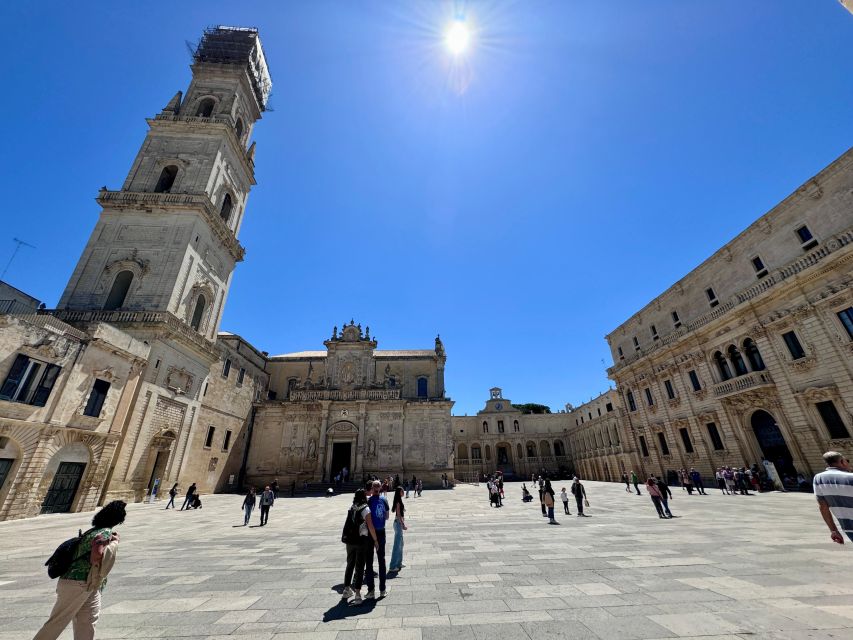
- Piazza del Duomo’s closed square design, plus the cathedral, bishop’s palace, and seminary palace in one coherent view
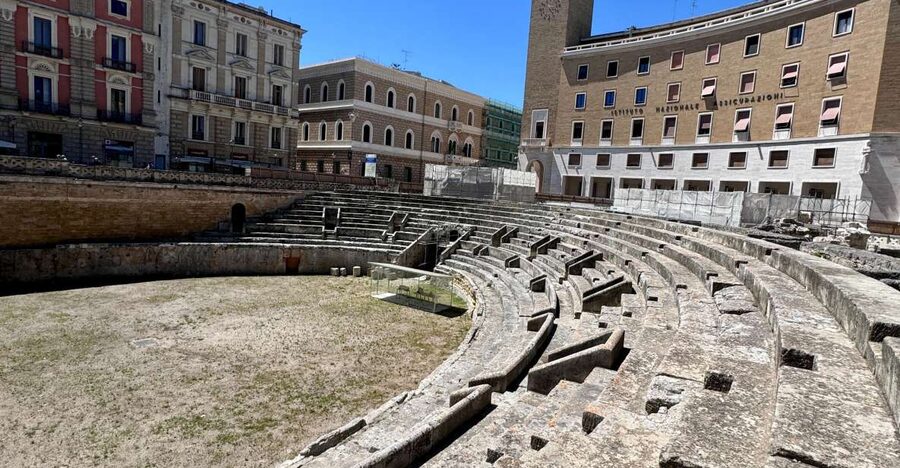
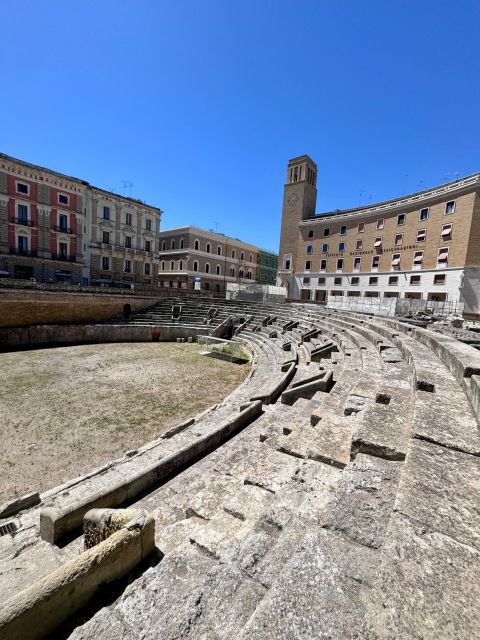
- A Roman-to-Baroque storyline, with Piazza Sant’Oronzo showing the amphitheater and the Roman column for Sant’Oronzo
- Federica Manzi guiding in Italian and Spanish, with explanations built around questions and detail
Why Lecce’s Baroque feels different from most of southern Italy
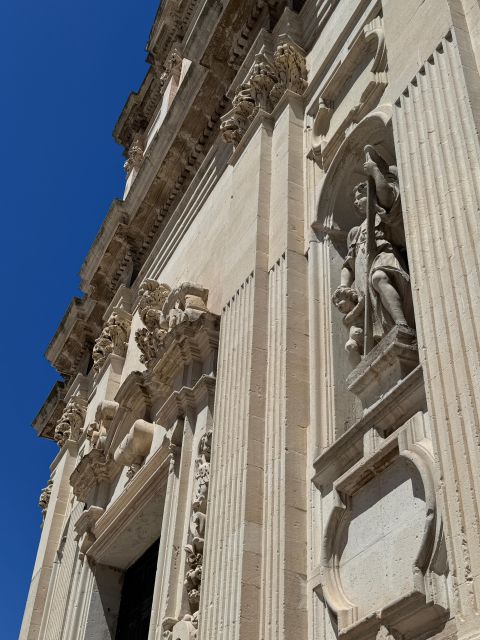
Lecce can surprise you fast because its Baroque isn’t only about dramatic facades. It’s the way the architecture seems to keep talking at you in layers—carved details, sculptural rhythm, and stonework that looks almost sculpted like lace. With a guide, you start noticing patterns you’d otherwise miss when you’re moving on your own.
This tour works because it respects how people actually experience a historic center. You walk through the historic core, hit the major architectural “read” points, and end in a place where the city’s energy makes sense—Piazza Sant’Oronzo. It’s a good fit if you want a strong orientation without spending an entire day on just streets and stairs.
You can also read our reviews of more tours and experiences in Lecce.
Starting at Porta Napoli: the perfect way to get oriented fast
You begin at Porta Napoli, the 16th-century gateway to Lecce. The gate is built in Lecce stone and connected to the memory of Charles V of Habsburg, which matters because it gives you a historical spine right away. Instead of wondering when a street or building started, you begin with a clear “how this city was shaped” reference point.
Why this start is practical: Porta Napoli isn’t just a landmark. It’s a natural beginning for a walking route that moves inward toward the religious and civic heart. If you’re trying to picture the city layout, starting here helps you understand the logic of where the tour is taking you next.
Also, this is the kind of meeting point that’s easy to recognize. Even if you arrive a little early, you can take in the gateway and get your bearings before the walk begins.
Via Giuseppe Palmieri: where churches and palaces guide your eyes
After Porta Napoli, the route follows Via Giuseppe Palmieri. This stretch is where Lecce’s Baroque really becomes a sequence: churches and Baroque palaces appear in an order that feels intentional, like the city is presenting different chapters as you walk.
I like how this part of the tour slows your attention down. Instead of treating each building like a solo photo opportunity, you learn to “read” the street: which facades are meant to impress from the sidewalk, how the density of landmarks changes the pace of your walk, and why the Baroque style often feels theatrical even when you’re simply passing by.
A possible drawback here is also simple: if you’re someone who prefers quiet sightseeing, this is an urban historic-center walk. You’ll be out in the middle of city movement, and the tour is designed to keep momentum, not to linger forever at every corner. Still, the route is paced for a solid 2-hour experience, not an all-day crawl.
Piazza del Duomo: the closed square idea that makes the cathedral area click
The tour’s next major shift is toward Piazza del Duomo. This is described as a rare example of a closed square, which is a fancy way of saying the space is shaped and framed so it feels enclosed rather than open-ended. That design matters because it creates a built-in viewpoint for the most important structures around it.
In this plaza, you’re looking at a cluster that tells the story of power and belief in one sweep:
- the Baroque cathedral
- the bishop’s palace
- the seminary palace
What makes this stop valuable is the way it brings multiple architectural roles together. You’re not only seeing religious design; you’re seeing civic and educational authority, all orbiting the cathedral complex. The closed-square layout makes it easier to grasp how the buildings relate to each other, even if you don’t know the architectural terms.
If you’re the type who loves architecture but also wants the “why,” this is the spot where the explanation usually pays off. You’ll finish the plaza walk with a clearer sense of what you’re looking at and why it’s arranged the way it is.
From Roman traces to Piazza Sant’Oronzo: the city’s second storyline
Lecce doesn’t only live in the Baroque era. This tour threads you through the streets of an ancient Roman city, then swings you toward Piazza Sant’Oronzo, one of the key spaces in town.
Here’s what you get to connect visually:
- the Roman amphitheater
- the Roman column holding the statue of Sant’Oronzo, the city protector
This section is valuable because it changes how you interpret what you’re seeing. Instead of treating Baroque facades as isolated artworks, you start realizing they’re layered on top of earlier urban life. That’s the kind of context that makes your photos more meaningful, because you can explain to yourself what’s older and what’s later.
One practical consideration: this portion involves walking from one architectural mindset to another—Roman echoes first, then Baroque church intensity. If you’re tightly scheduling multiple stops in Lecce, don’t cram too much right after this segment. Let the ideas settle so you don’t miss the way the city’s timeline shows itself in space.
Final churches and Basilica di Santa Croce: ending with a big architectural payoff
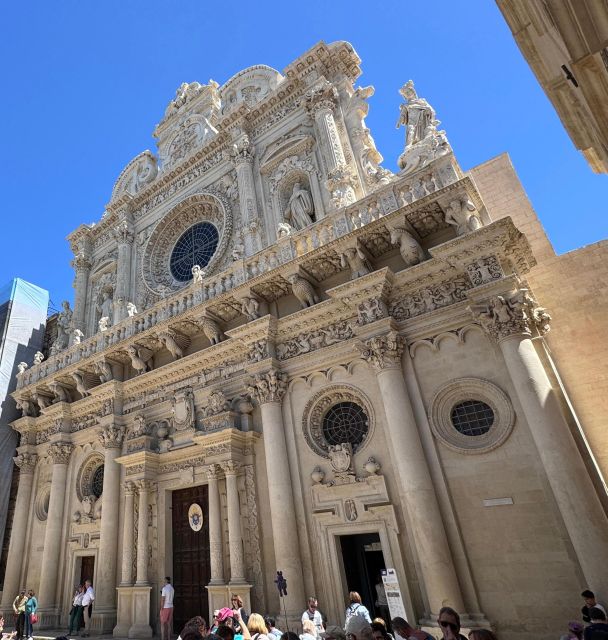
The tour closes with the evocative Baroque churches of Lecce and the Basilica of Santa Croce, one of the iconic symbols of Salento.
This is where the tone typically shifts from “look and learn” to “wow.” Santa Croce is famous in this region for a reason: the style and stonework make a strong impression even when you only have a limited time window. Ending here works because it gives you a satisfying finish—your last memory is not a random street corner, but a major architectural statement.
Do note the practical part again: entry to the churches isn’t included. That doesn’t ruin the tour—since the point is architecture and cultural orientation—but it does mean your experience will depend on how you want to handle interiors. If stepping inside is a must for you, I’d build in extra time after the walk to check openings and decide what you’ll prioritize.
What’s included (and what to plan around)
You’re booking a historical cultural tour with a live guide. That’s the core value: you’re paying for interpretation—how the city pieces fit together—not just for movement from one exterior to another.
Two things to keep in mind:
- Church entries aren’t included. You can still appreciate the facades and exterior design, but you may want to plan separate time and any associated entry costs if you decide to go inside.
- The tour is 2 hours. That’s enough for a focused highlights route, but it’s not long enough to add multiple extended museum-like stops without feeling rushed.
If your ideal day in Lecce includes both architecture and time to wander on your own, this 2-hour structure is a nice backbone. It gives you the knowledge and the direction to make free time afterwards more rewarding.
Federica Manzi’s guiding style in Italian and Spanish
The guide for this experience is Federica Manzi. The tour runs with a live guide in Italian and Spanish, which is a huge plus if you want explanations without translation gaps.
What I’d look for in a guide like this is clarity plus responsiveness. The descriptions of Federica’s performance emphasize that she speaks Spanish with confidence and that she knows the story behind the architecture in a detailed way. Even better, she handles questions well and adjusts based on what you ask for, which turns the tour from a one-way lecture into a conversation with your curiosity.
That matters because Baroque architecture can feel overwhelming if you’re only staring at decoration. A good guide helps you identify what’s symbolic, what’s stylistic, and what’s historically tied to the city’s development. With Federica, the experience is set up to help you get more out of what you’re seeing.
Price and value: when $147.27 makes sense for a small group
The listed price is $147.27 per group up to 5 for a 2-hour guided experience. On paper, per-person costs can vary a lot depending on group size. But the math is usually straightforward: if you’re traveling with 3–5 people, the cost per head drops quickly compared with booking individual tours.
Here’s why this can be good value for Lecce:
- You’re getting a structured route through multiple major architectural zones in one go
- You’re paying for interpretation across both Baroque and Roman-era traces
- The guide can answer questions, which often helps you enjoy the city more even after the tour ends
If you’re traveling solo or as a couple, it may feel like a smaller-group tour price. Still, the 2-hour duration and focused route can justify it if you want strong orientation and don’t want to spend your morning figuring out what matters most.
Who this tour is best for
This is a great match if you:
- want a high-impact historic-center walk without committing to a full day
- care about architecture and want context, not just landmarks
- enjoy guided storytelling but still want freedom to keep moving
- can work within a 2-hour time window and prefer exteriors plus cultural explanations
It’s also wheelchair accessible, which is a practical detail if mobility is part of your planning.
If you’re the type who loves stopping for long interior visits, you can still take this tour, but you’ll want to add time before or after for church entry where you choose.
Should you book this Lecce Baroque tour?
I’d book it if you want a well-paced, structured way to understand Lecce’s Baroque—and especially if you like the idea of walking from Porta Napoli through the cathedral area and ending near Sant’Oronzo. The route is built around the city’s visual logic, so you leave with a mental map, not just a pile of photos.
I’d think twice if your top priority is going inside multiple churches or spending hours deep in interiors. Since church entry isn’t included, you’ll need extra planning time if interior access is the whole point for you.
If you’re visiting Lecce and you want to get your bearings fast, learn what you’re looking at, and still have time for independent wandering, this is a strong value buy for a small group.
FAQ
Where does the guided tour start?
The guided tour starts at Porta Napoli.
Where does the tour finish?
The tour finishes at Piazza Sant’Oronzo.
How long is the tour?
The tour lasts 2 hours.
What languages is the live guide available in?
The live tour guide is available in Italian and Spanish.
Are church entries included?
No. Entry to the churches is not included.
How much does the tour cost?
The price is $147.27 per group up to 5.
Is the tour wheelchair accessible?
Yes, the tour is wheelchair accessible.