REVIEW · MADRID
Architecture Tour: Old Historic Madrid with an architect
Book on GetYourGuide →Operated by architoursmad . · Bookable on GetYourGuide
Madrid’s buildings have a storyline. This architecture tour uses a local architect’s eye to connect Madrid’s urban planning to big political turns, from the city’s Arab beginnings to the Habsburg-Austria era, then on through Bourbon rule. I especially like the way you’re guided through Madrid urbanism and the Austrias-Habsburg neighborhood highlights, with architecture and history treated as one conversation instead of two separate lessons.
One thing to consider: the tour does not include the interior of the Royal Palace, so your focus will be on exteriors, guided viewpoints, and church visits rather than walking rooms at the palace.
In This Review
- Key highlights to look for
- Why an architect leads you through Madrid’s power shifts
- Teatro Real to your first photo stop: lining up the story
- Plaza de Oriente and the Royal Palace zone: authority, stone, and scale
- Churches that matter: San Nicolás (pass by) and Almudena Cathedral
- The Arab Wall to the 12th-century Christian wall: history you can point to
- Cava Baja to Plaza de la Villa: taverns, town governance, and texture
- San Miguel Market pause: architecture that smells like Madrid
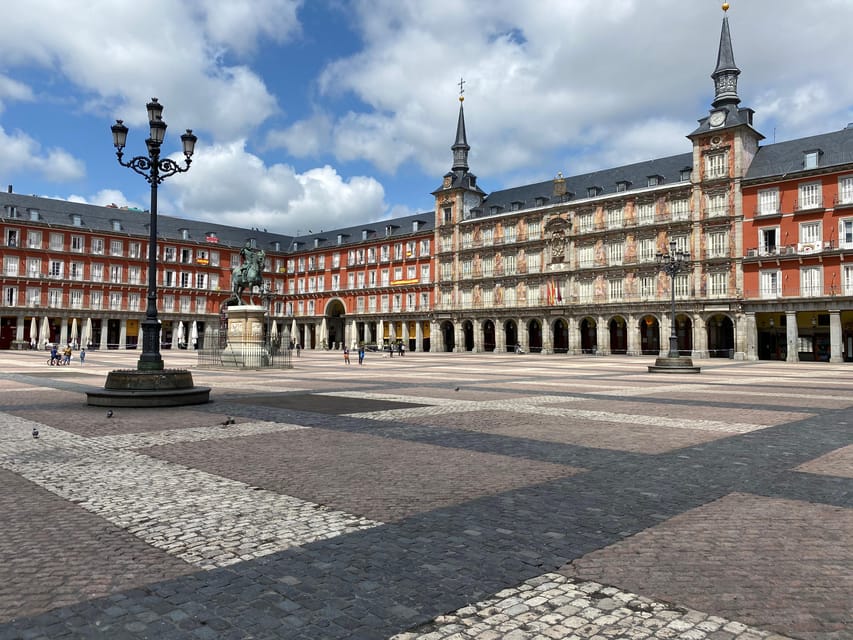
- Plaza Mayor: the main square that kept doing its job
- Price and value for a one-person private architect tour
- Timing, weather, and how to make the 3.5 hours work
- Who should book this architecture tour (and who might skip)
- Should you book? My practical take
- FAQ
- How long is the tour?
- Where does the tour start?
- Where do I meet the guide?
- What stops are included on the walk?
- Does the tour include the Royal Palace interior?
- Are church entrances included?
- Are drinks or snacks included?
- What languages is the guide available in?
- Is the tour wheelchair accessible?
Key highlights to look for
- An architect’s route through Madrid’s political map: you connect power shifts to the buildings you see.
- Teatro Real to Plaza Mayor in one coherent walk: you get clear transitions between royal, civic, and everyday spaces.
- Church entrances included: you get access where it matters, without paying extra for basic entry.
- Remains of the Arab Wall and the 12th-century Christian wall line: history becomes visible under your feet.
- Cava Baja vibes and old-tavern streets: you see how social life shaped the city fabric.
- Views toward Casa de Campo from the royal area zone: you get a skyline-to-forest moment in the mix.
Why an architect leads you through Madrid’s power shifts
This isn’t an architecture tour that only points at pretty facades. The whole point is how Madrid grew into what it is by designing around whoever was in charge. You start with the city’s origins after the Arabs founded Madrid at the end of the 9th century, then you move through the conquest under Alfonso VI of Castilla in the 11th century, and later the moment Felipe II chose Madrid as the fixed capital.
When an architect guides you, the buildings stop being static objects. You start noticing patterns: how royal authority “anchors” the center, how civic power shows up in squares and institutions, and how older layers don’t disappear so much as get covered, repurposed, or reused. Even if you are more of an architecture admirer than a professional, this kind of framing helps you read Madrid at street speed.
A major plus here is the time span. You get the splendor of the Austrias-Habsburg period, then you also track how the Bourbons influence the city from the 18th century into today. It’s the difference between seeing monuments and understanding why those monuments landed where they did.
You can also read our reviews of more tours and experiences in Madrid.
Teatro Real to your first photo stop: lining up the story
You begin at Pl. de Isabel II, 4 and meet at the entrance of a Starbucks tucked into one corner of Teatro Real. That matters because the tour starts with orientation. You’re near one of Madrid’s key performance buildings, which also works as a cultural anchor for the first part of the route.
At Teatro Real you get a photo stop plus a guided segment (about 15 minutes). This is a good opening because it sets tone: Madrid’s architecture isn’t only about the past; it’s also about what the city chose to build later as it consolidated its identity.
From there you move to Plaza de Oriente for another short guided stop (around 15 minutes). This area is all about how monumental space supports royal symbolism. Even if you only glance around, you’ll feel how squares and sightlines are used like stage sets.
Plaza de Oriente and the Royal Palace zone: authority, stone, and scale
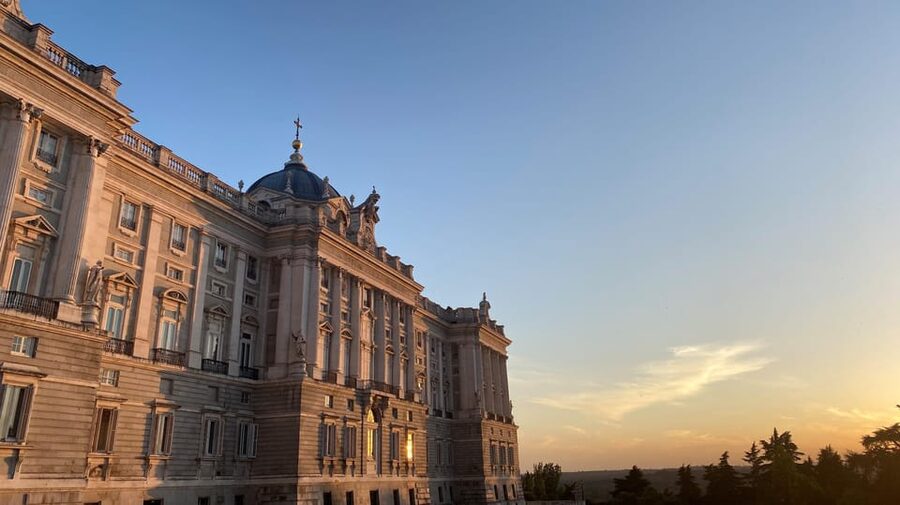
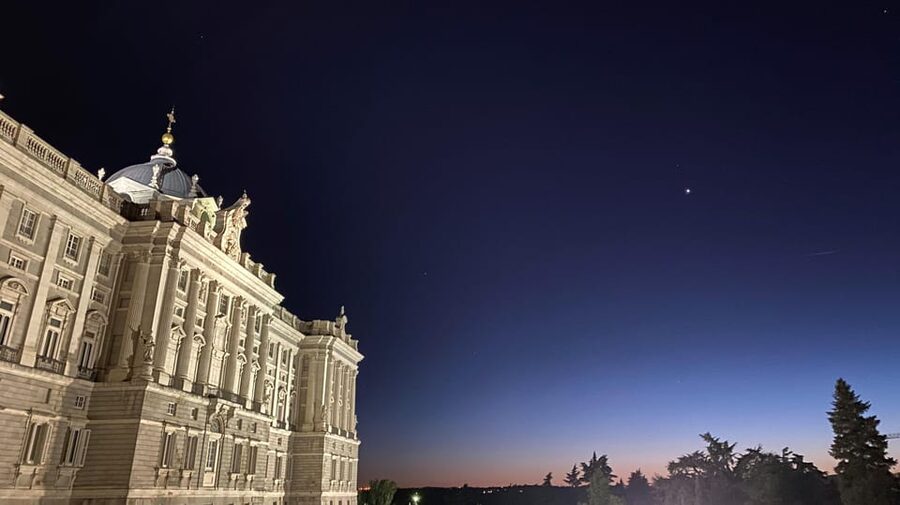
The Royal Palace is the next big anchor, with roughly 20 minutes of guided time. Important detail: you will not visit the interior. But that’s not a deal-breaker if you’re here for architecture and urban form. The palace’s exterior and its placement are doing a lot of work.
You’ll connect the palace to Felipe V, who ordered construction of the Royal Palace as we know it today. That historical link helps you interpret what you’re seeing. You can stand in the right spots, look at proportions, and understand how the palace projects state power outward into the city. If you’re expecting rooms and courtyards, temper that expectation now. If you’re here to read architecture like a map, you’ll likely enjoy it more.
A practical tip: since the palace time is outdoors and viewpoint-based, bring sunglasses and keep your phone battery ready. The light in central Madrid can shift fast, and you’ll want clean photos at the best angles.
You also get a connection to the modern layer of the royal area: the new Museum of Royal Collections designed by Tuñón and Mansilla. From this zone, you can enjoy views toward Casa de Campo forest. That mix of old power and newer interpretation is one of those quiet reasons this route feels current rather than stuck in a time capsule.
Churches that matter: San Nicolás (pass by) and Almudena Cathedral
One of the smartest ways to understand Madrid is to track how sacred architecture changes as political control changes. You’ll pass by Iglesia de San Nicolás (about 10 minutes). This is a quick look rather than a full stop, but it can still help you situate the route within the city’s religious landscape.
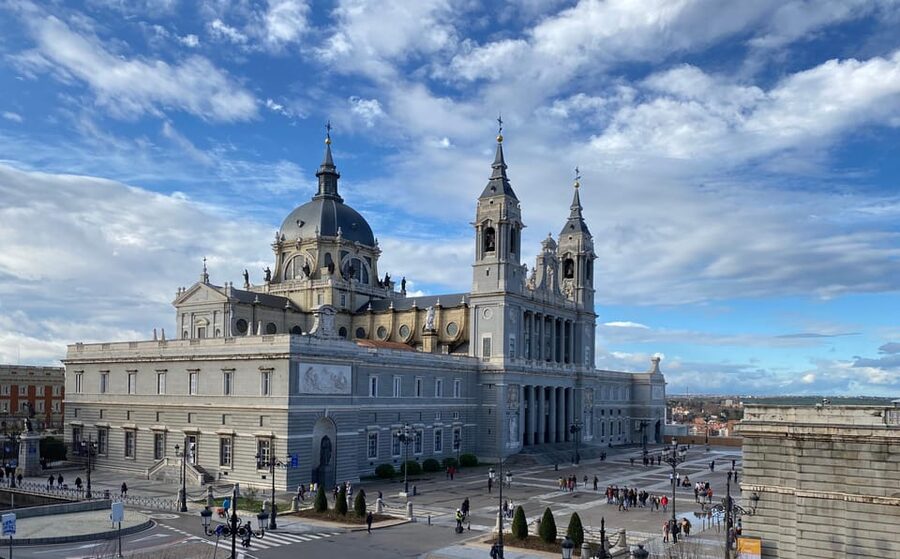
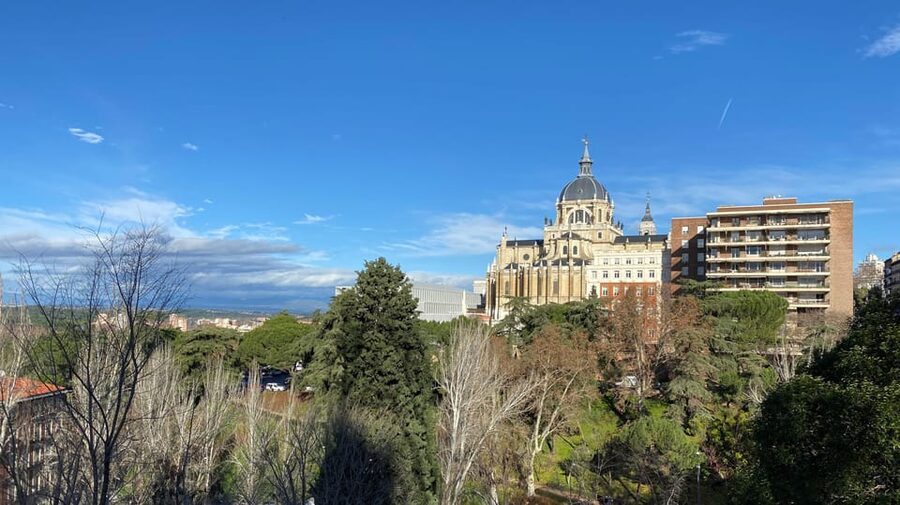
Then you go to Almudena Cathedral for a guided visit (about 15 minutes), with church entrances included. This is where you’ll likely appreciate the tour’s approach most: a guided walk that slows down when the architecture deserves it.
Even without getting lost in theory, you can read these buildings as cultural statements. Churches are where communities express identity, and the way they are built reflects the priorities of the era. Almudena Cathedral is a strong mid-route checkpoint because it bridges the royal/central story with the older city fabric you’ll explore next.
If you’re visiting in winter, dress for indoor-outdoor shifts. Churches can be cooler than the street, and being comfortable makes the guided segments easier to follow.
The Arab Wall to the 12th-century Christian wall: history you can point to
This is one of the most compelling parts of the route because it turns abstract history into visible geography. You’ll spend about 15 minutes sightseeing the remains of the Arab Wall. You’re not just hearing that the city evolved. You’re looking at the leftovers of that evolution.
Then the walk continues toward the remains of the 12th-century Christian wall. The contrast is fascinating because it shows conquest and change as something physical. Fortification lines are political choices. They define where the city can safely grow and where control ends.
As you move through this segment, pay attention to how the route shifts from grand public spaces into streets that feel older and more textured. You’re crossing from “monument” Madrid into “lived-in” Madrid, where the city’s past still shapes the street grid.
This section is also a good moment to ask yourself a simple question: what does power need? Usually the answer isn’t only palaces. It’s boundaries, walls, and routes for controlling movement. That’s why wall remains matter so much for understanding architecture.
Cava Baja to Plaza de la Villa: taverns, town governance, and texture
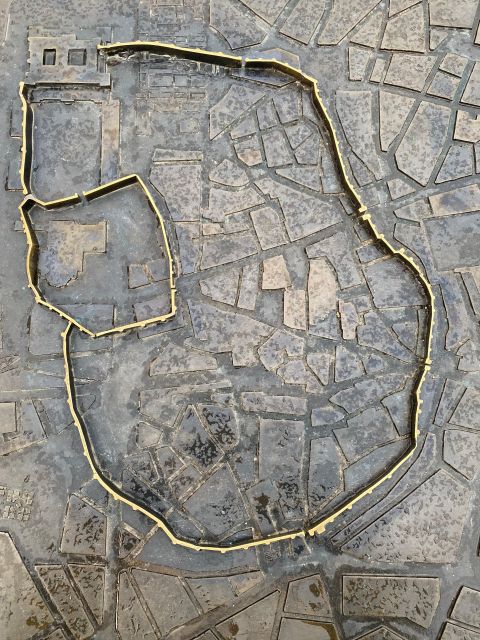
After the wall segment, the tour takes you through the Cava Baja area, known for old taverns. The vibe here is practical: food and drink aren’t separate from architecture. They’re part of how urban life uses a street.
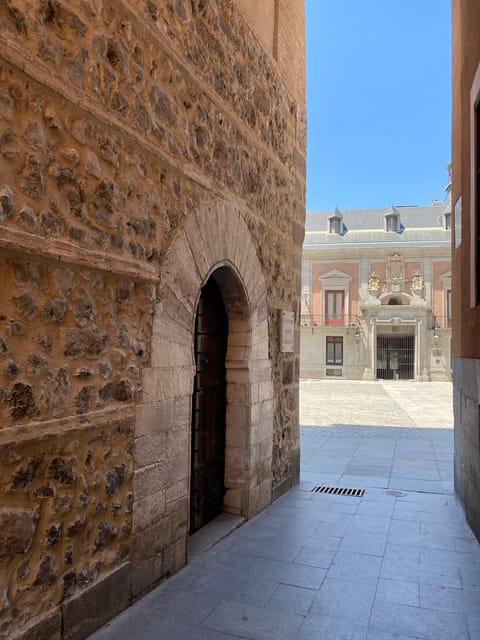
From there, you reach Plaza de la Villa for a walk (around 15 minutes). This square is especially interesting because it’s tied to old town governance. You’re in a spot that, historically, would have connected civic decisions to daily life.
You don’t need to be a politics nerd to enjoy this stop. The square helps you see how Madrid’s structure supports social movement: people gather, trade happens nearby, and the city’s institutions sit where they’re accessible. Architecture, in this sense, is the city’s system for organizing public life.
If you like your tours to feel like you’re walking through how people used to live, this part is a strong payoff.
San Miguel Market pause: architecture that smells like Madrid
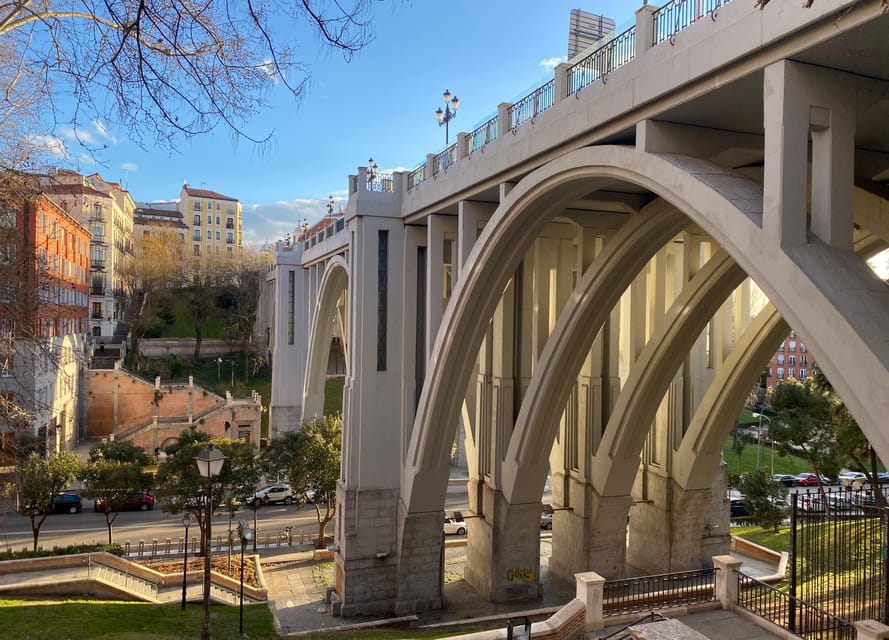
Next is San Miguel Market, with about 10 minutes for a guided segment. You’re guided through the space and it’s positioned as a place where you can grab a drink after earlier sightseeing. This is one of the tour’s smartest pacing choices: it gives you a reset without taking you away from the story.
This stop also helps you understand Madrid’s mix of ages. Markets are where old and new behavior coexist. Even if you’re only there briefly, you’ll feel how the city keeps functioning while its older architecture becomes a backdrop.
Two practical notes:
- The tour does not include drinks or snacks, so plan for optional spending if you want that market break.
- If you hate crowds, keep your expectations realistic. Central market areas can be busy.
Plaza Mayor: the main square that kept doing its job
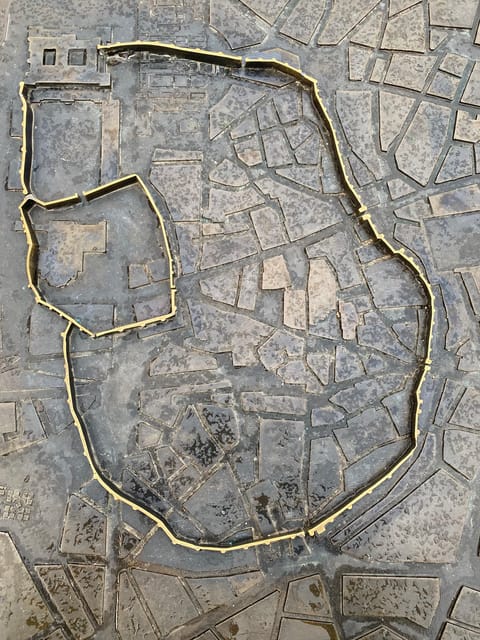
You finish at Plaza Mayor after a guided visit of roughly 15 minutes. This square is presented as the city’s main social and commercial life in the past, and that framing helps you appreciate why Plaza Mayor is still important.
What I like about ending here is how the tour brings together the threads:
- Royal power from earlier.
- Church and civic cues from the middle.
- Everyday life from Cava Baja and the market zone.
Plaza Mayor is where those themes compress into one place. Even if you only spend a short time here on foot, you get a sense of Madrid’s “public room” concept. Big squares aren’t only for monuments. They’re for commerce, meetings, celebrations, and the kind of daily rhythm that makes architecture feel alive.
It’s also a comfortable endpoint. You’ve got plenty of places to keep exploring afterward on your own, because the square is so central.
Price and value for a one-person private architect tour
The price is $387 per group, up to 1, for a 3.5-hour private experience. That pricing can sound steep if you compare it to group bus tours. But private architect-led time is different: you’re paying for expert interpretation, not just transportation.
Here’s where the value logic holds up:
- You get a live guide in English or Spanish for 3.5 hours.
- Church entrances are included, so you’re not adding entry fees mid-walk.
- You’re not visiting the Royal Palace interior, which keeps the tour focused on exterior and guided architecture reading rather than ticketed time.
Also, because it’s private, you can tailor your attention. If you’re interested in urbanism and politics, you can ask for clearer links between each era and the spaces you see. If your focus is more on architecture details, you can steer questions toward form, function, and how styles shift between periods.
If you’re traveling solo and want high-quality context fast, this kind of pricing can make sense. If you’re on a tight budget and plan to self-guide, you might prefer a cheaper walking route. But if you want someone to help you interpret Madrid’s layers in real time, this is the paid shortcut.
Timing, weather, and how to make the 3.5 hours work
This tour runs 3.5 hours. That’s long enough to cover major central zones, but short enough that you won’t feel trapped in a full-day schedule.
Weather matters because much of the route is outdoors with photo stops and walking segments. The tour suggests:
- In winter: warm clothes.
- In summer: sun protection (sunglasses, cap/hat) plus cold water.
Wear shoes you trust for city walking. Nothing here is described as a strenuous hike, but you’ll be on your feet for multiple stops in central Madrid. If you’re sensitive to heat, start hydrating early.
Also, bring a little patience for crowds near major landmarks. Central Madrid is popular. Your guide can help you keep moving and still get good angles.
Who should book this architecture tour (and who might skip)
This tour is ideal if you fall into one of these buckets:
- You love architecture and history and want them connected.
- You’re curious about Madrid’s urbanism and how political power shaped the built environment.
- You’re an architect or architecture student, or you just think in design terms.
It may not fit if:
- You want to go inside the Royal Palace, because the interior is not included.
- You need wheelchair accessibility, since it’s not suitable for wheelchair users.
If you’re the kind of person who takes mental notes on how cities organize themselves, you’ll get a lot out of this.
Should you book? My practical take
I’d book this if you want a guided walk where architecture is the main language and history is the translation. The route is structured to move from royal and performance spaces into older defensive lines, then into civic and social squares. That sequence makes the city’s growth feel logical.
I’d think twice if your top priority is museum time or palace interiors. This experience is built for interpretation and exterior reading, plus church access—not heavy-ticket indoor attractions.
If you’re flexible, private, and ready to see Madrid as a layered design story, this is a strong use of a half-day.
FAQ
How long is the tour?
It lasts 3.5 hours.
Where does the tour start?
The starting location is Pl. de Isabel II, 4.
Where do I meet the guide?
You meet at the entrance of the Starbucks located in one corner of the Royal Theater.
What stops are included on the walk?
The route includes Teatro Real, Plaza de Oriente, the Royal Palace area (guided), Iglesia de San Nicolás (pass by), Almudena Cathedral, the Arab Wall remains, Plaza de la Villa, San Miguel Market, and Plaza Mayor (finish).
Does the tour include the Royal Palace interior?
No. The tour does not include visiting the interior of the Royal Palace.
Are church entrances included?
Yes. Entrance to churches is included.
Are drinks or snacks included?
No. Drinks or snacks are not included.
What languages is the guide available in?
The live tour guide is available in English and Spanish.
Is the tour wheelchair accessible?
No, it is not suitable for wheelchair users.