REVIEW · CHANDIGARH
Le Corbusier’s Chandigarh : A Complete Architecture Tour
Book on GetYourGuide →Operated by The Hipster Chandigarh Experience · Bookable on GetYourGuide
Concrete never looked so intentional. This 5.5-hour small-group tour puts Le Corbusier and his team front and center, with guided access to key civic sites and the behind-the-scenes planning materials that explain the city’s design logic. I especially liked the rare permissioned access (including spaces most visitors only see from the outside) and the guide’s fact-heavy, funny delivery—no dry lecture vibe. One consideration: you’ll be on your feet a good chunk of the time, and the day depends on local political conditions, so a couple of stops may swap if access is limited.
The guiding force here is Rusty, a third-generation Chandigarh resident with 11+ years of journalism experience. He tells the story of Chandigarh’s evolution with a sharp, personal lens—focused on how the modernist ideas were built, what worked, and what the city’s legacy looks like today. It also has a practical benefit for you: you’re not just walking. You’re walking with the right explanations, at the right points, and in a route that’s designed to help you see the design instead of just passing it by.
If you care about architecture, planning, or how big ideas survive real-world life, this tour is a strong match. If you’re hoping for a quick highlights loop with minimal walking, you may want to plan for a slower day after—because Chandigarh is best when you stop, look closely, and ask questions.
In This Review
- Key moments that make this Chandigarh tour worth your time
- Chandigarh in 5.5 hours: how the pace really works
- Meet Rusty: the guide who tells Chandigarh like a story
- Gandhi Bhawan, AC Joshi Library, and Punjab University: modernism in an academic setting
- Maison Jeanneret: Pierre Jeanneret’s house, now a museum stop
- The Capitol Complex circuit: Palace of Assembly, Secretariat, High Court, and monuments
- Le Corbusier Centre and the sustainability story that sticks
- The architecture museum: letters, floor plans, sketches, and rare drawings
- What you’re paying for: $75 value, tickets included, and the food you choose
- Practical tips so you don’t suffer in the Chandigarh sun
- Who this Le Corbusier Chandigarh tour is best for
- Should you book? My take
- FAQ
- How long is the Le Corbusier Chandigarh architecture tour?
- What does the $75 per person price include?
- Where can pickup happen?
- Is the tour guide English-speaking?
- Are there any entry/visit restrictions I should plan for?
- What should I bring with me?
- What food is included in the tour?
- Is it wheelchair accessible?
- What’s the cancellation policy?
- Can I reserve now and pay later?
Key moments that make this Chandigarh tour worth your time
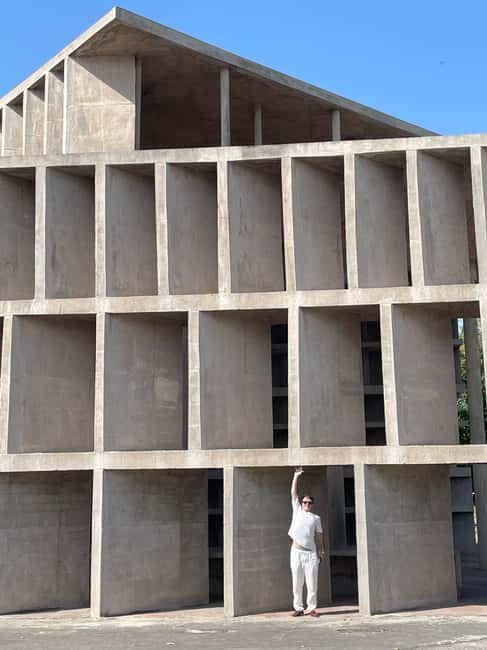
- Expert-led brutalist design walkthroughs that explain form, function, and how the city’s layout connects the dots
- Inside access to Punjab University spaces and other offices that are rarely opened to standard visitors
- Maison Jeanneret visit (a Pierre Jeanneret landmark and a museum space tied to Corbusier’s presence)
- Capitol Complex full guided circuit including the Palace of Assembly, Secretariat Building, High Court, and major monuments
- Le Corbusier Centre stop focused on how sustainability and green thinking entered the Indian context
- Architecture museum materials: original letters, floor plans, sketches, and rare drawings you can actually study
Chandigarh in 5.5 hours: how the pace really works
Chandigarh can feel spread out, and the architecture is not always right next to the next thing you want to see. That’s why I like that this tour is built as a timed sequence with car transport between sites, rather than a “walk until you’re tired” plan. You get pickup and drop-off from a reasonable distance, and the itinerary is designed so you’re not wasting time on logistics.
The pace is deliberately structured: you’ll spend time inside selected spaces, then shift to key exteriors for the full civic-complex effect. You should expect a day that mixes looking closely (details, layout, materials) with listening to the bigger design story. If you’re the type who likes to stop for a few photos and then keep moving, this format fits well.
One smart thing to consider: Chandigarh’s access can shift due to national holidays and local political conditions. The tour is planned with alternatives in mind, so you still get meaningful architecture stops rather than getting stranded outside a gate.
You can also read our reviews of more tours and experiences in Chandigarh.

Meet Rusty: the guide who tells Chandigarh like a story
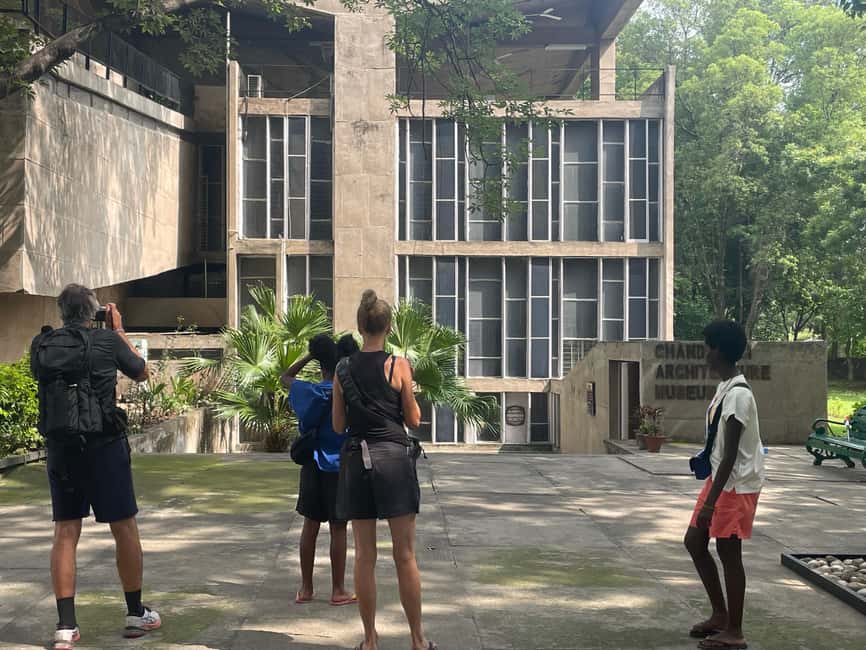
Rusty’s background matters. He’s a third-generation Chandigarh resident and has worked for more than a decade in journalism, so his explanations are built like reporting, not like a script. He answers questions and keeps the energy moving, and he doesn’t turn every sentence into a patriotic speech.
From a practical traveler’s point of view, the best part is clarity. You’re looking at buildings that can feel abstract at first—concrete, angles, civic geometry—and Rusty helps you connect what you’re seeing to why it exists. In the small-group setting, you also get breathing room to think and ask follow-ups rather than getting herded.
There’s also a small-but-real language flexibility. If your English is limited, you may find it helpful that Rusty can work with translation support during the conversation (the guide has experience communicating this way). That makes it easier to keep the tour from turning into passive sightseeing.
And yes, there’s a local-support angle built into the experience. This is operated as a citizen-led business, and the best way to honor that is simple: ask questions, show interest, and support the guide on the day you’re there.
Gandhi Bhawan, AC Joshi Library, and Punjab University: modernism in an academic setting
One of the strongest early parts of the day is the university-focused architecture. You’ll get guided access to places that help you understand how the city’s modernist vision wasn’t just about government buildings—it was also about education and public institutions.
You can expect a walk through the Punjab University campus with an insider focus on the spaces you’re standing in, not just the buildings’ exteriors. Gandhi Bhawan is included, and it’s the kind of stop that helps you read the city’s civic personality through its institutional architecture.
AC Joshi Library is also on the plan, but it’s explicitly subject to local conditions. That matters because you’ll know in advance that access can change. If that stop is unavailable, the tour framework aims to keep the day moving with comparable heritage architecture so you still get value.
What you should look for as you go: the way circulation and layout support day-to-day use. These are not museums of abstract ideas; they’re living spaces. When you understand that, Chandigarh’s “grid-and-sectors” thinking clicks more easily, and the rest of the day’s civic buildings start to feel like part of one system.
Maison Jeanneret: Pierre Jeanneret’s house, now a museum stop
Maison Jeanneret is the kind of stop that changes your perspective fast. This isn’t just another exterior photo-op. You’ll get guided access to the first house made in Chandigarh by Pierre Jeanneret, and you’ll also connect it to the fact that Le Corbusier stayed here.
In a tour that spends a lot of time on major civic structures, this smaller residential anchor is a smart counterbalance. It helps you see the design logic at a human scale: how people would live, how space would feel, and how form decisions translate into everyday experience.
Because it’s now turned into a museum space, you’re more likely to be able to slow down and study. Take a minute to look at the building’s relationship to light and structure rather than treating it like a checklist stop. If you’re an architecture fan, this is the moment when you’ll start to enjoy the details more than the headlines.
The Capitol Complex circuit: Palace of Assembly, Secretariat, High Court, and monuments
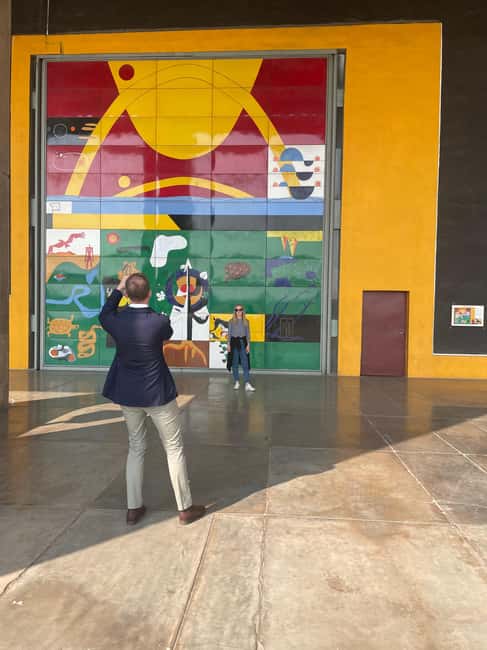
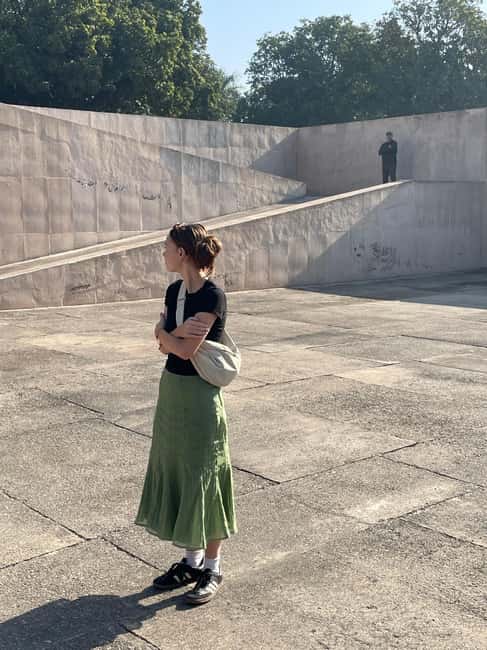
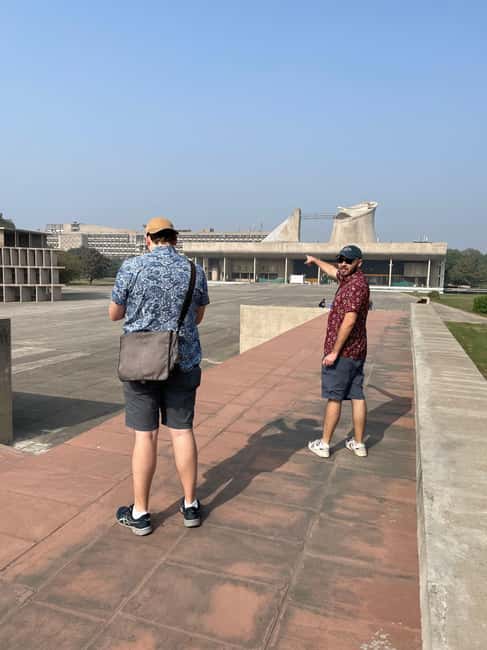
This is where Chandigarh becomes unmistakably Le Corbusier. The Capitol Complex segment is designed as a guided walkthrough of the civic core, with access to major buildings and major monuments on the same route.
You’ll visit the Palace of Assembly, the Secretariat Building, and the High Court—also known as the Palace of Justice. Seeing these in one connected sequence is the point. It’s hard to understand the design intent if you scatter these stops across a self-guided day.
The itinerary also includes the Open Hand Monument, Geometric Hill, Tower of Shadows, and the Martyrs Monument (with a note that local political conditions can affect access). If any one of these is restricted, the day is structured to keep you on track with other heritage architecture options.
What I found most useful about this segment is the way it frames the architecture as more than sculpture. You’ll hear how Chandigarh’s planning aimed at order and functionality, and how iconic buildings express a mix of utilitarian purpose and sculptural form. If you enjoy reading buildings like systems—rather than just admiring them—this part will land well.
Practical tip: wear shoes that can handle concrete patios and museum-like interiors. This portion is where fatigue can quietly steal your attention. A good pair of comfy shoes keeps you mentally present.
Le Corbusier Centre and the sustainability story that sticks
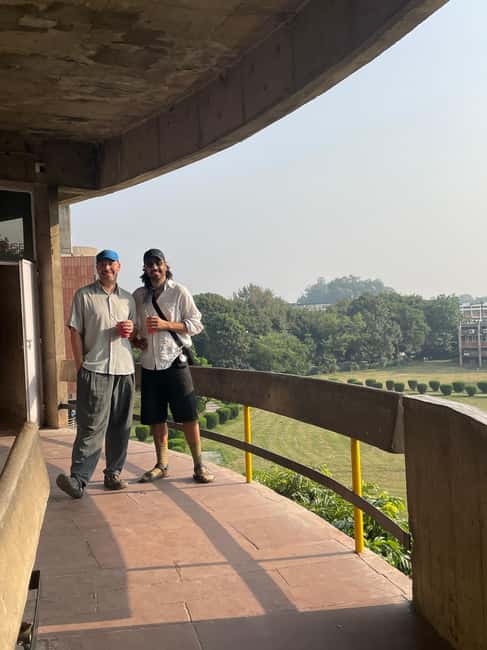
After the civic complex, the tour shifts into the idea-world behind the city. You’ll get guided access to the old architect’s office, now called the Le Corbusier Centre.
This stop is specifically tied to the introduction of sustainability and green architecture concepts into India. Even if you’re not a full-on environmental design expert, the way Rusty frames it helps you connect modernist planning to real-world needs—water, climate thinking, and the belief that buildings should behave responsibly, not just look correct.
I like this moment because it prevents the tour from becoming purely aesthetic. Chandigarh can look like a clean visual diagram from afar. The Le Corbusier Centre adds the “why” behind decisions, so you can walk away understanding the philosophy, not just the shapes.
Think of it as the tour’s grounding pause. You see concrete, then you see the mindset behind the concrete.
The architecture museum: letters, floor plans, sketches, and rare drawings
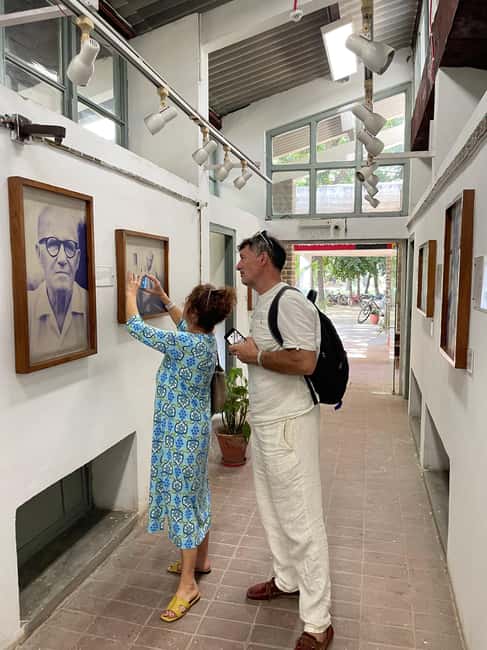
If you enjoy documents—real ones—this part is where your brain relaxes into focus. The architecture museum visit includes original letters, floor plans, sketches, and rare drawings connected to the creation of Chandigarh and its design thinking.
This is not just a room with photos behind glass. You’ll be shown materials that help you read the city like a draft evolving into a built reality. For architecture lovers, this kind of access makes the buildings feel less mysterious. The city starts to look like an argument that was written, revised, and built.
Even if you’re not the type to study drawings for fun, spend time with the floor plans. It’s the quickest way to understand why Chandigarh looks the way it does, and why the civic buildings feel positioned with intention rather than coincidence.
What you’re paying for: $75 value, tickets included, and the food you choose
At $75 per person for about 5.5 hours, the value is mostly in what’s covered. You get pickup and drop-off, transport between stops, bottled water, and all entry tickets, permissions, parking, and fuel charges included. That matters because Chandigarh’s key sites can be permission-sensitive. This tour handles the hassle so you can focus on the architecture.
The tour also includes the possibility of special extended viewing hours if available. That’s not guaranteed, but when it happens, it’s often the difference between rushing through and actually looking.
Food is not included, and you pay for it yourself. The guide provides a list of options with no forced recommendations, and the food selection is described as cheap, safe, and hygienic, with choices ranging from vegan to meat-focused kebabs and local specialties. One practical plus: you can tell your spice preference, and you should get options accordingly.
My advice: plan for a light meal gap before the tour or save room afterward. You’ll be doing a lot of thinking with your eyes, and that kind of attention burns energy.
Practical tips so you don’t suffer in the Chandigarh sun
Bring an ID (passport or ID card). Chandigarh is a city where entry and permissions can depend on paperwork, and you don’t want to be scrambling.
Wear comfortable shoes. This tour includes walking and campus time, plus standing during guided viewing. If your legs get angry easily, start with good footwear.
Sun protection is not optional. Bring a hat and sunscreen. Even with shade and building interiors, you’ll spend enough time outdoors that you should protect yourself.
Also plan your questions. Rusty’s style works best when you ask follow-ups. Good questions sound like: Why was this form used here? How does the layout connect the civic buildings? What changed in the legacy compared to the original vision?
If you communicate in English with support (translation apps, for example), that’s workable, so don’t self-censor. You’ll get more out of the day if you treat it like a conversation.
Who this Le Corbusier Chandigarh tour is best for
This is a strong fit if you’re:
- an architecture fan who wants guided interpretation, not just photos
- curious about Le Corbusier’s modernist civic vision and what it looks like in today’s Chandigarh
- interested in the behind-the-scenes planning story—letters, floor plans, sketches, and original office material
- someone who likes small-group experiences with time to ask questions
It can be less ideal if you want minimal walking or if mobility limits are a concern. The tour is noted as not suitable for wheelchair users. Even though there’s also a statement calling it wheelchair accessible, the “not suitable” note is the warning you should take seriously. If mobility is part of your planning, confirm details with the operator before booking.
Should you book? My take
Book this tour if you want the fastest way to understand Chandigarh’s modernist logic with real access. The $75 price makes sense mainly because entry tickets and permissions are handled, and you’re given guided access to high-value spaces rather than only street-level views.
I’d skip it if you only want a casual sightseeing loop. This is built for people who notice details and care about design decisions. If you’re that type, you’ll love the mix of civic monuments, institutional campus stops, and the more intimate Maison Jeanneret and Le Corbusier Centre moments.
If your goal is to leave Chandigarh with a clear mental map—grid thinking, civic purpose, and how the legacy reads today—this is an excellent use of one day.
FAQ
How long is the Le Corbusier Chandigarh architecture tour?
The tour lasts about 5.5 hours.
What does the $75 per person price include?
It includes pickup and drop-off from a reasonable distance, transport between sites in a comfortable car, bottled water, and all entry tickets, permissions, parking, and fuel charges. Food and drinks are not included.
Where can pickup happen?
You can be picked up from your hotel, railway station, bus stand, Airbnb, or even the airport, as long as it’s within a reasonable distance.
Is the tour guide English-speaking?
Yes. The live tour guide speaks English.
Are there any entry/visit restrictions I should plan for?
Yes. Daily group tours can be affected by local political conditions and national holidays, and some buildings may be closed. The tour aims to include heritage architecture alternatives if access changes.
What should I bring with me?
Bring a passport or ID card, comfortable shoes, a hat, and sunscreen.
What food is included in the tour?
Nothing—food and drinks are paid by you. You’ll be provided with options to choose from, and the guide recommends places that are described as cheap, safe, and hygienic.
Is it wheelchair accessible?
The information includes wheelchair accessibility, but it also states the tour is not suitable for wheelchair users. If you use a wheelchair or have mobility needs, you should check carefully before booking.
What’s the cancellation policy?
Cancel up to 24 hours in advance for a full refund.
Can I reserve now and pay later?
Yes. You can reserve your spot and pay later to keep your plans flexible.