REVIEW · SANTA BARBARA
Private Santa Barbara History and Architecture Walking Tour
Book on Viator →Operated by Sullivan Israel · Bookable on Viator
Santa Barbara’s buildings tell better stories than any sign. This private history and architecture walk is built around your interests, guided by local historian Sullivan Israel, and shaped as you go. You’ll cover the big downtown icons and also pick up the quieter adobe details that most people walk past.
I like two things a lot: the customization and the way the guide turns each stop into a real slice of daily life. You’ll get in-depth commentary tied to materials, design choices, and names that still echo through town. One thing to consider is that the experience is weather-dependent and it’s a walking tour, so bring comfortable shoes and plan for downtime if the sidewalks are busy.
Here’s the other truth: this tour is a lot more fun if you’re willing to look at facades close up, not just move from photo spot to photo spot. If you prefer only broad sightseeing with minimal walking, you might find the pacing a touch more “museum-ish” than “beach-and-breeze.”
In This Review
- Key points to know before you book
- Santa Barbara, explained through adobe and Spanish Revival
- Timing and practical setup (so you enjoy the walk)
- Starting at El Presidio: 1782 adobe walls and how life was built
- Rochin Adobe: the “in-between” structure you won’t notice alone
- Santa Barbara Historical Museum: early California-style architecture and exhibits
- De La Guerra Street adobes and the 1920s studios
- 802 Anacapa St: Presidio naming, Mexican-period adobes, and a courtyard you can almost feel
- City Hall and Casa de la Guerra: the Plaza de la Guerra power center
- “Street in Spain” energy at El Paseo and La Arcada
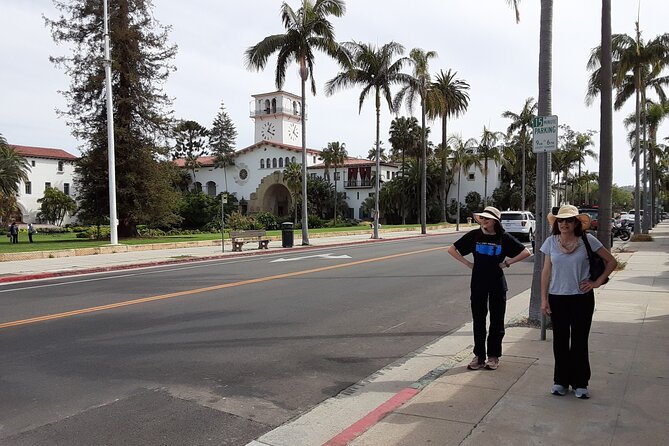
- The Santa Barbara County Courthouse: the Spanish Colonial Revival showpiece
- Downtown theaters: Granada and Arlington, plus the Lobero connection
- Alameda Park and Alice Keck Park: shade, trees, ducks, and monarchs
- The Santa Barbara Main Post Office: Streamline Moderne meets Spanish style
- El Cuartel (122 E Canon Perdido): ending at the oldest surviving Presidio structure
- Value and who this tour suits best
- Should you book this Santa Barbara architecture tour?
- FAQ
- How long is the Santa Barbara history and architecture walking tour?
- Where does the tour start and end?
- Is this a private tour or a group tour?
- What language is the tour offered in?
- Are admission tickets included for all stops?
- What should I expect at the Presidio stop?
- Can I enter buildings during the tour?
- Is the tour available on all days and times?
- Do you need good weather for this experience?
- Is there free cancellation?
Key points to know before you book
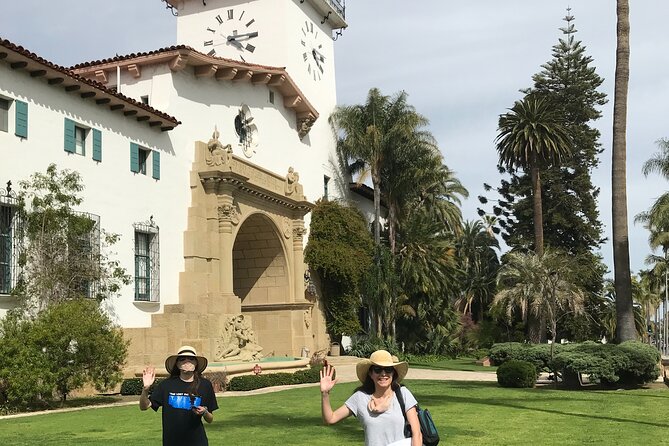
- Private and flexible: your route can be adjusted to your interests during the walk
- Adobe + Spanish Revival mix: you’ll see how Santa Barbara grew from Mexican-period roots into later styles
- Major landmarks and lesser-seen structures: El Presidio, the courthouse, and smaller adobes along the way
- Photo-supported storytelling: historical photos are part of the guided experience
- Some entry fees are covered, others are not: a smart way to keep costs predictable
- A guide who answers hard questions: you’ll get thoughtful depth, not just surface facts
Santa Barbara, explained through adobe and Spanish Revival
Santa Barbara can feel like a postcard. This tour cuts through the postcard layer and shows the craft underneath: how buildings were made, what materials were available nearby, and how political power and culture left fingerprints on walls and streets.
The core idea is simple. You start with one of California’s oldest Spanish-era structures at El Presidio de Santa Bárbara State Historic Park, then walk forward through time. You end up in downtown, where Spanish Colonial Revival design becomes a public statement—tiles, arches, courtyards, and ceremonial architecture facing Plaza de la Guerra.
The big value for you is pacing with context. A general walking tour will point. This one explains why the pointing matters.
And yes, it’s still fun. The guide’s style is engaging, and you’ll spend time looking at details you’d miss alone: stucco colors, window shapes, courtyard layouts, and the way certain streets connect to older paths from the waterfront to the Mission area.
You can also read our reviews of more tours and experiences in Santa Barbara.
Timing and practical setup (so you enjoy the walk)
This is a 2 to 3 hour private walking tour, in English. You’ll start at El Presidio de Santa Bárbara State Historic Park at 123 E Canon Perdido St and end back at the same meeting point.
A few practical notes that matter once you’re actually on the sidewalk:
- Wear shoes you can stand in. This is downtown walking on mixed surfaces, and the tour includes short stops inside when available.
- Bring water. One helpful tip from families on this kind of tour is that a small snack and bottle of water can keep energy steady for kids and adults.
- Expect some places to be exterior-first. Some entries depend on timing and conditions, and at least one major interior stop is described as being possible once restrictions ease.
If you’re the type who likes to ask questions, you’ll get a lot out of it. Sullivan Israel is described as an enthusiastic storyteller with deep Santa Barbara focus, and he’ll adjust pacing if you want more detail on one era than another.
Starting at El Presidio: 1782 adobe walls and how life was built
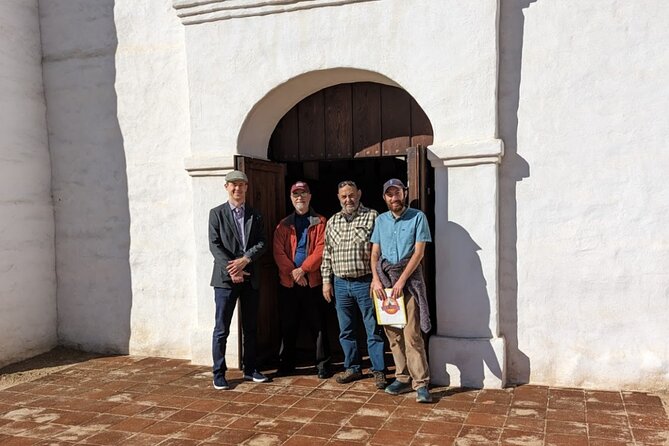
Your tour begins at El Presidio de Santa Bárbara State Historic Park, where you’ll spend about 20 minutes. Built in 1782 using adobe brick, the Presidio is one of the oldest structures in California. It’s not just a surviving wall either. You’ll see original rooms, soldier gardens, a chapel, and re-creations of everyday objects from the 18th century.
What I like about starting here: it gives you a framework for everything else you’ll see. You learn how construction relied on materials from the surrounding countryside, so the architecture makes sense in its place, not as random decoration.
The Presidio stop is also where names and ownership start to matter. Santa Barbara’s later story—adobes, street patterns, and political centers—grows out of this early Spanish outpost.
Quick watch for: this is the one stop where you’ll probably want to look up as much as forward. Adobe buildings can feel plain until you notice the craftsmanship and layout choices.
Rochin Adobe: the “in-between” structure you won’t notice alone
From the Presidio, you’ll pass by the Rochin Adobe, built in 1856 by a descendant of Captain Francisco Ortega, the first Comandante of the Presidio. The key detail is what happened over time: it used adobe bricks salvaged from the almost destroyed fort, and around 1900 it was covered in wooden clapboard, as it remains today.
Why this matters: it shows continuity and reuse. You’re not just seeing a single era. You’re seeing a town that rebuilt itself, literally using older materials.
This stop is brief, and that’s fine. It’s designed as a quick “layering lesson” as you move into the more urban parts of downtown.
Santa Barbara Historical Museum: early California-style architecture and exhibits
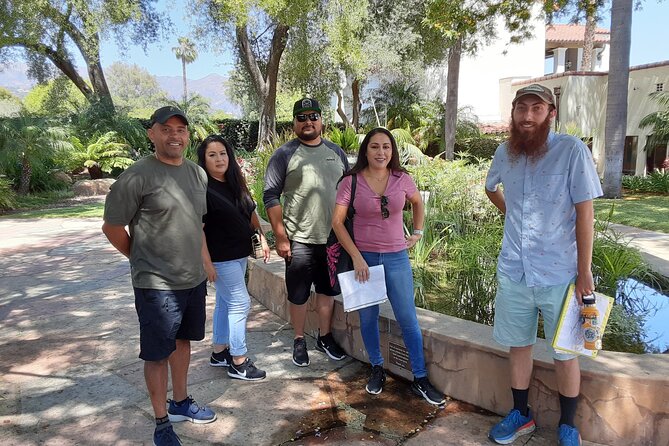
You’ll then reach the Santa Barbara Historical Museum, also around 20 minutes. The museum building is constructed in 1964 using adobe brick and is described as early California-style architecture.
Here’s where the tour gives you an optional add-on: you can enter to explore the exhibits, including painting and a collection of etchings. The courtyard also features two adobe structures dating from 1817, plus a gift shop, and it’s a solid place for photos.
Important detail for your planning: museum admission is not included. Other parts of this tour are free or covered, so you’ll want to decide on the spot whether it’s worth the extra time and ticket cost for you.
De La Guerra Street adobes and the 1920s studios
Next is a stretch around 112 E De La Guerra St, about 7 minutes, where you’ll see two different architectural worlds in one area.
First: the Lugo adobe and Meridian studios, completed in 1925 and designed by architect George Washington Smith. Look closely at the pastel-colored stucco walls and the large glass windows. If you’re there in spring, you may even catch the wisteria vine covered in purple flowers.
Then comes the quieter part of the story: behind the studios sits the Lugo Adobe, built by a retired Presidio soldier in the early 19th century. It’s described as well-preserved and remodeled, and because it’s more secluded, it’s seldom frequented by tourists.
This area is a great example of why a guided tour is worth it. On your own, you might admire the studios and never notice the deeper adobe layer behind them.
802 Anacapa St: Presidio naming, Mexican-period adobes, and a courtyard you can almost feel
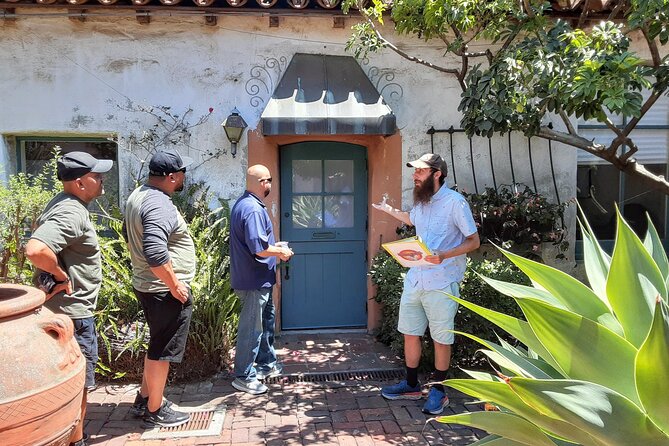
At 802 Anacapa St (about 7 minutes), the building name ties to the Presidio—it’s immediately adjacent. Construction is given as 1945, but it incorporates two original Mexican-period adobes plus part of the 1906 Nardi Hotel story.
You’ll also be able to spot the idea of “hidden space” nearby: behind the building there’s a hidden courtyard and garden. And you’ll hear about Presidio St., described as Santa Barbara’s earliest city street—a path once running from the waterfront to the Presidio and on toward the Mission.
This stop is mostly exterior, but the context makes it feel more like you’re tracing old routes on a map than just walking past walls.
City Hall and Casa de la Guerra: the Plaza de la Guerra power center
You’ll move into the civic heart of downtown.
At Santa Barbara City Hall (about 5 minutes), you’ll see a building constructed in 1923, before the 1925 earthquake. It’s tied to the Spanish Colonial Revival movement, with hand-painted tiles and arches that extend over the sidewalk. In front, a large California pepper tree is called out as a city landmark.
Then comes Casa de la Guerra (about 10 minutes). Built in 1819 by Don Jose de la Guerra, it served as both family mansion and a business center for this influential Presidio commander. Today, it hosts the Fiesta celebrations each summer and is open for visitors on weekends.
Why I think these two are a must: you get both the private-adobe world and the public-ceremonial world. Together they explain how Spanish-era leadership shaped Santa Barbara’s layout and cultural life.
“Street in Spain” energy at El Paseo and La Arcada
Downtown Santa Barbara has a few stretches that feel planned for strolling. This tour uses them well.
At the El Paseo Building (about 15 minutes), construction from 1922 to 1929 is described as the first major step in shifting downtown architecture from Eastern US main-street styles to Hispanic Pueblo forms. You’ll wander through passageways, visit a romantic courtyard, and meander down the famous Street in Spain, then emerge onto State St proper.
Then you enter the tiled paseo world of the Historic La Arcada Courtyard (about 10 minutes). This block of courtyards and arches runs along State St, leading toward the Santa Barbara County Courthouse. You’ll pass quirky bronze statues and arches with a second-story feel, and there’s a fountain with live turtles.
If you like photos, this section is where you’ll want to slow down. It’s not only pretty; it’s designed to be walked through.
The Santa Barbara County Courthouse: the Spanish Colonial Revival showpiece
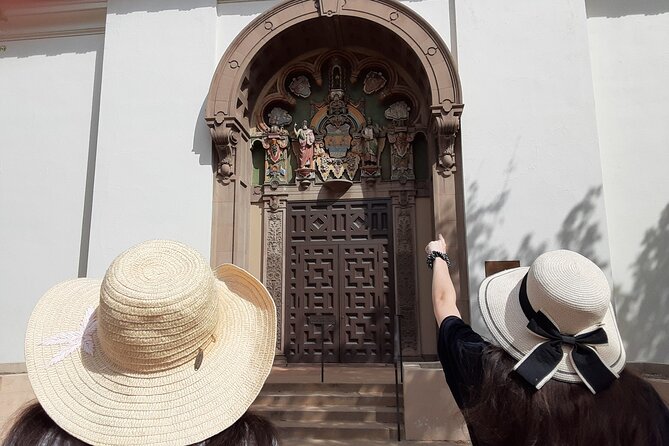
The biggest architectural payoff in the whole walk is the Santa Barbara County Courthouse (about 30 minutes). The building is described as the most important 20th century building in Santa Barbara, only second to the Mission in significance.
What you’ll look at outside is impressive: a Roman triumphal arch on the front facade, stone statues, hand-carved column capitals, and painted tiles throughout. If restrictions ease, you’ll then be able to go inside to see the mural room and climb stairs or take an elevator up the clock tower for a 360-degree view.
Even if you only take in the exterior, you’ll walk away with a strong sense of Spanish Colonial Revival as public messaging—architecture built to communicate importance.
Practical tip: If you can time it for quieter periods, you’ll have more space to look at the details without shoulder-to-shoulder pacing.
Downtown theaters: Granada and Arlington, plus the Lobero connection
You’ll also spot the city’s entertainment landmarks.
The Granada Theatre is described as a standout city landmark for a couple of clear reasons: it’s the tallest building in Santa Barbara (noted as built in 1924 before a 60-foot height ordinance), and the upper floors feature glazed terra cotta decoration. There’s also mention that you may be able to go inside once restrictions ease.
Then the tour includes the Arlington Theatre (about 7 minutes). The ground level has an arched paseo, and the tower rises above nearby rooftops. Inside, the theatre space is described as built to feel like a Spanish village town square, with fake 3-dimensional building facades and a vaulted roof painted with stars.
Finally, the route also points out the Lobero Theatre, built in 1924 by George Washington Smith. This site has operated as a theatrical space since 1873, when Italian immigrant Jose Lobero opened Southern California’s first opera house there. Like others, interior access may depend on current conditions, but the painted vaulted ceiling is specifically called out as a highlight.
If you’re curious about architecture beyond houses and churches, this theatre stretch is where Santa Barbara’s style shows off.
Alameda Park and Alice Keck Park: shade, trees, ducks, and monarchs
Now you get a break from building facades, and it matters.
At Alameda Park (about 20 minutes), the park area began in 1850 for public use and still functions as a center for downtown events, including Summer Solstice and Earth Day. The tour also mentions trees brought from abroad—examples given include redwoods and East African fern pines. There’s an 1880s bandstand on one block and a playground area called Kids’ World on another. Another block used to be home to the Mirasol Hotel until a fire in 1966 led to a conversion into botanical garden space with a duck pond and rare flowering trees.
Then comes Alice Keck Park Memorial Gardens (about 10 minutes). This square block is now a garden with a butterfly meadow that attracts monarchs, a running creek with stepping stones, and a massive Australian fig tree that provides shade over a duck pond with live turtles. Admission is described as included here.
If you book this tour in warmer months, you’ll appreciate that the park stops aren’t just filler. They help you cool down, reset, and keep your eyes refreshed before the route swings back toward historic structures.
The Santa Barbara Main Post Office: Streamline Moderne meets Spanish style
At the Santa Barbara Main Post Office (about 5 minutes), you’ll see a mix of styles: Streamline Moderne with Spanish elements. You’ll also get pointed to sculptures both inside and outside the building.
This is a useful stop for your mental model. Santa Barbara didn’t freeze at the Spanish Colonial stage. It kept updating design language while still referencing older aesthetics.
El Cuartel (122 E Canon Perdido): ending at the oldest surviving Presidio structure
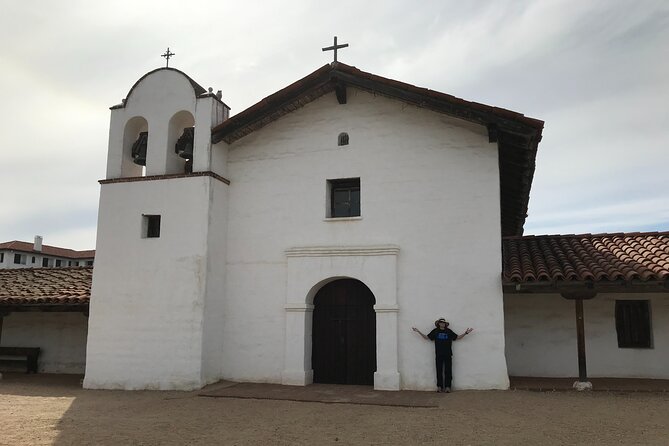
You finish at 122 E Canon Perdido St, across the street from where you began. The small structure is El Cuartel, once part of the Presidio complex and described as the oldest building in town, constructed in 1788.
Here you can wander inside the rooms and back garden. It’s described as relatively unchanged 18th-century structure, and the point is to help you picture daily life—when this was far from the tourist-dense downtown world.
In a tour that covers centuries quickly, ending here is satisfying. It brings you back to the first “why” question: how did people live in these structures when the landscape was more wild and less built out?
Value and who this tour suits best
Since this is a private tour, the value is strongest if you want flexibility. The itinerary is customized to your interests, and the guide can slow down for questions or speed up when you already have what you want.
Also, the admission structure is smart. The Presidio admission ticket is included, and Alice Keck Park admission is included. The Historical Museum admission is not included, while multiple other key stops are described as free. That means you’re not constantly deciding on paid entries to keep moving.
This is also a strong fit if:
- You care about architecture styles and how they reflect history, not just famous names
- You like walking but want guidance so you don’t miss the smaller adobe layers
- You’re traveling with kids or teens who can handle short stops and have questions (the pace is described as easy and engaging in the experiences shared)
If your ideal day is mostly sitting and scenic overlooks with minimal walking, this might feel too “on-foot and on-details.” It’s a history and architecture walk first.
Should you book this Santa Barbara architecture tour?
I’d book it if you want Santa Barbara with context. Starting at El Presidio, moving through De La Guerra Street adobes and Spanish Revival downtown landmarks, then finishing at El Cuartel gives you a clear time line you can actually picture.
Even better, the tour is private and shaped around you, guided by Sullivan Israel, who’s described as enthusiastic, story-driven, and willing to answer questions. That combination—structure plus flexibility—is what turns a walk into a real experience.
Book it if you like details: arches, tiles, courtyards, studio windows, theatre interiors when possible, and the park resets. Skip it if you want only broad sightseeing or you’d rather avoid walking for a couple of hours.
FAQ
How long is the Santa Barbara history and architecture walking tour?
The tour runs about 2 to 3 hours.
Where does the tour start and end?
It starts at El Presidio de Santa Bárbara State Historic Park (123 E Canon Perdido St) and ends back at the same meeting point.
Is this a private tour or a group tour?
It’s a private tour. Only your group participates.
What language is the tour offered in?
The tour is offered in English.
Are admission tickets included for all stops?
No. Admission is included at El Presidio de Santa Barbara State Historic Park and Alice Keck Park Memorial Gardens. The Santa Barbara Historical Museum admission is not included. Several other stops are listed as free.
What should I expect at the Presidio stop?
You’ll admire the 1782 adobe brick Presidio, including original rooms, soldier gardens, a chapel, and re-creations of everyday objects from the 18th century. Admission is included.
Can I enter buildings during the tour?
Some stops are described as free and exterior-focused, and at least the courthouse interior is noted as possible once restrictions ease. The museum can be entered if you choose.
Is the tour available on all days and times?
The listed opening hours run Monday to Friday, 10:00 AM to 3:00 PM.
Do you need good weather for this experience?
Yes. The experience requires good weather, and if it’s canceled due to poor weather you’ll be offered a different date or a full refund.
Is there free cancellation?
Yes. You can cancel for a full refund up to 24 hours in advance of the experience start time.