REVIEW · BARCELONA
Barcelona Architecture Walking Tour With Casa Batlló Upgrade
Book on Viator →Operated by ExperienceFirst · Bookable on Viator
Modernism in Barcelona, timed to perfection.
This guided architecture walking tour strings together Sant Pau and Sagrada Família, two of the best places to learn how Catalan modernism thinks in stone. I especially like that you get an expert-led story, not just a photo stop list, and that you’re looking at symbols and style as you go. One thing to keep in mind: in at least one group, there were no listening devices, and the pace felt a bit fast for the crowd.
You also get choices. The tour is offered in English, uses a mobile ticket, and runs with a maximum group size of 20, which helps the guide keep things moving without feeling like a stadium. I like that the experience includes a Casa Amatller chocolate sample, and the option to add an architecture expert and upgrade to Casa Batlló if you want the inside story.
In This Review
- Key highlights you should know before you go
- From Sant Pau’s hospital to Sagrada Família’s symbolism
- How the Sagrada Família stop actually helps your eyes
- CaixaForum Macaya: the quick story that rounds out the day
- Casa de les Punxes: fairy-tale modernism in 15 minutes
- Passeig de Gràcia’s Mansana de la Discordia: best use of your walking time
- Casa Amatller: enter the shop, then taste the story
- Casa Batlló upgrade: when the inside matters
- What you pay for, and what you’ll need to book separately
- Group size, pace, and hearing: how to make it work for you
- Guides matter more than you think
- Where you start and end (and why it’s convenient)
- Should you book this Barcelona architecture walking tour?
- FAQ
- How long is the Barcelona architecture walking tour?
- What language is the tour offered in?
- Is Casa Batlló included in the standard tour?
- Are admission tickets to the buildings included?
- What do you do at Casa Amatller?
- How big is the group?
- Where does the tour start and end?
- Do you use a mobile ticket?
- Can I cancel for free?
Key highlights you should know before you go
- Sant Pau’s Art Nouveau hospital complex gives you a perfect entry into Catalan modernism (and it is still in use history-wise up to the late 1990s).
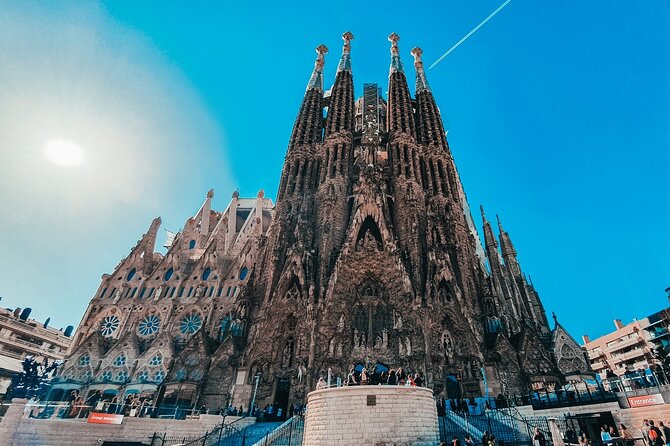
- Sagrada Família facades are taught like a symbol puzzle, with time to see the church from multiple angles along Avinguda Gaudí.
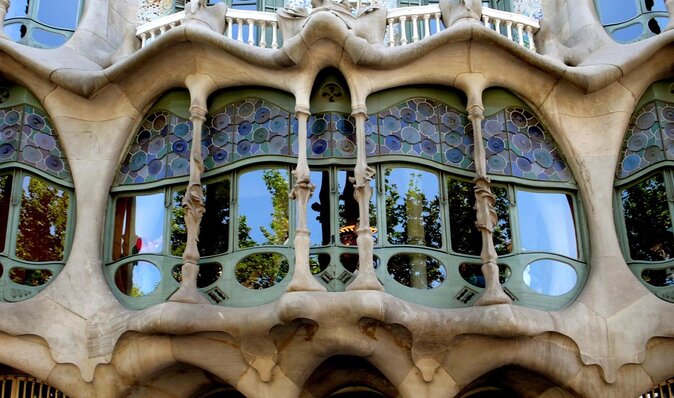
- Passeig de Gràcia’s Modernist concentration is handled efficiently, including Casa Milà, Casa Batlló, Casa Amatller, and Casa Lleó Morera.
- Casa Amatller includes a real stop inside the ground-level shop, plus a chocolate sample.
- Optional upgrades let you go deeper with an expert architect guide and Casa Batlló admission.
- Small-ish group size (up to 20) can make a big difference for listening, photos, and questions.
From Sant Pau’s hospital to Sagrada Família’s symbolism
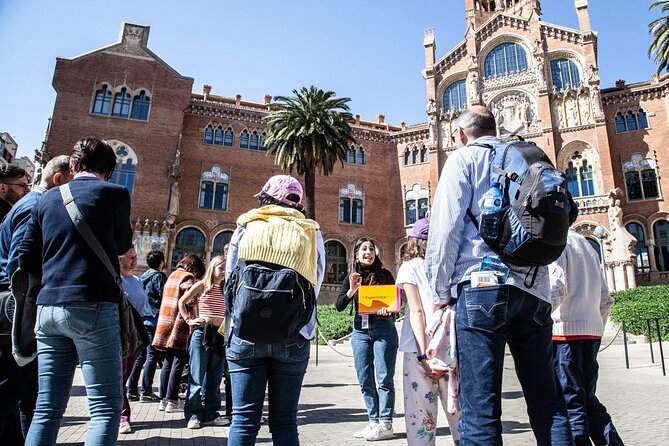
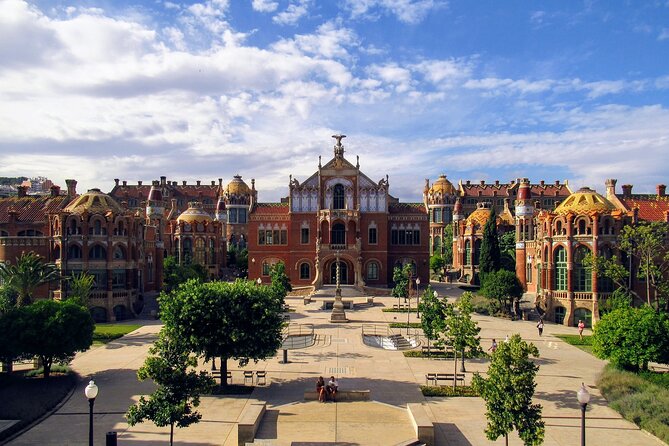
Your tour begins at Recinte Modernista de Sant Pau, designed by Lluís Domènech i Montaner. This matters because Sant Pau is not just pretty; it shows how Art Nouveau in Barcelona worked at a massive, civic scale. You’re stepping into a complex that once held an important hospital function, and the site remained in use until the late 1990s. That gives the architecture extra weight: it was built for real life, not just an aesthetic statement.
From here, you head toward Sagrada Família along Avinguda Gaudí. This is where you start to notice the tour’s guiding philosophy. Instead of treating buildings like stand-alone monuments, the guide helps you connect themes: where the forms come from, why certain shapes show up, and how the facades communicate with embedded symbolism. You’ll view the church from several angles, which is smart—Sagrada is meant to be read from outside, slowly.
Practical note: entry to the buildings is not included, so you’re primarily learning from exteriors during this walk. That is totally fine for a first look, but if you want interiors, you’ll need another visit day.
You can also read our reviews of more tours and experiences in Barcelona.


How the Sagrada Família stop actually helps your eyes
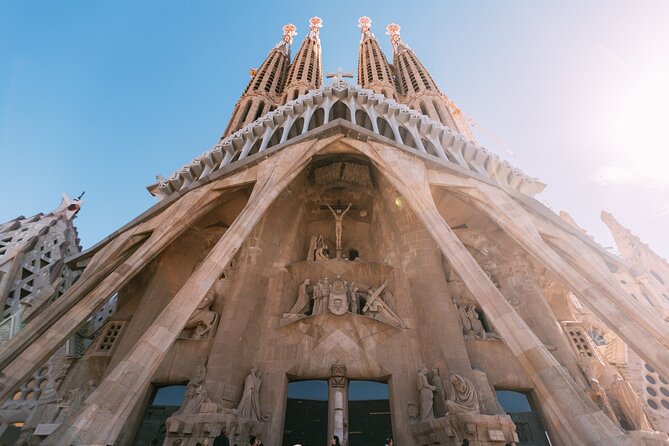
The Sagrada stop is one of the main reasons this tour works so well. It’s not just a quick glance at a famous landmark. The guide explains the secrets of the symbols built into the two facades, so when you look at the stonework, you can tell yourself a clearer story: what you’re seeing and why it’s there.
The location also helps. Being on the avenue gives you breathing room to step to different viewpoints while the guide keeps the context going. That’s the difference between watching the church and understanding it.
If you’re sensitive to noise, plan for it. Central Barcelona streets can be loud. And since one past experience described hearing difficulty due to missing listening devices, it is worth using what you can bring (good attention, and if you have hearing needs, consider bringing a personal hearing aid device if you use one).
CaixaForum Macaya: the quick story that rounds out the day
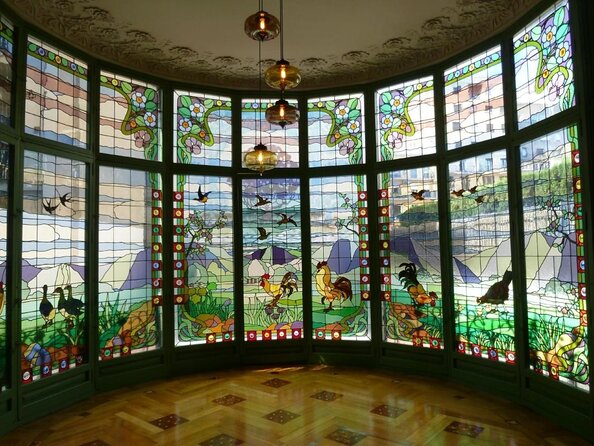
Next comes CaixaForum Macaya. The timing is short—about 10 minutes—but the value is in how it’s framed: you get the story behind what can feel like a side stop on a big itinerary. This kind of brief “context stop” is a sneaky way to make the city feel less like a checklist. It also keeps you from burning all your attention on the headline sights.
Because entry tickets aren’t included here, you’re learning from what you can see and from the guide’s explanation. If you love architecture, this is actually a good way to train your eye: notice proportions, how buildings relate to the street, and how Barcelona’s modernism isn’t only at the most obvious addresses.
Casa de les Punxes: fairy-tale modernism in 15 minutes
Casa de les Punxes is described as the fairy-house of Barcelona, and you feel that in the way it sits in the street—dramatic, playful, and unmistakably modernist. The tour gives it around 15 minutes, which is enough time to focus on the concept rather than rush through the details.
This stop is also a useful palate cleanser. After the symbolic intensity of Sagrada Família, Casa de les Punxes reminds you that Gaudí’s broader circle of architects also built for imagination, not just reverence. If you tend to get overwhelmed by too much religious stone at once, this is a smart breathing point.
Passeig de Gràcia’s Mansana de la Discordia: best use of your walking time
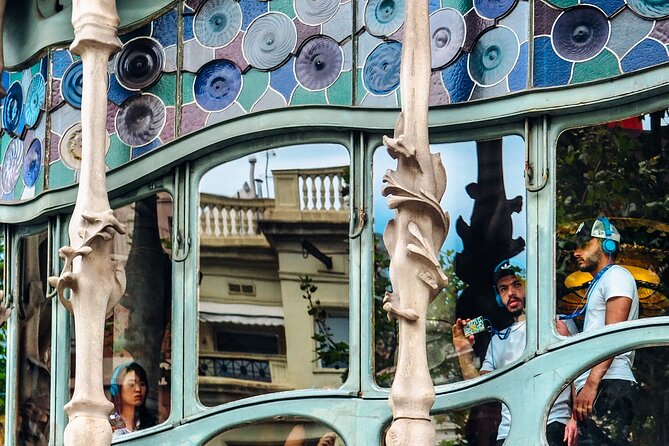
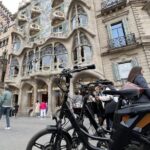
After the earlier highlights, the tour lands where many first-time architecture lovers want to be: Passeig de Gràcia, the heart of high-concentration modernist architecture. You’ll spend about 30 minutes here and focus on the well-known modernist addresses, including Casa Milà, Casa Batlló, Casa Amatller, and Casa Lleó Morera.
The tour also explicitly connects this pocket of buildings to La Mansana de la Discordia, the famed block where multiple major modernist visions sit close enough to compare. You’re not just seeing them—you’re learning how to spot differences in style, attitude, and design choices.
Important practical detail: for the Passeig de Gràcia exterior views, admission is free, so this is the part of the day that tends to feel the easiest. You can linger for photos and keep moving without worrying about timed entry lines.



Casa Amatller: enter the shop, then taste the story
One of the most fun parts of this architecture day is Casa Amatller. You don’t just look at the exterior; you enter the ground-level shop to learn the story and sample Barcelona chocolate. That is a smart inclusion because it breaks the rhythm of “look, read, walk, repeat.”
Also, it gives you a way to take the day home with something edible. Even if you’re not a chocolate person, the stop is a good chance to slow down, sit for a moment if offered, and reset your attention for the final stretch.
Timing is about 15 minutes, so it’s not a meal. It’s a taste with context, which is exactly what you want on a tour that still has walking ahead.
Casa Batlló upgrade: when the inside matters
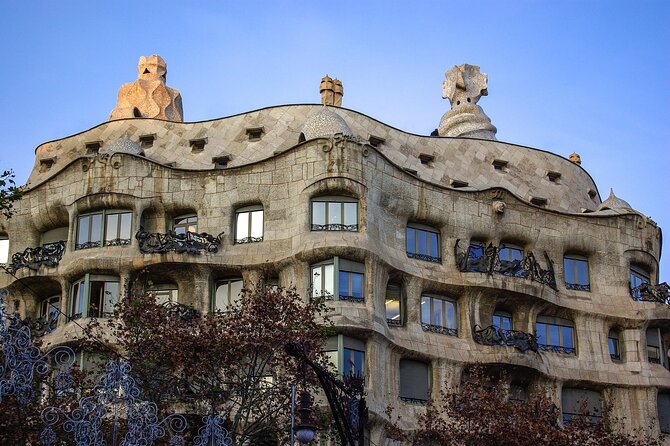
This tour includes an optional upgrade to visit Casa Batlló, one of Gaudí’s most elaborate masterpieces. The standard walking tour gives you architectural education and exterior viewing along Passeig de Gràcia, but the upgrade is what turns the day into an inside-out experience.
If you love Gaudí, the upgrade can be worth it because Casa Batlló is not only about how it looks from outside. It is also about how the structure feels as a designed environment. And this aligns with the enthusiasm you’ll see from art-leaning visitors and architecture lovers—one of the strongest pieces of feedback included that adding the Golden Casa Batlló ticket at the end felt like a great move.
Still, keep it realistic: this is a walking tour with a planned route. Adding Casa Batlló means you’ll spend more time inside and likely need to be a bit more flexible with the day’s pacing. If you prefer slow museum-style browsing, plan your other activities around this upgrade.
What you pay for, and what you’ll need to book separately
The base tour price is $35.07 per person for about 2 to 2.5 hours. That covers a local guide and the guided walking experience, plus the chocolate sample at Casa Amatller. An expert architect guide is an optional upgrade, and Casa Batlló admission is also optional.
Here’s the key planning point: entry to buildings is not included. So for sights like Sant Pau and Sagrada Família, you should treat this day as your architecture overview from the outside. If you want interiors, you’ll need separate tickets and another time window.
Group size, pace, and hearing: how to make it work for you
The tour has a maximum of 20 travelers, and that’s a good size for walking in a city center while still keeping the guide’s attention on the group. That said, one past experience described a tour with 12 people where the guide’s walking pace felt a little fast and the group had no listening devices. Another experience praised guides for being engaging and knowledgeable, and one person even noted an extra guide in training on the tour.
What should you do with that information? If you’re the type who wants to ask questions often, pick a day when you can keep up comfortably. Wear shoes you can walk in for a solid block of time, since you’re moving between major modernist points. And if you know you struggle to hear in busy streets, it’s worth asking in advance whether listening devices are available for your departure.
Guides matter more than you think
This tour lives or dies by the guide. The best feedback included named guide experiences like Perrine, praised for being enthusiastic and knowledgeable and for adding cultural, political, and economic context to the sights. Another strong review highlighted Patricio as fantastic and very knowledgeable about Gaudí. Others called out Cal as engaging and fun.
That’s a big deal because the itinerary is front-loaded with famous buildings where the real difference is what you notice once someone explains the symbols and design logic. Even the quick stops (CaixaForum Macaya, Casa de les Punxes) become more than photo ops when the guide knows how to connect them.
Where you start and end (and why it’s convenient)
You meet at Recinte Modernista de Sant Pau on Carrer de Sant Antoni Maria Claret, 167 (Horta-Guinardó), and you end on Passeig de Gràcia at number 35 in Eixample, in front of Casa Lleó i Morera.
That routing helps because it naturally takes you from a modernist landmark complex toward the main modernist corridor. You don’t end far from places you’ll want to explore on your own after the tour—shopping streets, cafés, and the next round of buildings.
Also, the meeting point is near public transportation, which is exactly what you want for a morning or midday walk. Build in a little buffer so you can arrive calmly and find the meeting spot without stress.
Should you book this Barcelona architecture walking tour?
Yes, if you want a guided, efficient modernist introduction that connects Sant Pau, Sagrada Família, and the Passeig de Gràcia buildings into one understandable story. I especially like the value mix: a guided architecture walk, a Casa Amatller chocolate stop inside the shop, and an optional path to go further with a Casa Batlló admission upgrade.
Skip the upgrade or consider another format if you’re very sensitive to walking pace or you need extra help hearing the guide. And remember: the buildings on this route are not included for entry tickets as part of the base tour, so treat it as your exterior-and-context day, not your full interior ticket plan.
If you do book, do it with one goal in mind: learn how to read Barcelona modernism, not just collect landmarks. That’s when this tour feels like time well spent.
FAQ
How long is the Barcelona architecture walking tour?
The tour lasts about 2 hours to 2 hours 30 minutes.
What language is the tour offered in?
It is offered in English.
Is Casa Batlló included in the standard tour?
Casa Batlló admission is an optional upgrade, not listed as included in the base tour.
Are admission tickets to the buildings included?
No. Entry to buildings is not included. The only building admission mentioned as an optional upgrade is Casa Batlló.
What do you do at Casa Amatller?
You enter the ground-level shop, learn about the story, and sample Barcelona chocolate.
How big is the group?
The tour has a maximum of 20 travelers.
Where does the tour start and end?
It starts at Recinte Modernista de Sant Pau and ends on Passeig de Gràcia at Pg. de Gràcia, 35, in front of Casa Lleó i Morera.
Do you use a mobile ticket?
Yes, the tour includes a mobile ticket.
Can I cancel for free?
You can cancel for free up to 24 hours in advance for a full refund.