REVIEW · OKLAHOMA CITY
Art and Architecture Tour
Book on Viator →Operated by Ride OKC · Bookable on Viator
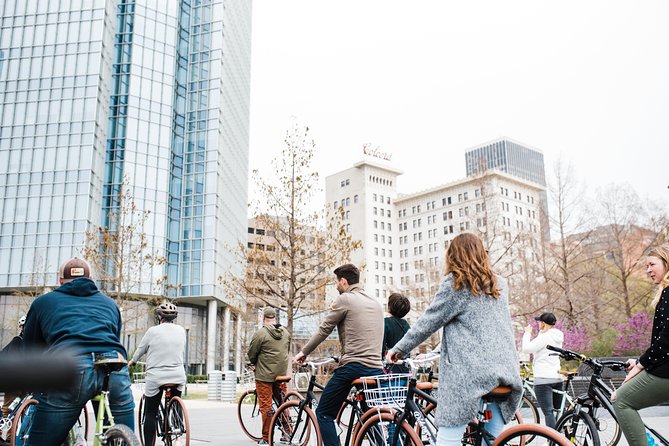
A downtown bike ride can turn OKC into a story you can actually ride through. I like that this tour mixes iconic landmarks (like the National Memorial) with quick hits of modern design (Devon Energy Center), so you get more than a postcard view. I also like the small-group format, which keeps questions flowing and makes the pacing feel more like a guided walk than a group shuffle. One thing to consider: this depends on good weather, and there’s also a minimum group size, so plan for the fact that your exact date might shift.
You’ll cover a lot of ground in 2 hours 30 minutes on comfortable 3-speed bikes, with helmets and bottled water included. Stops are brief and purposeful, so the tour works best if you enjoy seeing many buildings up close rather than stopping for long museum-style time.
In This Review
- Key points to know before you ride
- Downtown OKC in 2.5 hours: the smartest way to see the city core
- Meeting at Ride OKC: how the tour starts and why that matters
- Your bike basics: helmets, water, and a pace that works
- Stop by stop: what you’ll actually see in downtown OKC
- Henry Overholser Mansion: OKC’s first mansion and its settlers
- Oklahoma City National Memorial & Museum: symbolism, recovery, and design
- Boathouse District and the Olympic Training Site: modern architecture by the river
- Bricktown Canal, water taxi, and public art murals
- Chickasaw Bricktown Ballpark: funding, athletes, and team history
- Jim Thorpe statue: the odds story you can’t ignore
- Oklahoma County Courthouse: Art Deco design and a controversial origin
- The Skirvin Hilton: Art Deco + Neoclassical, plus ghosts and legends
- Centennial Land Run Monument: the largest bronze of its kind
- Myriad Botanical Gardens: starting with the park’s story
- Devon Energy Center: Oklahoma’s largest skyscraper, explained fast
- Colcord Hotel: Oklahoma City’s first skyscraper and a rags-to-riches story
- Leadership Square and its monumental sculpture
- Civic Center and WPA buildings from the Great Depression era
- Midtown Plaza Court: adaptive reuse and timeless style
- Oklahoma Case Study House: modern houses and how the neighborhood formed
- Federal Building replacement: design changes after bombing
- Kerr Park: your best downtown skyline viewpoint
- What makes this tour worth $64.99
- Who should book this, and who should skip it
- Book it? My straight answer
- FAQ
- How long is the Art and Architecture Bike Tour?
- What’s included in the ticket price?
- Where does the tour start?
- What times does the tour run?
- Are admissions to all stops included?
- What happens if the tour can’t run due to weather or group size?
Key points to know before you ride
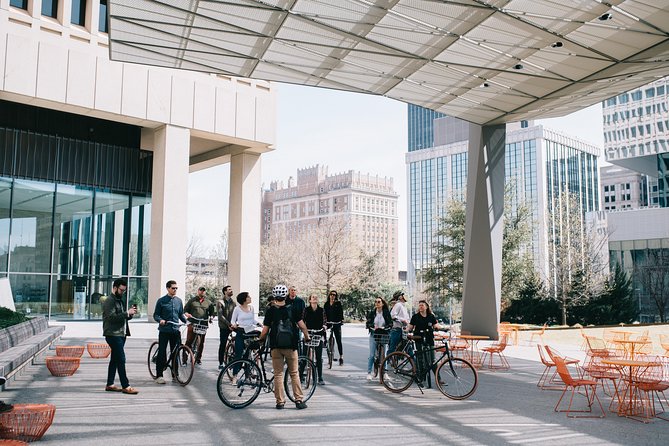
- Small group, more guide time: Maximum 15 riders means you can ask questions and get real context.
- Bike setup is taken care of: Helmet, bike use, and bottled water are included.
- Art + architecture mix: Public art, Art Deco buildings, and modern skyscrapers all show up in one loop.
- History without feeling heavy: You’ll learn about settlement and Oklahoma’s founding alongside 20th-century moments.
- A few stops have separate admission: The mansion, National Memorial & Museum, and ballpark aren’t included.
Downtown OKC in 2.5 hours: the smartest way to see the city core
This is a practical, guide-led bike tour designed for people who want the main downtown highlights without spending your whole day in traffic or lineups. The ride time is long enough to feel like a real tour, but the stop lengths are short enough that you keep momentum and still get clear explanations.
I like the structure: you’re not just passing buildings. You’re getting the why behind them—how OKC was settled, how Oklahoma’s public spaces were planned, and why certain designs (like Art Deco) show up again and again in the downtown skyline.
For most people, the bikes make it easier to stay comfortable. You’ll be on 3-speed bicycles, and the tour includes a helmet and bottled water, which sounds basic until you realize how often city tours forget the actual riding part.
You can also read our reviews of more tours and experiences in Oklahoma City.
Meeting at Ride OKC: how the tour starts and why that matters
You’ll meet at Ride OKC Bike Tours and Rentals, 428 W California Ave. The start time is 10:00am, and the tour loops back to the meeting point at the end.
Because the meeting area is near public transportation, this is also a good option if you’re not planning to rent a car just for downtown. And if you’re hoping to keep the morning light, the 2 hours 30 minutes duration is a manageable block that still leaves time later for lunch or a museum visit.
You’ll get a mobile ticket, so you’ll want your phone charged. It’s a simple detail, but for a bike tour, it helps to avoid any last-minute stress while you’re suiting up.
Your bike basics: helmets, water, and a pace that works
This tour keeps the “gear” side straightforward. You get:
- Helmet
- Use of bicycle
- Bottled water
- A guide who handles the route and the talking
The bike itself is the real difference-maker. If you’ve ever toured downtown on foot, you know how quickly the distance adds up. By biking, you can look at architecture without turning every block into a mini workout.
The pace also matters: most stops are around 5–10 minutes, with one longer stop in Bricktown. That means you’ll get context at each place, but you won’t get stuck waiting for the group to reassemble over and over. If you like to move and you don’t mind a fast rhythm, this format suits you well.
Stop by stop: what you’ll actually see in downtown OKC
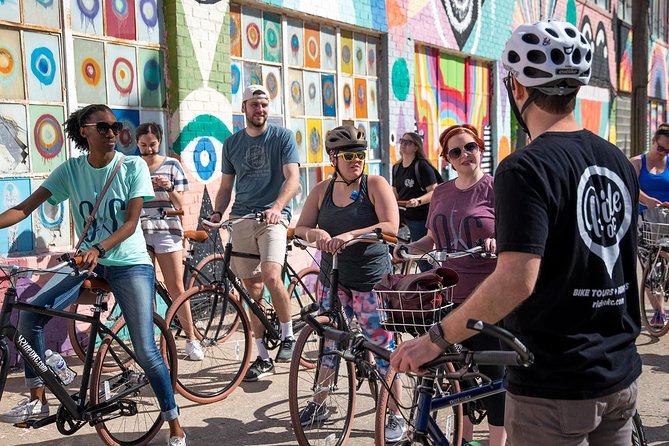
Henry Overholser Mansion: OKC’s first mansion and its settlers
You start with a look at Henry Overholser Mansion, known as Oklahoma City’s first mansion. You’ll see the surrounding historic neighborhood and hear how the city was founded and who those early settlers were.
This stop is short, but it sets a tone. Before you get to the skyscrapers and the memorial architecture, you get the “how did this place begin” story. If you’re the type who enjoys grounding modern landmarks in their origins, this is a great opener.
Admission is not included here, so if you want to go inside, you’ll need to plan separately.
Oklahoma City National Memorial & Museum: symbolism, recovery, and design
Next is the Oklahoma City National Memorial & Museum, one of the most significant sites in the US connected to domestic terrorism. The guide explains what happened, why it happened, how the city recovered, and the symbolism of the memorial’s design.
This is the stop that adds emotional weight to the tour, and it’s handled in a way that’s meant for a short visit. You’ll want to approach it with a slower mindset even though the time at the site is brief.
Admission is not included, so you’re choosing between seeing it as part of the guided overview or adding museum time on your own.
Boathouse District and the Olympic Training Site: modern architecture by the river
Then you’ll head toward the Boathouse District and the Olympic Training Site. This is where the tour shows off more contemporary OKC design, while also connecting it to how the Oklahoma River became a world-class rowing destination.
You’ll get the feeling that downtown isn’t just about high-rises. There’s a planned riverside chapter too—one built around training, recreation, and the kind of modern public space that locals use, not just tourists photograph.
This stop is free, so you’ll spend time learning about the architecture and the story without worrying about ticket add-ons.
Bricktown Canal, water taxi, and public art murals
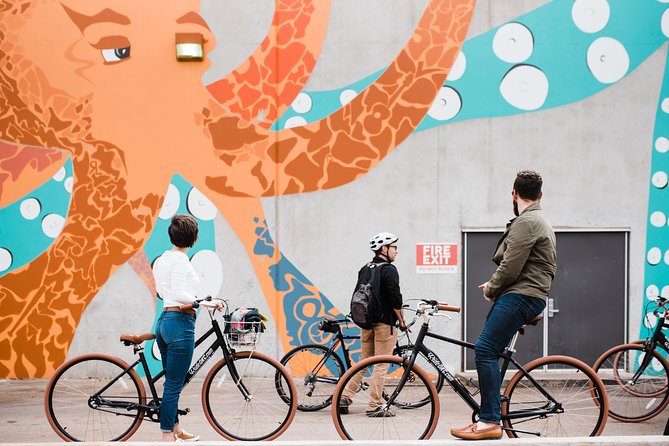
In Bricktown, you’ll look at the Bricktown Canal and the water taxi area, plus public art murals and sculptures. This is one of the longer stops (about 15 minutes), which makes sense because it’s the most “human scale” part of the tour.
The guide connects the art to the district’s history, so you’re not just looking at color and shapes—you’re learning what the city chose to celebrate in public.
If you’re planning to return later for food or an easy stroll, Bricktown is a good place to do it. You’ll get a clearer sense of what’s where during this bike stop, even if you don’t hop on a water taxi.
Chickasaw Bricktown Ballpark: funding, athletes, and team history
You’ll pass by Chickasaw Bricktown Ballpark and learn how it was funded, plus the background on famous Oklahoma athletes and the team that plays there.
This stop is short, so treat it like a quick history lesson rather than a full stadium tour. Admission is not included, so if you want to go deeper, you’d need separate plans.
Still, it’s a good reminder that Oklahoma City is also a sports city, not only a memorial-and-skyscrapers city.
Jim Thorpe statue: the odds story you can’t ignore
You’ll also discuss the Jim Thorpe statue outside. The guide highlights Thorpe’s unbelievable story of overcoming the odds.
This kind of stop works well on a bike tour because it breaks up the building-heavy rhythm with a story. And it adds a named person to the bigger Oklahoma narrative you’ve been hearing all morning.
Oklahoma County Courthouse: Art Deco design and a controversial origin
Next is the Oklahoma County Courthouse, where you’ll talk about Art Deco design, the architect, and the controversial founding of Oklahoma.
Art Deco can look like just another style at a glance, but here it’s tied to power, planning, and how cities set rules. If you’re curious about why governments and institutions often favor bold, formal design, this stop gives you a starting point.
This is a free stop, and it’s one of the more “architecture you can read” moments—especially if you pay attention to the shape language and the way the building presents itself.
The Skirvin Hilton: Art Deco + Neoclassical, plus ghosts and legends
At the Skirvin Hilton Oklahoma City, you’ll observe a historic building that mixes Art Deco and Neoclassical elements. The guide talks about architecture, ghosts, and urban legends.
This is the lightest, most story-forward architectural stop on the route. Even if you’re not into ghost stories, you can still enjoy the way the building carries local folklore. It also gives you a break from the heavier history while keeping the architecture theme front and center.
Centennial Land Run Monument: the largest bronze of its kind
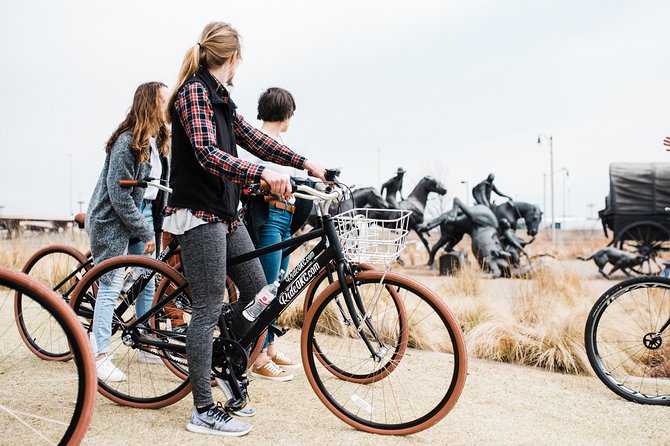
Then you’ll reach Centennial Land Run Monument. The big takeaway here is scale: you’ll see the world’s largest freestanding bronze monument, plus the artist and the history behind Oklahoma’s founding.
This stop is free and about 10 minutes, which is enough to get the symbolism and the story without rushing.
If you want photos, this is one of your best moments. The monument is made to be seen, not just passed.
Myriad Botanical Gardens: starting with the park’s story
The tour begins at Myriad Botanical Gardens with a short orientation and history of the park and how it came to be.
Even if you’re not spending long in the gardens themselves, knowing why the park exists helps you interpret what you’re seeing. Gardens in cities often reflect funding priorities, civic planning, and community goals—and that’s what the guide’s quick intro sets up.
This stop is free.
Devon Energy Center: Oklahoma’s largest skyscraper, explained fast
Next is Devon Energy Center, Oklahoma’s largest skyscraper. You’ll get the modern design details, the architect, and some key facts.
The time here is brief, so you’ll want to focus on the building’s overall form and the guide’s explanations rather than trying to read every feature. It’s perfect for getting a baseline understanding of what makes the tallest buildings in town feel distinct.
This stop is free and timed to keep the tour moving.
Colcord Hotel: Oklahoma City’s first skyscraper and a rags-to-riches story
You’ll see Colcord Hotel Oklahoma City, Curio Collection by Hilton, known as Oklahoma City’s first skyscraper. The guide shares the rags-to-riches story of the person behind it and points out key architectural design elements.
This is one of those stops where the architecture and the human story reinforce each other. It also gives you a sense of how downtown Oklahoma City grew from ambition into skyline.
Free stop, short viewing time—good for learning without committing your whole schedule.
Leadership Square and its monumental sculpture
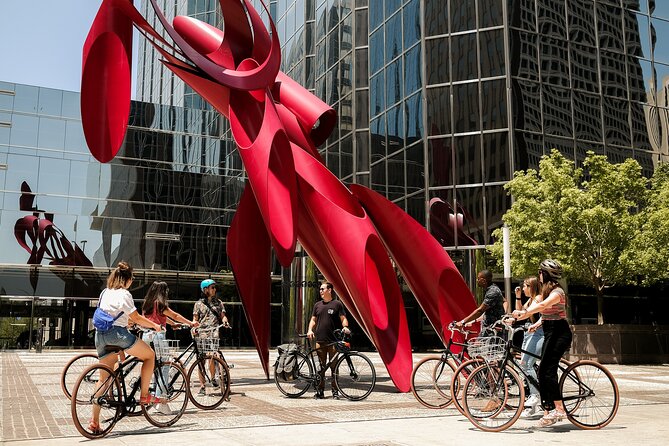
At Leadership Square, you’ll talk about the large glass building and the famous monumental sculpture out front.
This part of the tour is a good reminder that downtown architecture isn’t only about old stone and ornate historic buildings. There are also modern civic spaces designed to feel transparent and forward-looking.
This stop is free and should fit nicely if you like mixing decades of design in one morning.
Civic Center and WPA buildings from the Great Depression era
You’ll also see the Civic Center, which contains WPA buildings constructed during the Great Depression.
WPA-era work can feel hidden unless someone points it out. Having a guide explain that connection gives you a lens for seeing public buildings as part of national economic recovery efforts—not just local projects.
Free stop, quick pass.
Midtown Plaza Court: adaptive reuse and timeless style
In Midtown Plaza Court, you’ll look at historic architecture and hear about its original use and adaptive reuse. You’ll also get why the style still feels current.
This is a practical stop. Many visitors only notice brand-new development. Adaptive reuse is where cities keep their identity while adjusting to new needs, and this tour points you to that idea in a way you can see.
Oklahoma Case Study House: modern houses and how the neighborhood formed
Next is the Oklahoma Case Study House area, described as a lesser-known district full of ultra modern houses. The guide explains the designs, the architects, and how the neighborhood came to be.
This is for the architecture nerd in you—the part of OKC that doesn’t scream skyscraper but quietly shows modern ideas in residential form.
It’s free and about 5 minutes, so the best way to use the time is to look for patterns the guide mentions, not to memorize every building detail.
Federal Building replacement: design changes after bombing
At the Federal Building area, you’ll see the newer building that replaced the Federal Building that was bombed. You’ll hear about the design, the architect, and new codes put in place to prevent future acts of terrorism.
This is another heavy chapter, but the key value here is practical: how architecture and regulation changed after tragedy. You’ll understand the connection between safety planning and how buildings are designed.
Free stop.
Kerr Park: your best downtown skyline viewpoint
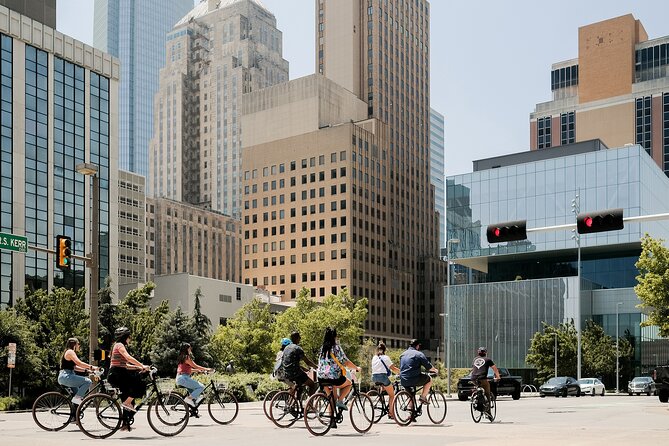
Finally, you’ll finish at Kerr Park, often called one of the best spots in OKC for skyline views. The guide points out surrounding skyscrapers, their design, and who occupies them.
This last stop is where everything you’ve seen earlier clicks. You’ve learned what those buildings represent, and now you see their relationships to each other on the horizon.
It’s free, about 6 minutes, and it’s a strong closer for the tour.
What makes this tour worth $64.99
At $64.99 per person, you’re paying for a lot more than a few photos. The price covers the guide, a bike you can ride immediately, a helmet, and bottled water. That’s meaningful because downtown walking tours often charge similarly while leaving you to solve your own transport and water needs.
Also, you get a tight sample of many kinds of design: historic settlement (Overholser Mansion), memorial architecture (National Memorial), and big-city modern work (Devon Center and beyond). If you’re only in Oklahoma City for a short time, this tour helps you decide what to return to later—whether that’s a museum add-on, a longer stop in Bricktown, or a second look at the skyline from Kerr Park.
Yes, a few spots have separate admission costs (like the mansion, the National Memorial & Museum, and the ballpark). But even without paid entry, you still get the guide’s context for what those places mean.
Who should book this, and who should skip it
This tour is a great fit if you:
- Want a first-time grasp of downtown Oklahoma City’s art and architecture.
- Enjoy stories that connect buildings to people and events.
- Like guided conversation, not just sightseeing.
- Prefer getting your bearings fast with a planned route.
You might want to skip or think carefully if you:
- Don’t feel comfortable biking for stretches through downtown.
- Are expecting long museum time at the memorial or inside historic sites (the stop lengths are brief).
- Can’t deal with date changes if weather is poor or if the minimum group size isn’t met.
On the guide side, I’ll also note something useful from real-world experience: the tour guide Aaron is known for being engaging, answering questions, and keeping the tone fun. If you like explanations that feel human, that’s a good sign.
Book it? My straight answer
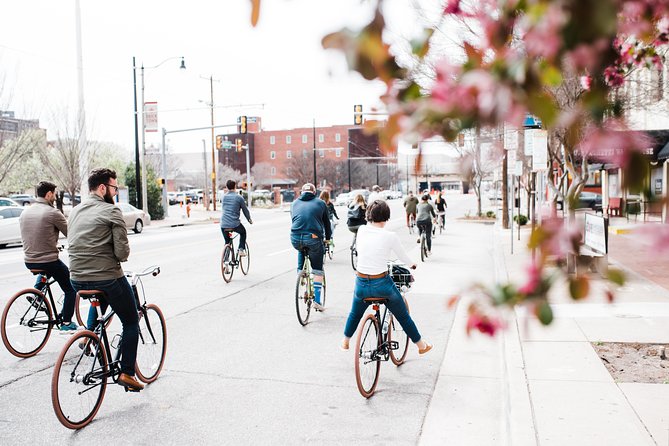
If you’re planning a short visit and you want the downtown story—art, architecture, and major OKC landmarks—this is a solid choice. The small-group size helps you get more attention, and the included bike setup makes it easy to enjoy the ride without extra rentals or prep.
If you’re the type who only wants indoor time or you’re sensitive to schedule uncertainty, adjust your expectations. Some key stops aren’t included for admission, and the tour depends on good weather and a minimum group size.
FAQ
How long is the Art and Architecture Bike Tour?
It runs about 2 hours 30 minutes.
What’s included in the ticket price?
You get bottled water, a helmet, use of the bicycle, and a knowledgeable guide.
Where does the tour start?
The meeting point is Ride OKC Bike Tours and Rentals, 428 W California Ave, Oklahoma City, OK 73102. The tour ends back at the meeting point.
What times does the tour run?
The start time is 10:00am.
Are admissions to all stops included?
No. Henry Overholser Mansion, the Oklahoma City National Memorial & Museum, and Chickasaw Bricktown Ballpark are marked as not included. Other stops are listed as free.
What happens if the tour can’t run due to weather or group size?
The experience requires good weather. If it’s canceled due to poor weather, you’ll be offered a different date or a full refund. It also requires a minimum number of travelers; if that minimum isn’t met, you’ll be offered a different date or a full refund.