REVIEW · BRUSSELS
Brussels: Art Nouveau Private Walking Tour with Horta Museum
Book on GetYourGuide →Operated by LocalCoolTour · Bookable on GetYourGuide
Art Nouveau in Brussels clicks when you have a guide. You get private, expert-led walking time and skip-the-line entry to the Horta Museum, so the details don’t blur into random pretty buildings. I love how the tour connects names like Victor Horta to what you can actually see on the street, and I especially like the focus on the Horta House Museum as the payoff stop where style turns into lived-in design.
One thing to weigh: most other stops are exteriors only, so the $150 price is really about the guided storytelling plus the Horta House visit, not about going inside multiple houses.
In This Review
- Key highlights you’ll feel right away
- Why Brussels’ Art Nouveau reads like a story on foot
- Café Belga meeting point: get the route right in the first minutes
- Delune Area façades: Sterner’s Studio and the early Art Nouveau vibe
- Hôtel Solvay and Hôtel Tassel exteriors: light, craft, and attitude
- Hôtel Tassel (outside only, but it’s the one you’ll remember)
- Hôtel Solvay (about light and finish)
- Roosenboom, Otlet, and Ciamberlani: symbolic details you can’t unsee
- Maison Hankar and Maison Hannon: where Art Nouveau bridges eras
- Maison Hankar: bridging historicism and innovation
- Maison Hannon: dreamlike artistry with refined design
- Chaussée de Charleroi and Rue Defacqz: reading the city’s shift
- The Horta Museum stop: where skip-the-line turns into real time saved
- Price and logistics: what $150 buys you (and what it doesn’t)
- Group style, languages, and pacing: private means tailored, not rushed
- Who should book this tour
- Should you book this Brussels Art Nouveau private tour?
Key highlights you’ll feel right away
- Skip-the-line Horta Museum access with an express security check
- Private guide (English, French, German) who explains what you’re looking at
- Delune Area + Sterner’s Studio façades to start the Art Nouveau story early
- Hotel Tassel and Hotel Solvay exteriors for the movement’s signature look
- A timed route (~3 hours) that keeps the walk efficient and focused
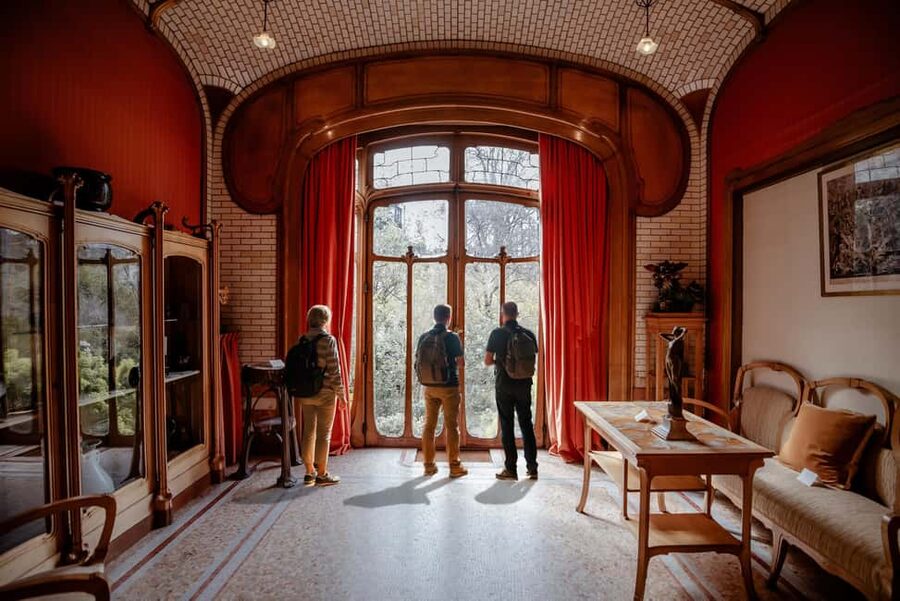
- Horta House Museum guided visit (~41 minutes) inside the architect’s home
Why Brussels’ Art Nouveau reads like a story on foot
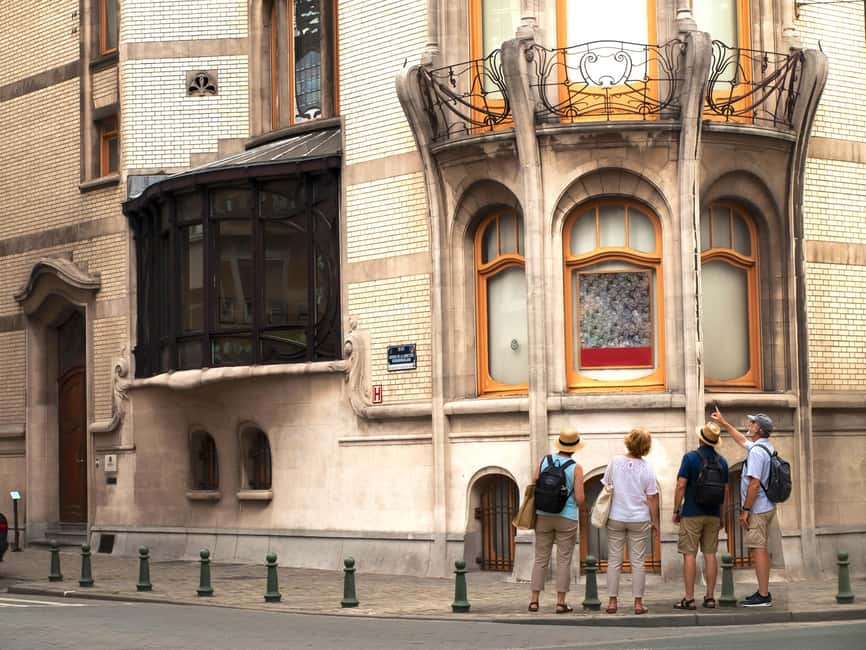
Brussels learned how to express “modern life” in the early 1900s, and Art Nouveau is how it spoke. The shapes, the ironwork, the way windows and doors look like they belong to one breathing organism—those choices weren’t random decoration. On this kind of walking tour, you start seeing patterns: plant-like curves, handcraft details, and a new way of thinking about architecture as design down to the smallest element.
The big value here is that you’re not just moving from famous address to famous address. You’re getting a guide who ties what you see to why it mattered in Brussels. That turns a long list of buildings into a single timeline you can follow, block by block.
You can also read our reviews of more tours and experiences in Brussels.
Café Belga meeting point: get the route right in the first minutes
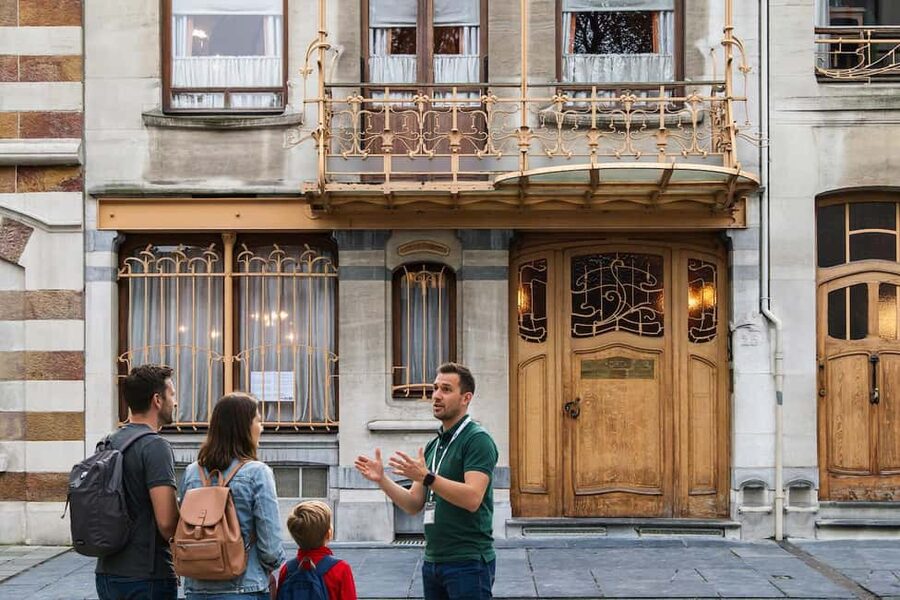
Your day starts at the entrance of Café Belga. The early part matters more than you’d think, because Art Nouveau is full of visual cues that are easiest to spot when you know what your guide is going to point out next.
This tour runs about 3 hours as a private group, so the pace stays human. You’ll do short passes where your guide gives you what to look for, then you’ll pause near key façades. If you like street-level architecture—corner details, window symmetry breaking, unusual ornament—this format works well.
Tip: wear shoes you can trust. Even with a “walking tour” label, the stops are close enough that you’ll likely spend most of your time on your feet, stopping and starting through neighborhoods.
Delune Area façades: Sterner’s Studio and the early Art Nouveau vibe
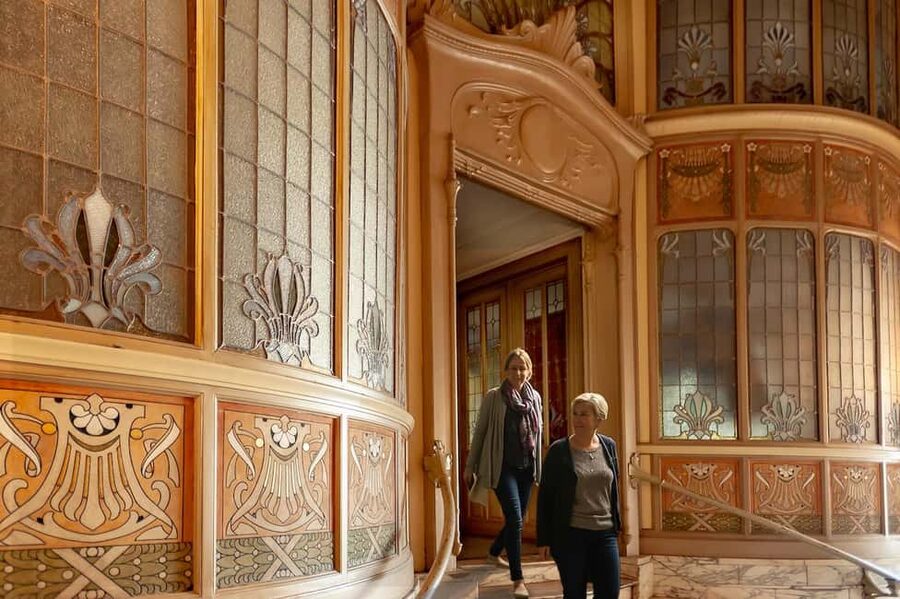
You begin in the Delune Area, with Sterner’s Studio as a standout reference point. This is where you can feel the movement becoming its own style rather than copying older looks. Instead of heavy historical revival, you see smoother, more personal design choices and a strong sense that the building is part of one artistic idea.
This part of the walk works especially well if you’re the type who likes to understand the “why” behind the “wow.” Your guide’s job is to help you spot features that might look like ornament until someone points out how they guide your eye along the façade.
What to look for as you stroll:
- How lines curve instead of snapping straight
- How decorative elements connect across windows and doors
- Any repeating motifs that feel nature-inspired but are still architectural
Hôtel Solvay and Hôtel Tassel exteriors: light, craft, and attitude
The tour brings you past Hôtel Solvay and then Hôtel Tassel, both closely tied to Victor Horta’s reputation for making Art Nouveau feel both artistic and structural.
Hôtel Tassel (outside only, but it’s the one you’ll remember)
You visit the exterior of Hôtel Tassel, widely seen as the world’s first true Art Nouveau house. From the street, you’ll likely notice how the façade doesn’t behave like a traditional box. The design language feels new: curves, asymmetry, and an emphasis on craftsmanship you can sense even without entering.
Hôtel Solvay (about light and finish)
With Hôtel Solvay, the focus is on light, color, and workmanship—exactly the kind of Art Nouveau obsession that makes the style more than skin-deep. You might find yourself looking at how the building’s surfaces and openings are meant to shape interior experience, even from the outside.
A quick reality check: since these are exterior views, you won’t get to see the full interior drama here. But that’s also why the Horta Museum stop later is such a payoff—you’ll go from street impressions to the real thing inside.
Roosenboom, Otlet, and Ciamberlani: symbolic details you can’t unsee
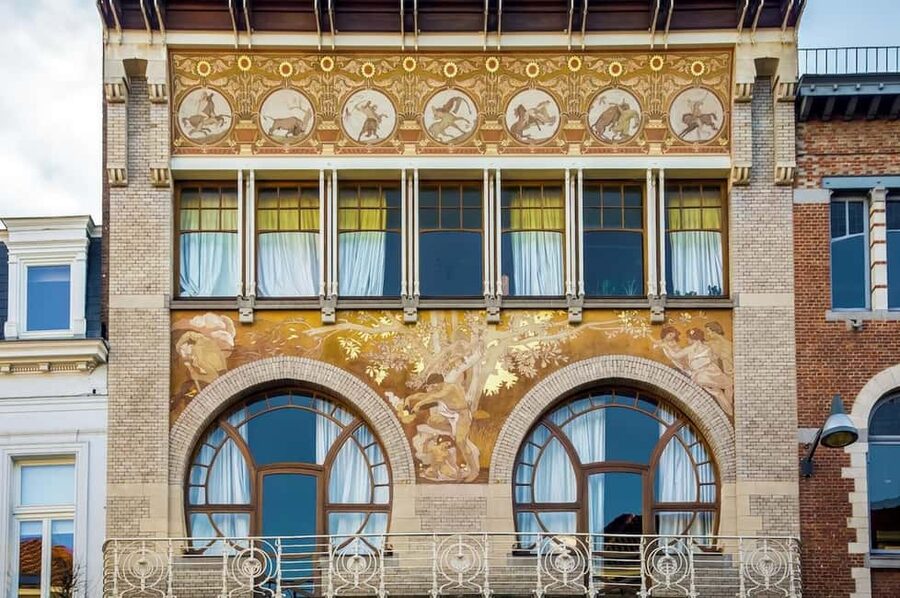
The middle stretch turns more “detective work” than sightseeing. You’ll pass Maison Roosenboom, then Hotel Otlet, and you’ll also spot Hotel Ciamberlani with its symbolic design cues.
Maison Roosenboom is described as architecture becoming a total work of art. That phrase matters because it’s a reminder that Art Nouveau didn’t want “building” to mean just walls and windows. It aimed for unity—design that feels like it belongs to one mind, one vision, from the façade down through the interior.
Hotel Otlet is framed around intellectual elegance. That’s useful guidance: when you see façade details that look more restrained, more composed, or more concept-driven than purely decorative, your guide can help you connect them to the idea of status, modern thinking, and the personality of the owner.
And then Hotel Ciamberlani comes in with symbolic details. That means you’re not just scanning for pretty curls—you’re looking for meaningful elements. Even if you don’t know the exact symbolism, you’ll start to learn how these buildings communicate.
Maison Hankar and Maison Hannon: where Art Nouveau bridges eras
Near the later part of the walk you’ll see Maison Hankar and Maison Hannon (Saint-Gilles).
Maison Hankar: bridging historicism and innovation
Maison Hankar is described as pivotal for creating a bridge between historicism and innovation. In practice, that can mean the design still carries recognizable “old world” building language, but it’s being reworked with modern Art Nouveau ideas—so it feels like a transition stage rather than a hard break.
If you’re the kind of person who likes architectural evolution (not just style snapshots), this stop is a good one. Your guide’s explanations here help you understand how Brussels changed without throwing everything away at once.
Maison Hannon: dreamlike artistry with refined design
Maison Hannon gets described as dreamlike artistry with refined design. That’s the vibe you’ll want to catch from the street: a sense that the building wants to feel slightly more theatrical than a plain functional structure, but still controlled and crafted.
If you’ve been enjoying the “read the façade” part of this tour, these last exteriors help you tie together the movement’s range—from symbolic and intellectual to more dreamlike and expressive.
Chaussée de Charleroi and Rue Defacqz: reading the city’s shift
As you move along Chaussée de Charleroi (and also Rue Defacqz, depending on the route), you’re basically walking through Brussels’ architectural transition. The tour frames this as a shift from neoclassical to modern.
Here’s why that matters: Art Nouveau didn’t appear in a vacuum. It was a response to what came before, and the streets around it show that shift. Even if you’re not doing architecture research, you’ll notice differences in how façades are organized, how ornament is used, and how modern ideas show up in building rhythm.
This stretch is also a good moment to ask your guide for a comparison: “What would you point out if someone had seen only one Art Nouveau building?” They can show you how to build a mental checklist.
The Horta Museum stop: where skip-the-line turns into real time saved
The tour ends with Horta Museum with skip-the-line tickets and a guided visit inside for about 41 minutes. This is where the private format pays off, because you’re not just looking at a museum plan. You’re stepping into the architect’s own home experience—exactly the kind of context that street exteriors can’t provide.
The tour also notes an express security check. That matters because museum entry can eat up your energy. Here, the skip-the-line approach helps you spend more of your limited time on the art itself and less on queues.
What you’ll feel during the visit:
- How Art Nouveau design works when it’s not just outside
- How the “total work of art” idea can show up in real rooms
- How light and craftsmanship become part of daily life, not only visual drama
And if you’re carrying impressions from Hôtel Tassel and Hôtel Solvay, the museum visit helps you confirm what you thought you saw. It’s one thing to admire a façade curve; it’s another to understand how design choices flow through a home.
Price and logistics: what $150 buys you (and what it doesn’t)
At $150 per person for a 3-hour private tour, you’re paying for three things:
- A private expert guide
- Skip-the-line Horta Museum access
- Guided time inside the Horta House Museum
What you’re not paying for (and you shouldn’t expect):
- Tickets for other houses or hotels beyond the museum. The rest of the key sites on the route are visited from the exterior.
So the value depends on your interests. If you love architecture but you mainly want the storytelling and key façades, you’ll get your money’s worth. If your dream is to enter multiple private homes, you may need to add extra ticketed visits on your own—because this tour is intentionally focused and time-boxed.
One practical caution to keep you safe: a properly booked Horta Museum entry is the heart of the schedule. If you want to avoid stress, confirm ahead of time that your Horta Museum skip-the-line tickets are secured for your specific date and group. There’s at least one instance where a guide (Christophe) reportedly didn’t have the Horta Museum tickets reserved and the visit plan shifted. You don’t need to panic, but you do need to be proactive.
Group style, languages, and pacing: private means tailored, not rushed
This is a private group tour. That typically means you can get answers in the moment and adjust the pace to what you care about—ornament details, architectural timeline, or simply enjoying the walk without feeling herded.
The guide languages listed are English, French, and German, so you can match your comfort level. This matters because Art Nouveau details can be subtle, and having explanations in your strongest language helps your eyes catch what you might otherwise miss.
Wheelchair accessibility is listed, which is good news if mobility is a factor. The text doesn’t specify the exact route smoothness, so if you need specific accommodations, ask for route details when you book.
Who should book this tour
Book this if:
- You’re an architecture fan who wants context, not just photos
- You care about Victor Horta and want the Horta House visit as the main highlight
- You like walking tours with structured stops, short explanations, and purposeful pacing
Skip it (or pair it with extra visits) if:
- You mainly want to go inside lots of buildings beyond the Horta Museum
- You’re only interested in one or two famous façades and don’t need the guided connections
Should you book this Brussels Art Nouveau private tour?
Yes, with one smart caveat.
I think it’s a strong choice because the structure makes sense: exteriors across Brussels set up the story, and the guided Horta Museum visit gives you the inside understanding you can’t get from the street. The skip-the-line access is also a real time-saver for a tour that already packs a lot into 3 hours.
My only “do it right” advice: make sure your Horta Museum entry is locked in for your date and time window. If that’s handled, you’ll come away seeing Art Nouveau as a coherent idea, not just a list of beautiful buildings.