REVIEW · TURIN
Turin: Art Nouveau Walking Tour with Coffee
Book on GetYourGuide →Operated by Keys of Italy/Piemonte · Bookable on GetYourGuide
Art Nouveau in Turin makes street corners teach you. On this 2-hour guided walk, you’ll get a tight, friendly route through the city’s best-looking buildings, plus a coffee break that fits the theme. I especially love how the guide connects the style to real design choices you can spot on the facades, like the House of Dragons’ neo-Gothic French flavor mixed with Art Nouveau, and I also love the way the itinerary lands on big visual “wow” moments such as Casa Fenoglio-Lafleur’s floral details and polychrome glass.
One possible drawback: at $93 per person, this is pricier than a free self-guided stroll. If you mainly want photos with zero explanation, you might feel you could do the same walk on your own—though the guidance is what turns the details into something you actually understand.
In This Review
- Key highlights to know before you go
- Meeting at Principi d’Acaja and getting your bearings
- House of Dragons: the neo-Gothic meets Art Nouveau lesson
- Casa Fenoglio-Lafleur: floral friezes and polychrome glass
- Villino Raby: Pietro Fenoglio’s signature, with Domenico Smeriglio details
- Chiesa di Gesù Nazareno: a bell tower with Art Nouveau influences
- Coffee break in an Art Nouveau café: rest with theme
- Price and value: what $93 buys you in Turin
- Who this tour fits best (and who should reconsider)
- Should you book this Art Nouveau walking tour?
- FAQ
- Where is the meeting point for the tour?
- How long is the Art Nouveau walking tour?
- What is included in the price?
- Is hotel pickup or drop-off included?
- How much does it cost?
- Which languages are available for the live guide?
- Is the group size kept small?
- Is the tour wheelchair accessible?
- What stops will we see during the walk?
- Can I cancel and get a refund?
- Can I reserve now and pay later?
Key highlights to know before you go
- Start at Principi d’Acaja Metro so you can get oriented fast and begin walking immediately.
- House of Dragons shows the style mix Turin became known for, blending neo-Gothic and Art Nouveau in one façade.
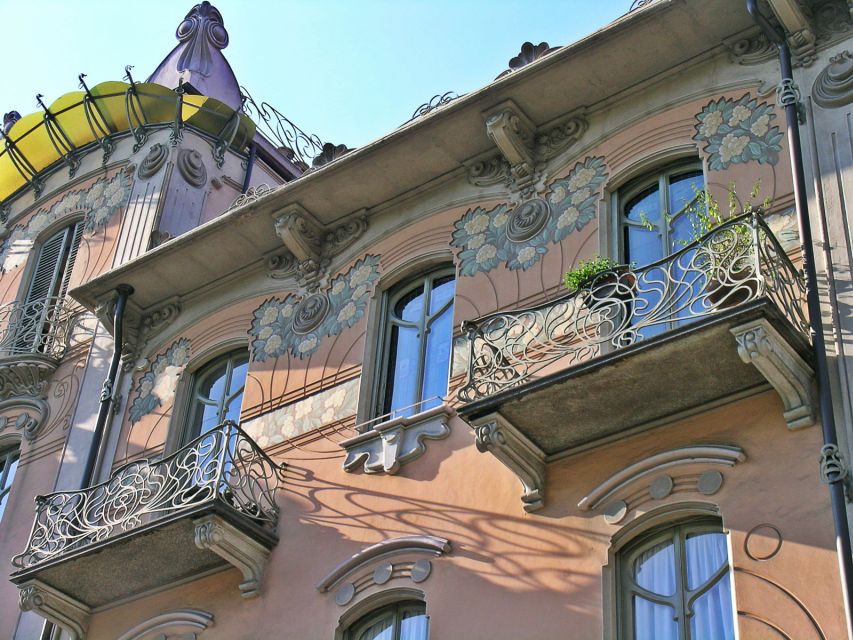
- Casa Fenoglio-Lafleur is all about close-up textures: floral friezes, wrought-iron balconies, and polychrome glass.
- Villino Raby spotlights Pietro Fenoglio’s work, with wrought-iron railings, a bow-window, and decorations by Domenico Smeriglio.
- Chiesa di Gesù Nazareno adds the church angle: early 20th-century design in neo-Gothic form with Art Nouveau influences.
- Coffee at a themed café gives you a real rest break in a place that matches the architecture.
Meeting at Principi d’Acaja and getting your bearings
I like tours that start clean and simple, and this one does. You meet your guide in front of the Metro stop of Principi d’Acaja, then you’re walking right away through a focused slice of Turin that’s tied to the city’s Art Nouveau identity.
This is a good length for a first look. Two hours is long enough to see multiple standout buildings, yet short enough that you won’t feel dragged around the city for a whole day. And because this is a small group option, you usually get more back-and-forth when you spot something you want explained.
Practical note: wear comfy shoes. The tour is walking, and most of the magic here is in spotting details at street level—facade carvings, window shapes, ironwork, and how different architectural “languages” get mixed.
You can also read our reviews of more tours and experiences in Turin.
House of Dragons: the neo-Gothic meets Art Nouveau lesson
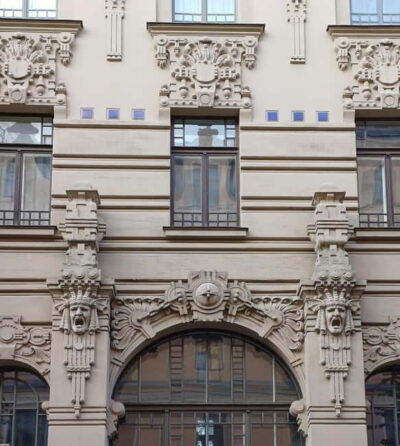
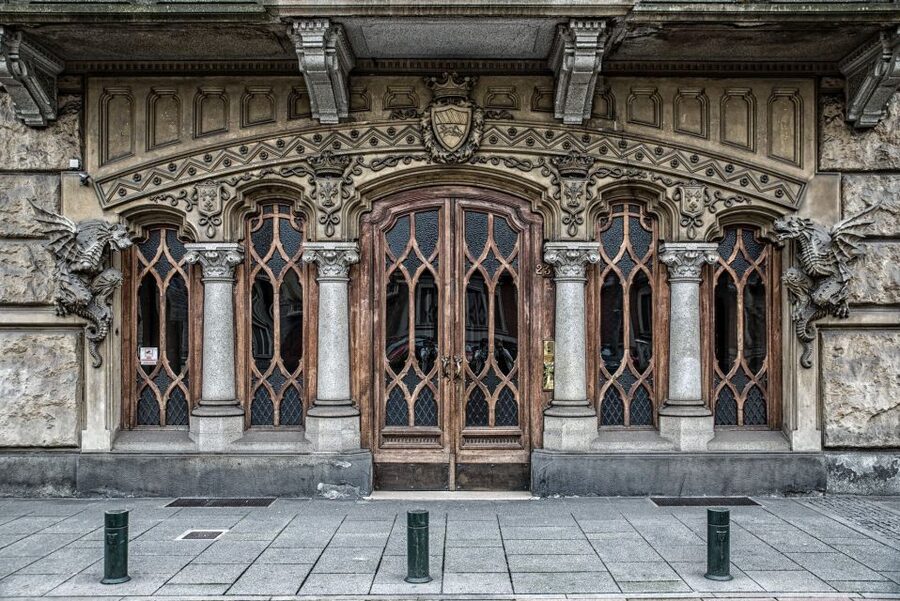
The tour begins with The House of Dragons, and it’s a smart opener. It’s described as one of Turin’s most valuable examples of the city’s “mixing” approach—especially the skilled blend between neo-Gothic French style and Art Nouveau, a combination that took hold around the turn of the 19th and 20th centuries.
This stop matters because it teaches you what to look for. Art Nouveau isn’t only about pretty shapes. It’s also about how designers borrow older styles and then twist them with newer ideas—curves, ornamental detail, and visual drama. When you know the pattern, the next buildings get easier to read.
Also, this is where the “look longer, not faster” mindset pays off. If you’re in rush mode, you’ll miss the point. Stand with your group, let the guide point to the key contrasts, and you’ll start seeing the design logic instead of just admiring the surface.
Casa Fenoglio-Lafleur: floral friezes and polychrome glass
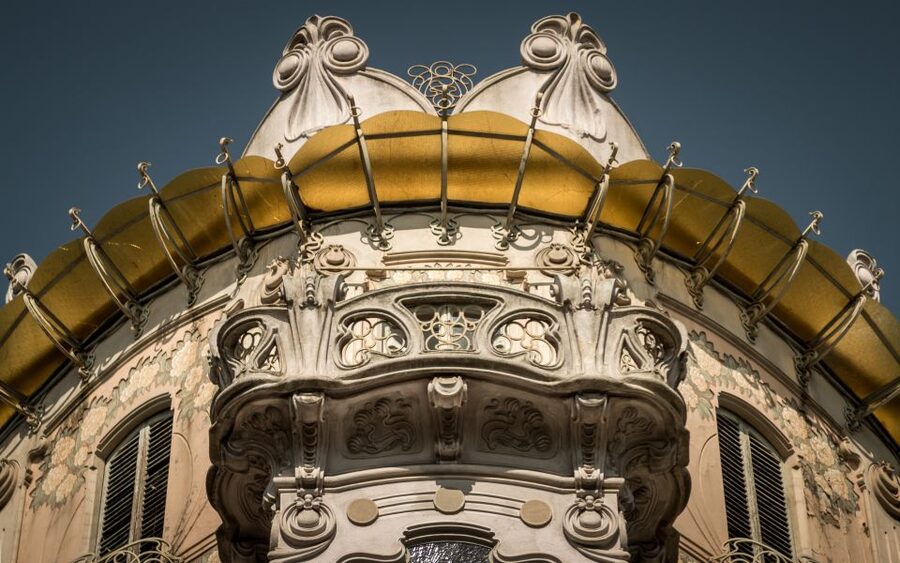
Next up is Casa Fenoglio-Lafleur, and yes, it’s the kind of facade that grabs you immediately. The standout features listed for this house are exactly the kind of things you should train your eye on during the walk:
- Floral friezes covering the facade
- Wrought-iron balconies
- Polychrome glass
That word polychrome matters. Different colors in glass can change the whole “mood” of a building depending on the light outside. If you’ve only seen Art Nouveau in pictures, this is the stop that helps you understand why locals like Turin’s version: it plays with color and detail at the human scale.
What I like here is how the tour turns decoration into a clue. Those floral motifs aren’t random. They connect to the broader Art Nouveau habit of using nature-inspired forms as a visual language—so the building feels alive rather than purely architectural.
One small consideration: if you prefer interior sightseeing, this route is mostly about what you can see from the street and at entrances/exteriors. The upside is that you learn how to “read” facades like a book.
Villino Raby: Pietro Fenoglio’s signature, with Domenico Smeriglio details
After the house and the big facade statement, you move to Villino Raby, one of Pietro Fenoglio’s masterpieces. This stop gets special attention for its ironwork and window design elements, plus decoration credited to Domenico Smeriglio.
Here’s what to watch for during this part of the walk:
- Wrought iron railings that frame the approach
- A large bow-window that pulls the eye outward
- Decorations by Domenico Smeriglio
This is a great moment to slow down and compare. Fenoglio is a key name in Turin’s Art Nouveau story, and Villino Raby helps you see how the style can look both elegant and structured. The iron railings also reinforce something important: in Art Nouveau, metalwork isn’t just functional. It’s ornamental, and it shapes how you perceive the building’s edges.
If you like architecture you can “feel” through details, this is the stop that usually clicks hardest. Not because it’s flashy in the same way as Casa Fenoglio-Lafleur, but because it teaches you how proportion and craft combine.
Chiesa di Gesù Nazareno: a bell tower with Art Nouveau influences
Turin doesn’t only do Art Nouveau in houses. The tour balances that with Chiesa di Gesù Nazareno, built at the start of the 20th century as part of a project by architect Giuseppe Gallo.
The church is described as neo-Gothic in style, but with Art Nouveau influences. The key external feature is the high bell tower, plus a richly decorated facade.
Why this stop is valuable: it expands your understanding of the movement. You’re not just looking at residential ornament. You’re seeing how the same design ideas migrate into religious architecture. That contrast—homes versus church—helps you realize Art Nouveau wasn’t trapped in one category. It was a broader design mindset that artists and architects applied to different kinds of buildings.
One thing I appreciate: you end up with a more complete picture of what Turin’s Art Nouveau “means.” Houses show the everyday face of style. A church shows its public, civic side.
Coffee break in an Art Nouveau café: rest with theme
Then comes the part I genuinely look forward to: the coffee break in a traditional café built in Art Nouveau style.
This isn’t just a random pause. It’s a smart rhythm reset. After scanning facades for details, your eyes and brain need a breather. Having coffee in a setting designed with the same visual language keeps the experience coherent instead of feeling like a detour.
From the tour description, the coffee is positioned as high-quality, and that matches what you should expect from a thoughtful tour stop: you’re not being asked to buy something quick and generic. You’re being offered a moment to sit, people-watch, and compare what you saw on the walk to what you’re seeing inside.
Practical tip: if you’re the kind of person who likes to keep notes, this is when to jot what stood out—floral patterns, ironwork shapes, the bell tower vibe—so it sticks later.
Price and value: what $93 buys you in Turin
Let’s talk money. $93 per person for a 2-hour guided walk with a coffee is not cheap. If you compare it to a do-it-yourself walk where you just follow streets and Google photos, you may wonder if it’s worth it.
Here’s where I think the value lands:
- You’re paying for someone to point out the exact elements that make Turin’s Art Nouveau special, including the design blend in The House of Dragons and the credited names tied to specific buildings.
- You’re getting a structured route, so you don’t waste your limited time guessing which buildings matter most.
- You’re not only visiting architecture—you’re also getting a coffee stop in an Art Nouveau setting, which is part of the experience rather than an add-on.
Also, the tour runs with a live guide in Spanish, Italian, French, or English. A strong guide can turn a facade into a story you remember. And from the feedback, guides like Marina and Laura have delivered the kind of presentation that keeps it interesting without dragging.
That’s the real reason this price can feel justified. You’re not just buying entry to objects. You’re buying interpretation—and in art/design walks, that interpretation is most of the payoff.
Who this tour fits best (and who should reconsider)
This is a great fit if:
- you like architecture as a puzzle and want help spotting what to look for
- you’re visiting Turin for a short time and want a high-density route
- you appreciate when a guide gives context that links style to its era and choices
- you want a break that’s not just standing around
You might reconsider if:
- you’re mainly after quick photos and don’t care about explanation
- you expect long interior visits (the focus described here is on notable exterior examples)
- you’re on a tight budget and would rather spend time exploring on your own
The good news: the walk is only two hours, so even if you’re unsure, it’s a manageable commitment. You get a complete taste of Turin’s Art Nouveau without making it your whole day.
Should you book this Art Nouveau walking tour?
I’d book it if you want a guided way to understand why Turin’s Art Nouveau feels distinct. The route hits the right range: residential statement houses, a Fenoglio masterpiece, and a church that shows the movement traveling beyond homes. Add the coffee break in a themed café, and you get a tidy package that doesn’t just show buildings—it helps you read them.
If you’re a casual observer who only wants the prettiest facades, you could cobble together a self-guided walk. But if you like getting your eyes trained and you appreciate a guide who can explain the design choices clearly, this tour is a solid use of time.
FAQ
Where is the meeting point for the tour?
Meet your guide in front of the Metro station of Principi d’Acaja.
How long is the Art Nouveau walking tour?
The duration is 2 hours.
What is included in the price?
The tour includes a guided walking tour and a coffee break.
Is hotel pickup or drop-off included?
No, hotel pickup and drop-off are not included.
How much does it cost?
The price is $93 per person.
Which languages are available for the live guide?
The live guide is available in Spanish, Italian, French, and English.
Is the group size kept small?
Yes, a small group option is available.
Is the tour wheelchair accessible?
Yes, the tour is wheelchair accessible.
What stops will we see during the walk?
You’ll see The House of Dragons, Casa Fenoglio-Lafleur, Villino Raby, and the Chiesa di Gesù Nazareno, plus a coffee break in a traditional Art Nouveau café.
Can I cancel and get a refund?
Yes. Free cancellation is available up to 24 hours in advance for a full refund.
Can I reserve now and pay later?
Yes, you can reserve now & pay later to keep your plans flexible.
If you tell me your travel month and what neighborhoods you’re staying near, I can suggest an efficient way to pair this with other Turin sights in the same day.