REVIEW · TURIN
Turin, Art Nouveau walking tour and coffee break
Book on Viator →Operated by Keys of Italy · Bookable on Viator
Turin’s Art Nouveau is hiding in plain sight. This 2-hour walk pulls you through Liberty-style details you’d miss on your own, with a real local guiding the story behind the buildings. I especially like the stop-focused format (you’re looking at specific façades, not just passing by), and I love that the route includes a coffee break in an art nouveau bar. One consideration: the tour depends on good weather, and interior access isn’t guaranteed since admission tickets aren’t included.
The group stays small—maximum nine people—so you get time to ask questions while you’re standing right in front of the architecture. You’ll start near public transportation at Principi d’Acaja 10138 Turin, and you’ll end back at the same meeting point, which makes the whole thing easy to plug into a day of sightseeing.
In This Review
- Key Highlights You’ll Actually Feel During the Walk
- Why Liberty-Style Turin Demands a Guide
- The Walk at a Glance: Timing, Group Size, and Mobile Ticket
- Casa La Fleur (Casa Fenoglio): Floral Friezes You Can’t Unsee
- Casa della Vittoria: The House of Dragons in Mixed Styles
- Villino Raby: Pietro Fenoglio’s Masterpiece Moment
- Chiesa di Gesù Nazareno: Neo-Gothic With Liberty Influences
- The Coffee Break Stop: A Reset in Art Nouveau Decor
- What Makes the Guides Matter (Marco, Francesca, Simone)
- Price and Value: Is $82.26 Worth It?
- How to Prepare So You Get the Most Out of It
- Who This Tour Suits Best (and Who Might Skip It)
- Should You Book This Turin Art Nouveau Walk?
- FAQ
- How long is the Turin Art Nouveau walking tour?
- How large is the group?
- Where does the tour start?
- Are admission tickets included for the buildings?
- Does the tour depend on weather?
- Can I cancel and get a full refund?
Key Highlights You’ll Actually Feel During the Walk
- Small group (up to 9) means less rushing and more time at the details
- Liberty-style focus helps you identify the design clues across multiple neighborhoods
- Four major stops keep the route clear and photo-friendly
- Professional local guides (including Marco, Francesca, and Simone) explain what you’re seeing and why it matters
- Coffee break stop built into the flow, so you don’t have to plan it yourself
Why Liberty-Style Turin Demands a Guide
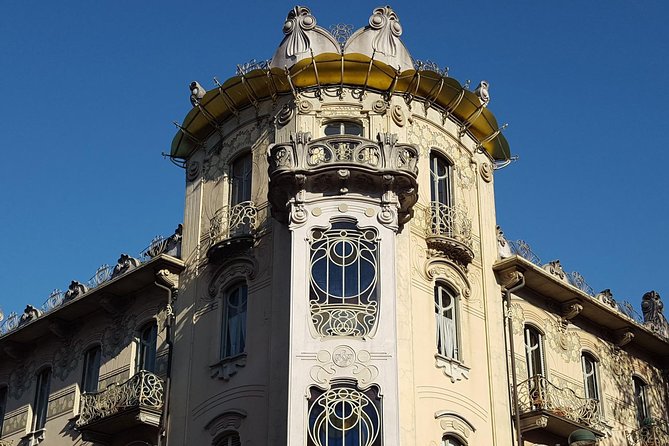
Turin’s Art Nouveau—called Liberty in Italy—doesn’t show up as one grand monument. It’s spread across the city in façades, balconies, stained glass, and church details that quietly compete with more famous sights. A guide turns the walk from sightseeing into pattern-spotting. You start to recognize motifs fast: floral stonework, wrought iron flourishes, and the mix of styles that shows up around the turn of the 1900s.
I like that this tour doesn’t try to cover everything. Instead, it helps you slow down and read the buildings. That’s where the value lives: when you know what to look for, you get more out of the same streets.
You can also read our reviews of more tours and experiences in Turin.
The Walk at a Glance: Timing, Group Size, and Mobile Ticket
This is a 2-hour group walk in central Turin, paced for a relaxed rhythm rather than a sprint. The group is capped at nine travelers, which is big enough for a social feel, but small enough that your questions don’t get lost.
You’ll also use a mobile ticket, so you don’t have to juggle paper. And since the meeting point is near public transportation, you can arrive with less stress than tours that force a long trek to a remote starting spot.
As for entrances: each stop is time-limited (around 20 minutes at the main building points), and the tour notes that admission tickets aren’t included. If you’re hoping to go inside specific places, treat the exterior and shared viewing time as the core experience.
Casa La Fleur (Casa Fenoglio): Floral Friezes You Can’t Unsee
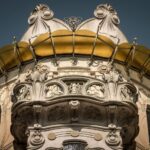
Your first stop is Casa La Fleur, also associated with Casa Fenoglio. Right away, you notice the floral friezes that wrap the façade, plus the wrought iron balconies and polychrome glass. This is the kind of building where a quick look doesn’t do it justice, because the charm is in the repeating small details.
What I like about starting here: it sets your visual vocabulary. After Casa La Fleur, the rest of the route feels more legible. You’re no longer asking, what is Liberty? You’re spotting how designers expressed ornament in stone, metal, and color.
One drawback to plan for: because your time is limited, you’ll want to bring your phone camera—and also decide what you’re prioritizing. If you try to photograph everything, you’ll miss the chance to really compare details from stop to stop.
Casa della Vittoria: The House of Dragons in Mixed Styles
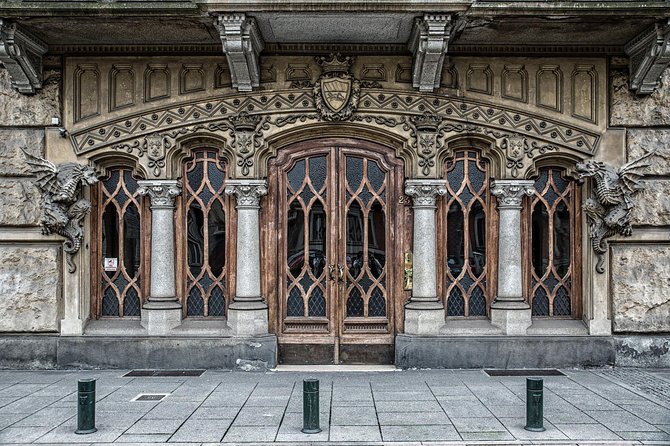
Next comes Casa della Vittoria, nicknamed the House of Dragons. This is where Turin’s Liberty gets extra interesting, because the building blends neo-Gothic French styling with Art Nouveau influences—the kind of stylistic mix that made the period feel modern and theatrical at the time.
From a distance, you get the dramatic silhouette. Up close, the value is in how the design language shifts: you see Gothic cues and then suddenly the Liberty personality shows up through the decorative approach. A good guide helps you connect those dots instead of treating the façade like a random collection of features.
Practical note: because admission isn’t included, your focus here is mainly on what you can see during the allotted time. If you want to go inside, you’ll need to handle that separately.
Villino Raby: Pietro Fenoglio’s Masterpiece Moment
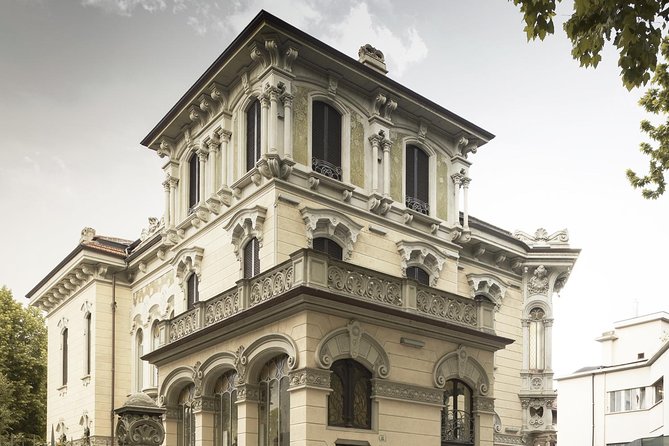
Villino Raby is tied to architect Pietro Fenoglio, and it’s considered one of his standout works. The tour route points you to the wrought iron railings that lead the eye toward the rooms, and then to the large bow-window and the decorative work associated with Domenico Smeriglio.
This stop is great if you like architecture that feels lived-in—because the details look crafted for human scale. The wrought iron is especially important here. It’s not just decoration; it guides where you look next, almost like a design “hand.”
If you’re someone who normally thinks of Art Nouveau as mainly floral and curvy, Villino Raby is a helpful corrective. You still get ornament, but it also has structure and authority.
Chiesa di Gesù Nazareno: Neo-Gothic With Liberty Influences
Your final major stop is the Chiesa di Gesù Nazareno (also referred to as Chiesa di Gesù Nazareno). Built in the decade 1904/1913 from a project by Giuseppe Gallo, it’s a neo-Gothic church with Liberty influences—so it’s not pure Art Nouveau, and that’s part of the point.
The Latin cross plan and the high bell tower help you understand the building’s big geometry before you start noticing surface ornament. Then the façade shows its richly decorated character. This is a good capstone, because churches often make architecture feel more emotional than residential buildings.
Time is tight here, too. You’ll get a chance to take in the overall shape and key façade details, but if you’re the type who likes to wander slowly, consider pairing this tour with a bit of solo time afterward in the area.
The Coffee Break Stop: A Reset in Art Nouveau Decor
The tour includes a short coffee break in a bar known for art nouveau décor. This isn’t just a scheduled break so you can sit down; it’s part of the theme. You’ll shift from street-level architecture to interior design, and you’ll often spot the same design logic—curves, materials, and decorative balance—showing up in a different context.
One practical consideration: the tour description doesn’t spell out what’s included with the coffee, so treat it as a bar stop rather than a guaranteed free drink. The benefit is that you don’t have to hunt for a café with the right vibe while you’re mid-walk.
What Makes the Guides Matter (Marco, Francesca, Simone)
The biggest strength of this experience is how the guides shape your attention. Guides such as Marco, Francesca, and Simone are described as friendly and well-prepared, with a knack for explaining the buildings clearly while keeping the walk moving at a good pace.
You don’t need a degree in architecture to enjoy this tour. What you do need is help translating design details into a story. That’s what these guides bring: context for why Liberty shows up where it does, and what each designer choice is trying to communicate.
And since the group is small, you can ask the natural follow-up questions—like what makes a façade “Liberty” versus just decorative—and get answers on the spot.
Price and Value: Is $82.26 Worth It?
At $82.26 per person for about two hours, the cost works out to roughly $40+ per hour. That’s not “budget,” but it’s also not trying to be a mass-market bus tour. Here’s the value equation as I see it:
- You get a local guide focused on specific buildings, not generic commentary
- You visit multiple major Liberty examples in a short time window
- You get a structured coffee break so your schedule stays simple
- Small group size improves your chance to actually see and understand details
If you enjoy architecture and want your photos to mean something (not just pretty façades), the price can feel fair. If you only want a quick stroll or you’re not interested in design details, you might feel like it’s more time than you wanted to spend on façades.
The good news: because the stops are clear and themed, it’s easy to decide on the spot whether the style clicks for you.
How to Prepare So You Get the Most Out of It
A few simple choices will make your experience smoother:
- Wear shoes you can stand in. This is a walking tour with multiple stops.
- Bring a phone with enough battery for façade details and the polychrome glass moments.
- Decide your priority: floral stonework, wrought iron, church façade, or the style mix.
- Bring light layers if you’re going in shoulder season—weather can change fast.
Also, remember the key limitation: admission tickets aren’t included. Even if you’re tempted to assume you’ll go inside every stop, it’s safer to plan for mostly exterior viewing during the guided time.
Who This Tour Suits Best (and Who Might Skip It)
This tour is a strong fit if you’re the kind of person who pauses when you see floral stonework, loves wrought iron details, or wants to understand the difference between Liberty-style decoration and other design influences around Turin.
It’s also ideal if you like a sociable, small-group vibe. With a maximum of nine people, you’re not stuck in a crowd, and the guide can keep the conversation moving.
Skip it if you’re hoping for long interior visits or if you’re mainly interested in Turin’s classic landmarks with minimal walking and minimal looking. This is a “read the city” experience, not a “tick off monuments” one.
Should You Book This Turin Art Nouveau Walk?
I’d book it if you want Turin to feel specific, not generic. The focused route—Casa La Fleur, Casa della Vittoria, Villino Raby, and Chiesa di Gesù Nazareno—gives you a real sense of how Liberty appears across different building types, from private homes to a church façade.
I’d hesitate if weather is unpredictable for your dates, since the tour requires good weather, or if your main goal is interior access. In that case, you might want to pair this kind of walk with another plan that clearly matches your must-see list.
If Liberty-style architecture is your thing, this tour gives you the right mix of guidance, time at the details, and a built-in break without overcomplicating your schedule.
FAQ
How long is the Turin Art Nouveau walking tour?
It runs for about 2 hours.
How large is the group?
The tour has a maximum of 9 travelers.
Where does the tour start?
It starts at Principi d’Acaja 10138 Turin, Metropolitan City of Turin, Italy.
Are admission tickets included for the buildings?
No. The tour notes that admission ticket(s) aren’t included.
Does the tour depend on weather?
Yes. It requires good weather. If it’s canceled due to poor weather, you’ll be offered a different date or a full refund.
Can I cancel and get a full refund?
Yes. Free cancellation is available if you cancel at least 24 hours in advance of the experience start time.