REVIEW · SPLIT
Secret Split: Socialist Architecture & brutalism – Urban Utopia
Book on Viator →Operated by Walking tours with The Storyteller Croatia · Bookable on Viator
Concrete has a story in Split.
Most first-timers stick to Roman leftovers, but this walk jumps to the 20th century and the post–World War II neighborhoods built to test a new vision for life in concrete. You’ll follow the ideas behind Split 3 and why this experiment later made it into MoMA’s 2018 exhibition Toward a Concrete Utopia.
I really like two things about this experience. First, you’re walking a pedestrian, community-built residential area meant for daily life (including space for children and everyday social routines). Second, you also meet local artists/activists, which keeps the architecture grounded in real people, not just photos and facts. When my guide Mirjana led the discussion, her passion for her city and for how design shapes daily habits made everything click.
One consideration: this is not a nostalgia stroll, so if you only want ancient monuments, you may find the mood more stark and modern than expected. It’s also a walking experience, so plan on time on your feet even though the duration is flexible.
In This Review
- Key Things You’ll Notice on Secret Split
- From Diocletian to Concrete: Why This Tour Feels Different
- Price and Value: Is $113.90 Worth It?
- The Route at a Glance: Where You Start and What the Walk Covers
- Stop 1: Papandopulova ulica and the MoMA Moment
- Stop 2: Split-Dalmatia County and the Demographics Behind the Plan
- Stop 3: Art Activism and Why Communication Belongs in the Streets
- Brutalism Here: It’s Not Just Concrete, It’s Community Design
- Meeting Local Artists and Activists: Why That Part Matters
- How Long It Takes, and How the Pace Usually Works
- Who This Tour Is For (and Who Might Skip It)
- Small Practical Notes That Help You Enjoy It
- Should You Book Secret Split in Split?
- FAQ
- How long is the Secret Split tour?
- Where does the tour start?
- Is the tour only for my group?
- What does the tour cover?
- Are tickets or admissions required for the stops?
- How much does it cost?
- What kind of guide will I have?
- What ticket format is used?
- Are refunds available if I cancel?
- Is the tour easy for most people to join?
Key Things You’ll Notice on Secret Split
- Split 3’s concrete utopia story, tied to MoMA’s 2018 exhibition Toward a Concrete Utopia
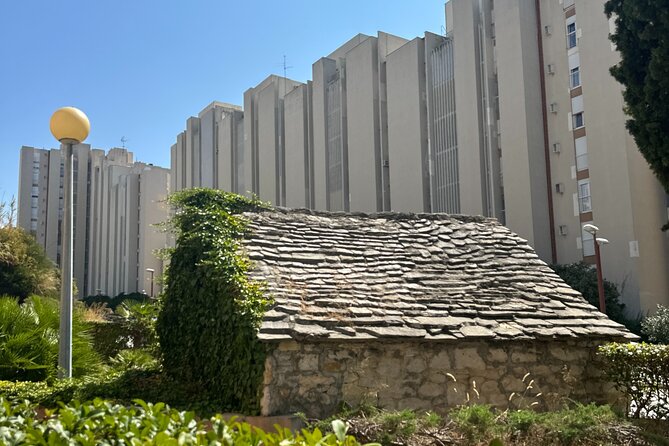
- A city-within-a-city feeling: residential planning plus a pedestrian focus
- Real daily-life geometry: raw forms, clean lines, and open spaces designed for use
- Local arts and activism meet-and-greet, adding a human layer to “socialist architecture”
- A plan shaped by demographics, with a vision that was never fully realized
From Diocletian to Concrete: Why This Tour Feels Different
Split is famous for layers, and most walking tours play it safe: Roman first, then maybe a stop or two that’s still old enough to feel timeless. This tour flips that script. You’re looking at how the city tried to grow after World War II, when planners believed built space could improve society—right down to how children play and how neighbors meet.
What makes it interesting is the framing. You’re not just looking at buildings as objects. You’re learning how people thought about community, space, and daily life. The architecture is concrete and blunt, yes, but the tour’s goal is to show you the intention behind it—and why that intention still affects how the neighborhood works today.
Price and Value: Is $113.90 Worth It?
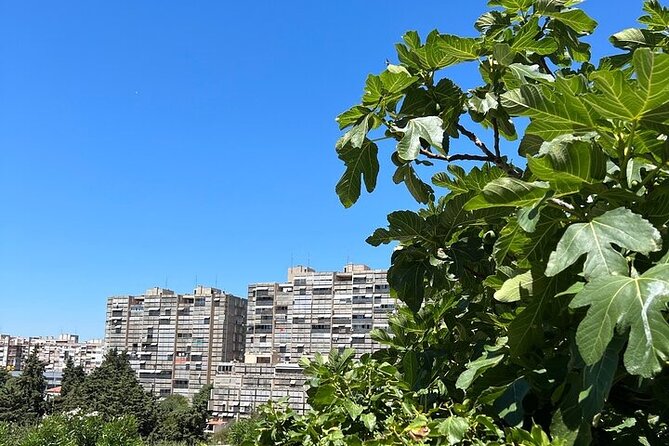
At $113.90 per person, this isn’t the cheapest option in Split. But the value comes from what’s bundled in: a tour with a licensed tourist guide and a certified heritage interpreter, walking through a residential area you probably wouldn’t find on your own, and meeting local artists/activists.
The duration is also reasonable. You’re looking at roughly 1 to 3 hours, depending on how the group moves and how much discussion happens. If you want modern design explained in plain language, with real local voices involved, that price can make sense—especially since it’s a private tour (only your group participates) and you can ask questions without having to shout over a crowd.
You’ll also avoid common cost traps. The stops are listed as admission ticket free, which helps keep the experience straightforward financially. There’s no need to hunt for entry tickets before you meet your guide.
The Route at a Glance: Where You Start and What the Walk Covers
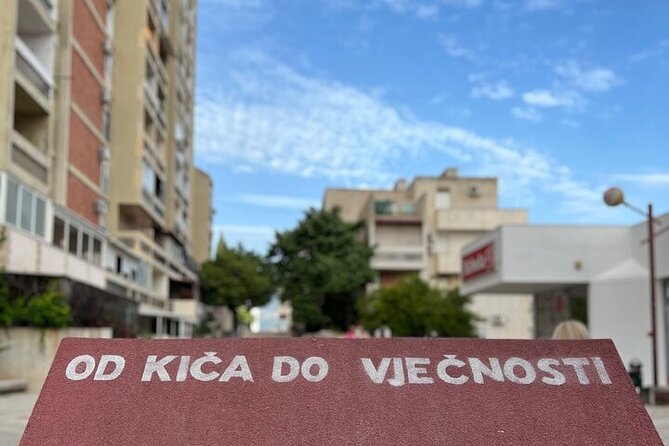
You’ll meet at Ul. Šime Ljubića 3 (21000, Split), and the walk ends back at the same point. The tour runs on a set schedule within the listed season window: Monday to Thursday, 8:00 AM to 7:00 PM, between 05/25/2022 and 09/07/2026.
It’s also built to be easy to fit into a day. The structure is simple: three focused stops, each with its own theme and architecture discussion. You’ll spend about 38 minutes on the first stop, about 25 minutes on the second, and about 35 minutes on the third. That’s enough time to hear the story and look closely without dragging on.
Stop 1: Papandopulova ulica and the MoMA Moment
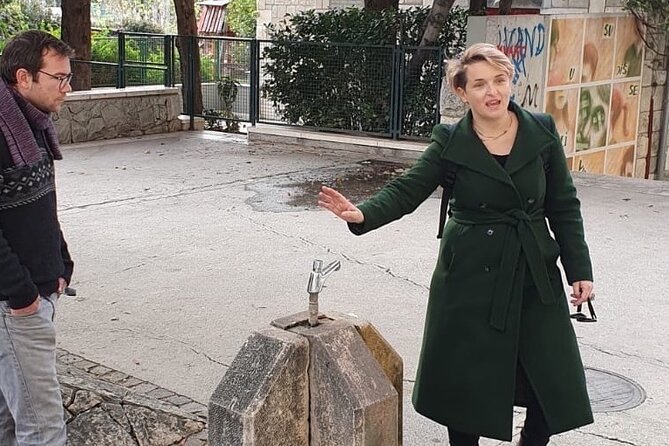
Your first stop takes you to Papandopulova ulica, and this is where the tour’s main “why this matters” story gets a big spotlight. You learn that Split 3, built in the 1970s as an expansion of Split, was one of the last large-scale urban planning efforts in this style. It also links directly to why the neighborhood became internationally visible: it was featured in MoMA’s 2018 exhibition Toward a Concrete Utopia.
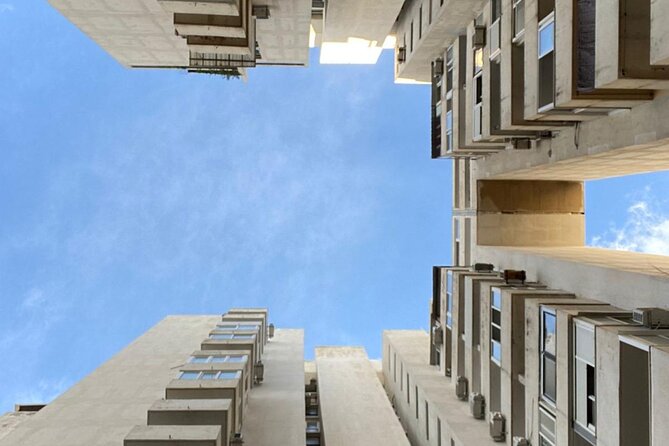
Here’s what I think you’ll appreciate most at this stage. It’s easy to see concrete as cold. But when you connect concrete to planning goals—space, society, daily life—the tone changes. The tour pushes you to look at the layout and the form with intention: the raw surfaces, the clean geometry, and the open spaces don’t just look severe. They were part of a belief that design could protect community routines.
Also, this first stop helps set expectations. By the time you move on, you’re not wandering randomly. You’re walking with a question in your head: What did the planners think life should feel like, and did the built environment support that?
Stop 2: Split-Dalmatia County and the Demographics Behind the Plan
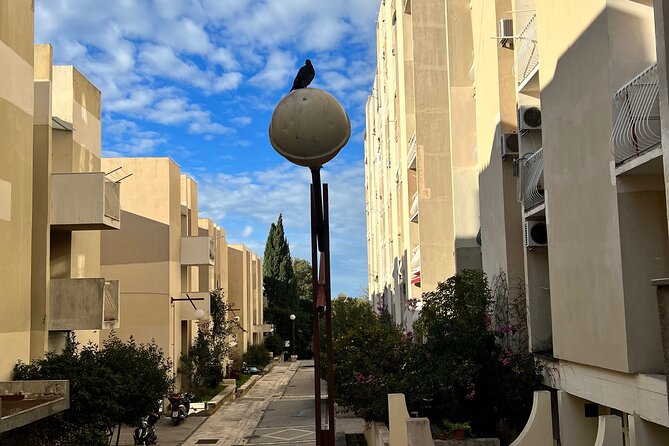
The next phase shifts from the “art museum” angle to the real-world pressure that created this idea. At Split-Dalmatia County, you’ll hear that the Split 3 project was a response to rapid demographic growth. In other words, it wasn’t just an architectural theory. It was a practical attempt to house and organize a growing population.
Then comes an important twist: the project was never fully realized. That detail matters because it keeps the story honest. A utopia is only as strong as the conditions that allow it. When the full plan doesn’t happen, you start to see the gap between vision and reality in the built environment itself.
This stop is where I’d recommend you slow down mentally and read the neighborhood. Don’t treat buildings like they’re from a museum display. Treat them like they were meant to function every day: movement, routines, shared space. You’ll understand why the tour keeps repeating the theme that this wasn’t only about concrete—it was about care.
Stop 3: Art Activism and Why Communication Belongs in the Streets
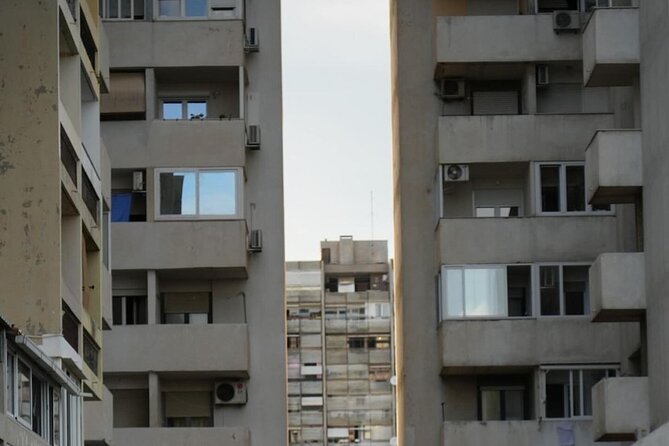
The third stop moves away from pure planning theory and into how people use space for messages. You’ll visit Split, with a focus on art activism and the idea of explicit critical communication.
Even with limited specifics at this stop, the theme is clear: built environments are never neutral. When a neighborhood has strong design intentions, it also becomes a stage for ongoing social meaning. The tour frames this as a response to the need for clear, critical communication, which ties neatly into the larger story of socialist architecture as a test of society.
In practical terms, this is where you’ll feel the tour stop being only about buildings and start being about people. You’re likely to connect the dots between the planners’ intentions and the residents’ lived reality—how design influences behavior, and how communities respond through culture and activism.
Brutalism Here: It’s Not Just Concrete, It’s Community Design
If you’ve ever seen brutalist buildings and thought, that’s a lot of grey, you’re in the right place. This walk doesn’t ask you to love brutalism as a style. It asks you to understand brutalism as an approach with a purpose.
The tour emphasizes that brutalism wasn’t only about the material. It was about how spaces function for people: open spaces, clean geometry, and the idea of neighborhoods built for community and daily life. That’s a key point for your expectations. You’re not being sold a look. You’re being shown a logic.
And because you’re walking through a residential area, you see how architecture supports routine. You’ll likely notice how planning affects movement and meeting points—how a place designed for pedestrians changes what everyday interaction feels like. That shift is often where visitors start to enjoy the aesthetic, because you can sense the human intention behind the hard lines.
Meeting Local Artists and Activists: Why That Part Matters
A lot of architecture tours stop once the guide is done explaining the buildings. This one adds a stronger ingredient: you meet local artists/activists as part of the experience.
That matters because it provides a bridge between design and ongoing culture. You’re not only learning what planners believed. You’re also hearing how creative and civic voices interpret that legacy now. It’s one thing to hear about a socialist urban plan as an experiment. It’s another to talk with people who live alongside the results.
This also explains why the reviews are so consistent about the tour feeling personal and grounded. When your guide leads you with enthusiasm and local perspective—like Mirjana did—you get the sense that the neighborhood isn’t a concept to her. It’s home, conversation, and sometimes debate.
How Long It Takes, and How the Pace Usually Works
This is listed as 1 to 3 hours. That range is helpful because it signals a tour that can flex based on questions and how long you want to linger at each stop.
The itinerary timing is roughly split into three parts: 38 minutes, 25 minutes, and 35 minutes. That means you’ll get enough time to hear the story and observe, but the walk shouldn’t feel like a slow crawl. It’s designed as a compact theme experience rather than a marathon through every corner of Split.
The tour format is also private, meaning only your group participates. For architecture and city-planning discussions, this is a big advantage. You can ask about what you’re seeing without competing with a larger crowd, and your guide can adjust explanations to what your group cares about.
Who This Tour Is For (and Who Might Skip It)
This experience fits best if you like one of these:
- Modern design, city planning, and the logic behind built form
- Brutalism that’s explained with human context
- People who are tired of the same Roman-era walk and want a second angle on Split
- Travelers who enjoy local voices, especially artists and activism
It may not be ideal if you’re only chasing ancient ruins or you prefer tours that focus on landmark monuments with lots of photo stops. This tour is about a neighborhood and its planning worldview. The payoff is in interpretation and observation, not in collecting iconic Roman sights.
Small Practical Notes That Help You Enjoy It
Since this is a walking tour through a residential area, keep your pace realistic. Bring comfortable walking shoes and dress for the season. Also, because the tour is built around three specific stops, being on time matters—you don’t want to miss the opening context that connects Split 3 to the broader story.
Tickets are delivered digitally via mobile ticket, and the stops are listed as admission ticket free, so you’re not juggling entry fees while you’re with the guide.
Should You Book Secret Split in Split?
I’d book it if you want to understand how Split grew beyond its ancient reputation. This tour gives you a modern lens on the city that most visitors never reach, centered on Split 3, socialist planning, and brutalism explained as care—not just concrete.
You should think twice if your trip goals are strictly historical monuments from the far past. This walk is about the near past and the design experiments that shaped how people live today. It’s not nostalgia. It’s interpretation in motion.
If you want a Split tour that makes the city feel like more than postcards, this one has the ingredients: expert interpretation, a concrete utopia story tied to MoMA, and the added reality of meeting local artists/activists.
FAQ
How long is the Secret Split tour?
It lasts about 1 to 3 hours.
Where does the tour start?
The meeting point is Ul. Šime Ljubića 3, 21000, Split, Croatia.
Is the tour only for my group?
Yes. It’s listed as private, so only your group participates.
What does the tour cover?
It focuses on the residential area of Split 3, socialist architecture and brutalism, plus a stop related to art activism, with time built in to meet local artists/activists.
Are tickets or admissions required for the stops?
The stops are listed as admission ticket free.
How much does it cost?
The price is $113.90 per person.
What kind of guide will I have?
You’ll have a licensed tourist guide and a certified heritage interpreter.
What ticket format is used?
You receive a mobile ticket.
Are refunds available if I cancel?
Yes. You can cancel for a full refund up to 24 hours in advance.
Is the tour easy for most people to join?
It’s listed as suitable for most travelers, and service animals are allowed.