REVIEW · HONOLULU
O‘ahu Highlights Private Guided Tour: Landmarks & Architecture
Book on Viator →Operated by DTours · Bookable on Viator
A morning drive on Oʻahu, with key stops done right. This private highlights tour is built for first-time visitors who want history and design in a tight window, from Diamond Head to Iolani Palace. I especially like how private guiding keeps things relaxed and lets you get straight answers without juggling a crowd.
I also like that you get both views and architecture, not just one or the other. You’ll hit signature overlooks like Nuʻuanu Pali Lookout and also slow down for place-specific details at royal sites and historic churches. The only real caution: it’s a short 4-hour run, so the pace is efficient, not leisurely—bring your camera ready and your best walking shoes.
In This Review
- Quick Hits: What Makes This Tour Worth Your Time
- Starting in Waikīkī: From Kalākaua Avenue to Diamond Head Road
- Diamond Head to Iolani Palace: Why Royal Honolulu Hits So Hard
- Kawaiahaʻo Church: Coral Walls and Neoclassical-Mission Style
- Aliʻiolani Hale and the Kamehameha V Courtyard Courthouse Scene
- Nuʻuanu Pali Lookout: The View Plus the Story Behind It
- H-3 and the Tetsuo Harano Tunnel: A Modern Drive Through Koʻolau
- What the 4 Hours Really Feels Like (and Who It Fits Best)
- Value check: $225 per person for a private day
- Service Style: What You’ll Likely Appreciate About the Guide
- Should You Book This Oʻahu Highlights and Architecture Tour?
- FAQ
- What places are included on this O‘ahu highlights and architecture tour?
- How long is the tour?
- Is pickup available?
- Is bottled water included?
- Is this a private tour?
- What’s the starting time window?
- Are animals allowed?
- What if the weather is poor?
- Should I book? (Quick Decision)
Quick Hits: What Makes This Tour Worth Your Time
- Jeff Parker-level guiding that’s flexible, friendly, and good at explaining what you’re actually seeing
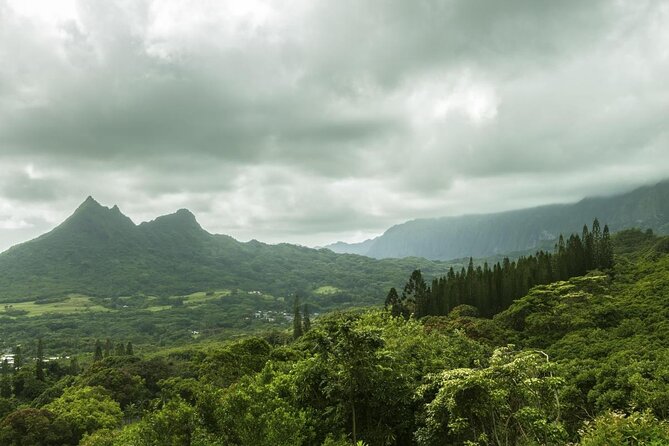
- Diamond Head to Nuʻuanu Pali in one sweep, so you don’t waste a day guessing routes
- Royal and mission-era architecture in real places, including Iolani Palace and Kawaiahaʻo Church
- Kamehameha V statue and courthouse setting at Aliʻiolani Hale for a strong “Hawaiian government” feel
- Bottled water and private transportation, so comfort stays simple
Starting in Waikīkī: From Kalākaua Avenue to Diamond Head Road
You’ll begin on Kalākaua Avenue, the main stretch through Waikīkī where old and new Honolulu sit side by side. It’s a smart first move because it gives you context fast. You can look around and start learning the island’s geography—where the city sits, where the views begin, and what direction you’re traveling next.
From there, you’ll roll toward Diamond Head State Monument. This part matters because Diamond Head isn’t just a postcard peak. The route you take climbs and changes perspective along the southern face, which helps you understand why it’s such a major landmark. If you’re the type who likes to know what’s behind a viewpoint, this drive gives you that setup before you arrive at the bigger vistas.
By the time you’re near Diamond Head Road, you’ll want your camera staged. The payoff is the breakaway-from-sea-level feeling and the chance to look down rocky cliffs toward the ocean. Even if you’ve seen Diamond Head photos before, the angles from the road make it feel real—like you’re standing at the edge of the island’s geography, not just looking at a name on a map.
One practical note: this is a drive-and-stop style day, not a long hike. If you want a full summit trek, you may still want a separate Diamond Head walk. This tour is designed for getting the main landmarks and the architecture story without eating your whole day.
You can also read our reviews of more tours and experiences in Honolulu.

Diamond Head to Iolani Palace: Why Royal Honolulu Hits So Hard
Next comes Iolani Palace, and it’s the kind of stop that changes how you think about Hawaiian history. Built at the request of King David Kalākaua in 1879 and completed in 1882, it’s easy to see why people remember it. The palace wasn’t built to be modest. It was built to show capability and modernity for its time.
What I like about this stop is that it’s not just “a pretty building.” It’s a concrete reminder that the Kingdom of Hawaiʻi was modern and ambitious. Details you’ll hear connected to the palace include indoor plumbing, telephone, and electric lights—technology that was rare on the world stage in the late 1800s. The fact that Iolani Palace remains the only royal residence in the United States is the kind of fact that sticks, because it’s both surprising and easy to picture once you’re standing there.
Architecturally, it also gives you a clear contrast to the religious and civic sites later on. You’re moving from royal residence to missionary-era church style, then to government buildings. The day’s design is smart: it teaches you how different structures reflected different roles in society.
If you care about details, a private guide helps. You can ask quick questions right when something catches your eye—what a feature was used for, what a symbol means, or why a certain design choice was made. That’s where private guiding earns its keep.
Kawaiahaʻo Church: Coral Walls and Neoclassical-Mission Style
Kawaiahaʻo Church is where the tour shifts into architectural storytelling in a big way. Completed in 1842, it’s Oʻahu’s oldest church. It originally served as a place of worship for the royal family, which adds a layer that’s easy to miss if you only focus on the exterior.
Here’s the detail I think you’ll remember: the main walls were made from large coral slabs—1,000-pound pieces. That fact alone makes the building feel physical, not just decorative. You’re looking at a structure that used heavy, local material and turned it into an enduring expression of faith and community.
Stylistically, the church carries neoclassical-Mediterranean Revival architectural influences brought by early missionaries. That mix is interesting because it shows how the Islands adopted outside design ideas while still grounding them in Hawaiian life and materials. In other words, it’s not “imported architecture” in a vacuum. It’s something adapted and built for the place.
There’s also a tone shift. If earlier stops feel grand and political, Kawaiahaʻo feels like a grounding moment. It slows your day just enough to appreciate craftsmanship and how the community used architecture to create identity.
Possible drawback: because the day is packed, you’ll want to manage your expectations. This stop is meaningful, but you won’t have the time to do it like a museum visit with hours of wandering. Come ready to take in the big structural details and you’ll get a lot out of the time.
Aliʻiolani Hale and the Kamehameha V Courtyard Courthouse Scene
Aliʻiolani Hale is next, and it’s a stop that gives you government and power in a single glance. The building served as a seat of government of the Kingdom of Hawaiʻi and later the Republic of Hawaiʻi. Today it houses Hawaii’s Supreme Court, so the structure still plays a role in public life.
Completed in 1874, it was originally designed by Kamehameha V as a royal palace. Then it was recommissioned as his Hawaiian government expanded. That timeline matters because it turns the building into a living record of political evolution—not just a static monument.
If you like “spot the theme” sightseeing, you’ll enjoy the way the tour keeps reinforcing how buildings represent authority. Here you get both the royal-political roots and the present-day function. It’s one of those places where it’s easier to understand history as a sequence, not a list.
In the courtyard, you’ll also see the Kamehameha V statue—gold-leafed and front and center. The statue of Kamehameha the Great is heavily featured in print, television, and movies, but seeing it in the courtyard is different. It’s like watching a familiar image lose its screen-distance and become part of a real site.
This stop is also a good reset. After churches and palaces, Aliʻiolani Hale gives you a different kind of awe: formal, civic, and grounded.
Nuʻuanu Pali Lookout: The View Plus the Story Behind It
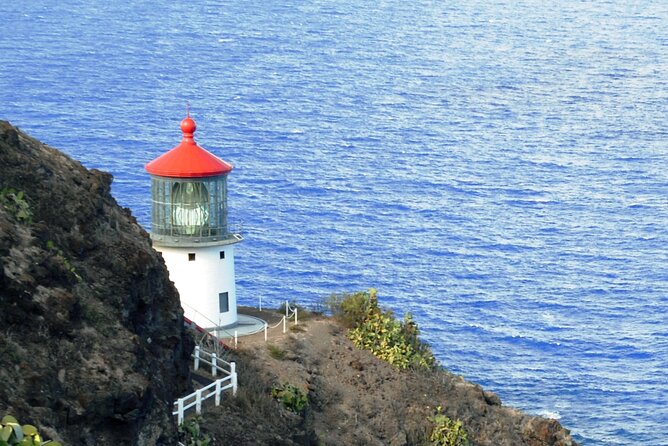
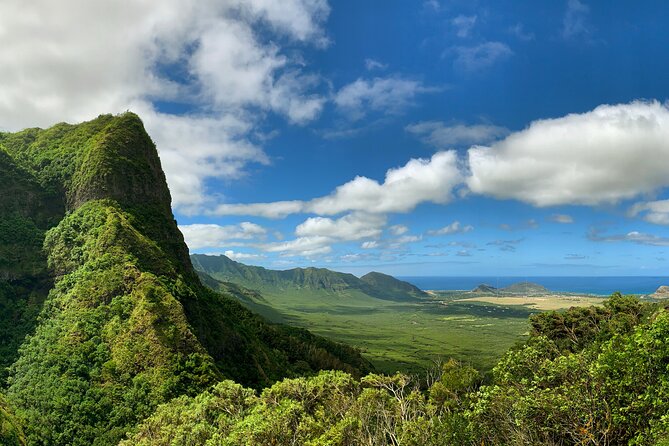
Nuʻuanu Pali Lookout is the emotional and visual high point for a lot of people, and it makes sense. This is where you get breathtaking coastal and cliff views plus mountain views, all tied to Hawaiian history and folklore.
The specific historical note connected with this site is that it’s the location of one of the bloodiest battles in Hawaiian history. That detail makes the viewpoint more than scenery. It gives weight to why people describe the place with strong feeling. When you pair a wide landscape with a sharp historical marker, the stop becomes memorable in a different way.
This is also a place where private guiding helps because you can ask for quick context without slowing everyone else down. If you’re the type who likes to understand what you’re looking at—the ridge lines, the geography, the direction of the coast—your guide can point you in the right places.
And the views really do earn their reputation. You’re looking out from a dramatic elevation, so everything feels “spread out” in a way that beats a flat city panorama. It’s a strong choice for photographers too, especially if you’re trying to bring home a few images that actually say Oʻahu, not just Honolulu.
H-3 and the Tetsuo Harano Tunnel: A Modern Drive Through Koʻolau
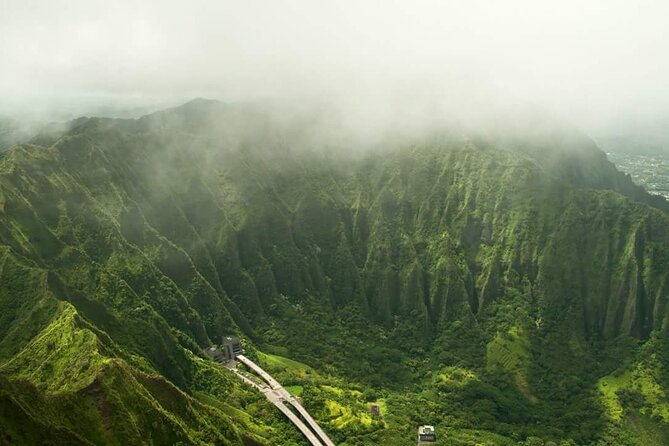
After the lookout, the tour turns toward Interstate H-3, Oʻahu’s main Eastside-Westside route through the Koʻolau Mountain Range. This part is not just transportation. It’s a chance to see how the island’s modern infrastructure threads through rugged terrain.
You’ll also pass through the 5,165-foot-long Tetsuo Harano Tunnel, then pop out onto the Windward side. That contrast can feel like a small time shift: from dramatic cliff views into a road route that cuts through mountains and changes the vibe as you go.
The main reason I think this section works on a landmarks-and-architecture day is balance. You’ve covered royal buildings, churches, and civic architecture. Now you get a taste of engineering and geography—another kind of “how the island connects.”
Camera moment alert: the instructions here are basically the tour’s theme—have your camera ready. Even if you don’t care about highway architecture, you’ll likely notice the rugged look of the Koʻolau range once you’re out of the tunnel.
What the 4 Hours Really Feels Like (and Who It Fits Best)
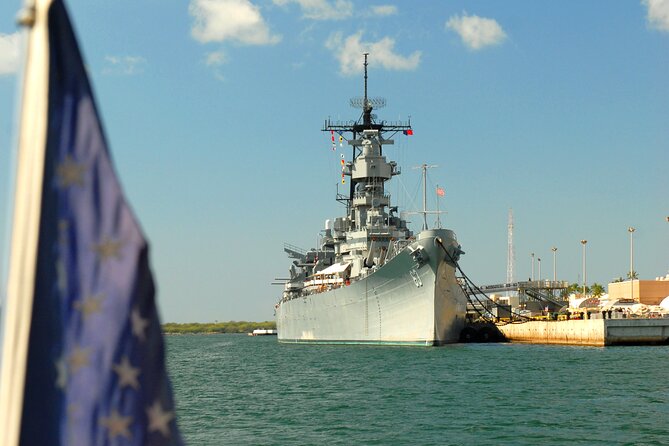
The tour runs about 4 hours, and it’s designed to be efficient without feeling like a sprint. Private transportation helps a lot. You’re not figuring out parking or rerouting buses. You can focus on what you’re seeing and on asking your guide questions.
The start window is early—6:00 AM to 10:00 AM daily. That early timing is smart for two reasons. First, you often get more pleasant conditions for driving and stopping. Second, it keeps your day flexible for beaches and food later.
Because this is private, it’s a good fit for:
- first-time visitors who want strong orientation fast
- couples or small groups who prefer conversation over group noise
- families that want a guided structure without a complicated schedule
- anyone who cares about architecture and wants context, not just locations
It’s less ideal if you want a slow, wandering, all-day adventure. This tour is built to hit major sites and give you the story behind them within a tight window.
Value check: $225 per person for a private day
At $225 per person, the price can feel high at first glance. But you’re paying for private transportation plus a guide who can connect the dots across very different places—Diamond Head views, Iolani Palace’s royal-modern angle, Kawaiahaʻo’s coral-wall construction, Aliʻiolani Hale’s civic role, and Nuʻuanu Pali’s view-and-history impact. You’re not just buying access. You’re buying time-saving routing and interpretation.
If you’re traveling with just a couple people, you’ll feel that cost more. If you’re a small group, it often feels easier to justify because the “private” part means you’re not stuck in a bigger, slower rhythm. Either way, the best way to judge value is simple: if you want a guided sweep that reduces planning stress, this tour leans into that hard.
Service Style: What You’ll Likely Appreciate About the Guide
The guide’s name that stands out in the feedback is Jeff Parker, and the tone is consistent: he’s not just reciting facts. He’s described as kind and engaging, and he provides useful background so the buildings and viewpoints make sense fast.
Flexibility also shows up. In practice, that means if you want to adjust a stop or add a few extra photo moments, you’re not treated like your request is an inconvenience. One review notes Jeff incorporated ideas, and another highlights how helpful he was for parents and made people feel comfortable and safe.
This kind of guiding matters because Oʻahu can feel overwhelming. The island has lots of famous stops, plus plenty of roads that look simple on maps but take time in real life. A private guide helps you move through that complexity and get to the meaningful parts.
Should You Book This Oʻahu Highlights and Architecture Tour?
If you’re on Oʻahu for a short stay and you want the big landmarks plus the architectural context, I think this is an easy yes. The route covers views and buildings that connect clearly—royal residence, historic church, government seat, and a major overlook tied to Hawaiian history.
Book it if:
- you’re a first-timer who wants a smooth introduction
- you care about architecture and want real context
- you’d rather spend 4 guided hours than plan multiple separate drives
Skip it (or pair it with other time) if:
- you want full hikes and lots of independent wandering
- your group needs more slow, flexible time than a set 4-hour plan allows
- you’re only interested in beaches and want zero history
FAQ
What places are included on this O‘ahu highlights and architecture tour?
The tour includes Diamond Head State Monument, Iolani Palace, Kawaiahaʻo Church, Aliʻiolani Hale, the Kamehameha V statue in the courtyard, Nuʻuanu Pali Lookout, and driving through Interstate H-3.
How long is the tour?
The duration is about 4 hours.
Is pickup available?
Yes, pickup is offered.
Is bottled water included?
Yes, bottled water is provided.
Is this a private tour?
Yes. It’s a private tour, and only your group participates.
What’s the starting time window?
The tour operates daily from 6:00 AM to 10:00 AM.
Are animals allowed?
No, animals are not allowed.
What if the weather is poor?
This experience requires good weather. If it’s canceled due to poor weather, you’ll be offered a different date or a full refund.
Should I book? (Quick Decision)
If you want to see Diamond Head, royal architecture, historic churches, and a major lookout without spending your day on planning, this tour is built for you. The private format and the guide’s flexibility make it especially worth it when you want clarity and a smooth route in limited time.