REVIEW · BEIJING
Beijing Hutong Walking Tour History, Architecture and Local Life
Book on Viator →Operated by 启城|NextCity · Bookable on Viator
Hutongs teach Beijing in walking distance. This 3-hour tour connects old hutong life to major landmarks, with a guide who explains how spaces and architecture shape daily routines. I like the tight schedule that still covers several different sites, and I especially appreciate the contrast between ancient lanes and the modern Financial Street finish.
You’ll also get architecture that’s more than photos: an early church with a Chinese touch, Guangji Temple with ancient finger paintings, and the Yuan-dynasty Wansong Brick Pagoda in a Siheyuan setting. One possible drawback: you’ll spend a good chunk outdoors, so if the weather is rough, the tour may shift or get canceled.
In This Review
- Key highlights before you go
- A fast 3-hour route that links hutongs and the city center
- Where you meet, where you finish (and why that matters)
- Price and value: what $49 gets you
- Stop 1: Xishiku Church and the early church story
- Stop 2: Guangji Temple and ancient finger paintings
- Stop 3: Zhengyang Shuju, the Yuan-dynasty Wansong Pagoda, and a Siheyuan photo collection
- Stop 4: Zhuanta Lane—the oldest hutong feel
- Stop 5: Temple of Previous Dynasties (Temple of Successive Emperors) and ancestor respect
- Stop 6: White Stupa Temple (Miaoying / Baita Si) and pagoda types
- What I think works best about this tour style
- Weather and walking pace: the main thing to consider
- Who should book this hutong walking tour
- Should you book it? My take
- FAQ
- How long is the hutong walking tour?
- Where does the tour start and end?
- How much does the tour cost?
- What’s included in the tour price?
- Are there admission tickets included?
- Is this a small group tour?
- What if the weather is bad?
- Can I cancel for a refund?
Key highlights before you go
- Small group (max 10), so you can ask questions without shouting over the crowd
- Start at Xisi area and end near Financial Street, so you see old and new in one loop
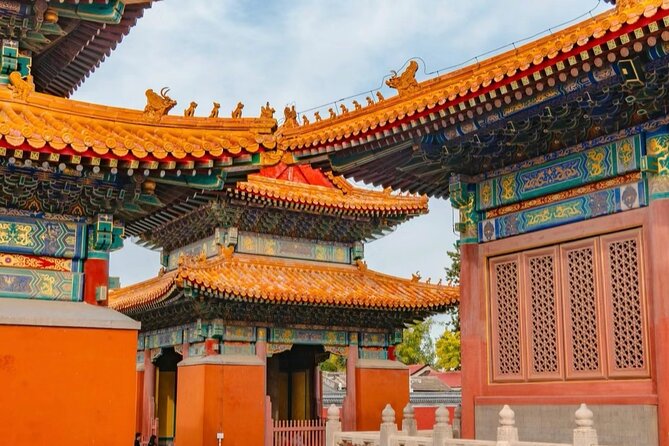
- Multiple architectural styles in a short time: Siheyuan courtyard homes, pagodas, and temple layouts
- Finger paintings at Guangji Temple and a White Stupa view that’s presented from a café balcony
- A included traditional Beijing drink plus bottled water, helpful if you’ll be out walking
A fast 3-hour route that links hutongs and the city center
Beijing’s hutongs can feel like a maze until someone shows you how they work. This tour is built for getting your bearings fast—starting around Xisi and ending near Financial Street—so you walk from the older texture of the city into the sharper lines of modern Beijing.
The timing matters. In about three hours (including travel between stops), you’ll pass churches, temples, a pagoda, and a classic lane where locals still move through their day. It’s not a museum day; it’s a walking day.
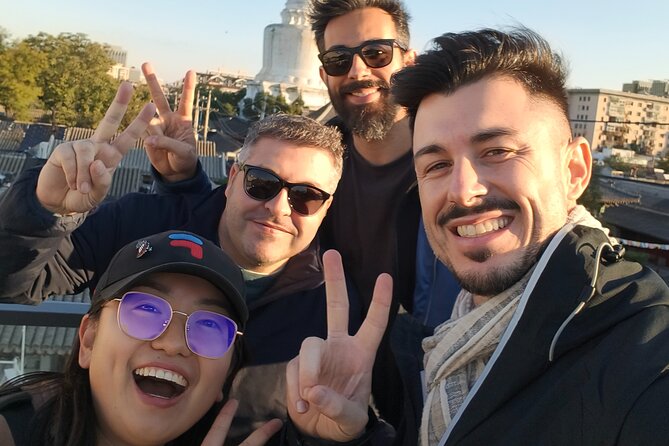
Also, the group size cap of 10 is a big deal for this kind of route. When you’re threading through narrow lanes, it helps to have people who aren’t constantly cutting across each other, and it’s easier for the guide to point out details like door placement and street layout.
Where you meet, where you finish (and why that matters)
You start near the Xisi subway area (the tour lists Xisi/Fuchengmen area, with the first site tied to Xishiku). The ending point is at Fuchengmen Station, Exit C (Line 2), near Financial Street.
That end point isn’t random. It’s a practical way to reconnect with transit and nearby hotels, and it also gives you a clear visual contrast: you’re leaving behind the hutong grid and stepping toward Beijing’s business core. If you plan to grab lunch afterward, this location makes it easier to find options without going back the whole way.
One small thing to plan for: this isn’t a loop that brings you back to the exact same spot. Wear shoes you trust, because your feet will be doing the work as you move between these different neighborhoods.
Price and value: what $49 gets you
At $49 per person, you’re paying for guided time, site access where it applies, and basic refreshment. The tour includes:
- Bottled water
- A complimentary traditional Beijing drink
- All fees and taxes
Some stops are free admission, and one main site includes admission (Temple of Previous Dynasties / Temple of Successive Emperors, if open). For a short, structured route, that “most things handled” approach is usually what makes or breaks value in Beijing walking tours.
If you’re trying to see multiple corners of the city without stringing together separate tickets and guides, this price makes sense. You’re not just getting the walk—you’re getting a framework for understanding what you’re looking at.
Stop 1: Xishiku Church and the early church story
The tour begins with a visit to Xishiku Church. What makes this stop interesting is that it isn’t presented as a generic foreign building plopped into China. The guide focuses on the story and the Chinese touch behind it.
You’ll spend about 10 minutes here, which is short on purpose. The goal is orientation: it gives you a historical anchor before you switch into Chinese religious architecture and everyday hutong life.
Practical note: because this is a quick stop, it helps to have questions ready. If you’re curious how different communities shaped the city, ask early—your guide will likely be thinking along those lines.
Stop 2: Guangji Temple and ancient finger paintings
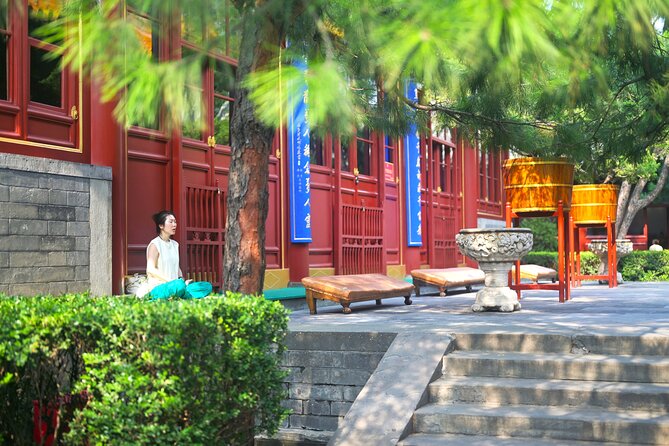
Next is Beijing Guangji Temple, scheduled for about 20 minutes. This is one of the stops that feels genuinely specific to Beijing, not just a “temple stop.”
You’ll see traditional Chinese temple architecture and the highlight here is ancient finger paintings. That detail is a good reminder that temple culture isn’t only about the big halls—it can also be about the artistic traditions tied to touch, ritual, and reverence.
A possible drawback: since finger paintings can be small or require close viewing, bring your attention. You may not get every fine detail like you would in a slow, dedicated museum visit, but you’ll get enough context to understand what you’re seeing instead of treating it like wallpaper.
Stop 3: Zhengyang Shuju, the Yuan-dynasty Wansong Pagoda, and a Siheyuan photo collection
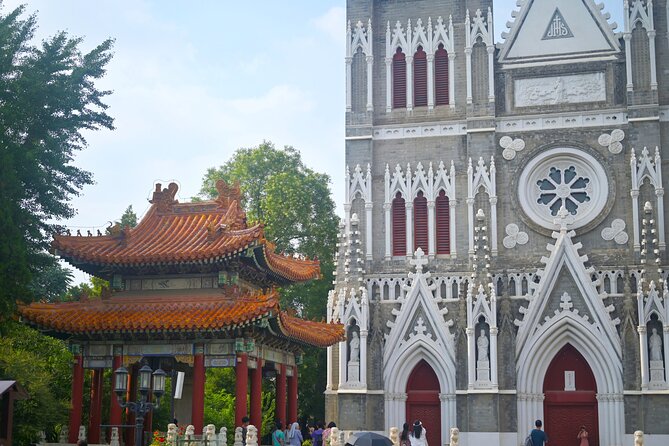
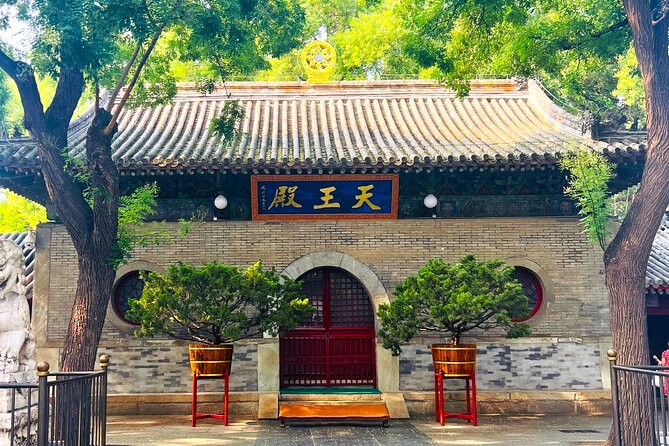
At Zhengyang Shuju, you’ll get two visual anchors in one stop: the Wansong Brick Pagoda dating to the Yuan dynasty and a Siheyuan courtyard housing an old Beijing image collection.
This is about 20 minutes, so again, the pace is brisk. Still, it works well because you’re getting:
- A vertical landmark (the pagoda)
- A horizontal, human-scale space (the Siheyuan)
The Siheyuan part matters for real-world understanding. When you see the courtyard logic—how doors, walls, and rooms connect—you start noticing the pattern in other neighborhoods you walk later on your own.
If you want the best experience here, pause and look around the courtyard edges rather than only staring at the pagoda. The courtyard layout is what helps the hutong logic click.
Stop 4: Zhuanta Lane—the oldest hutong feel
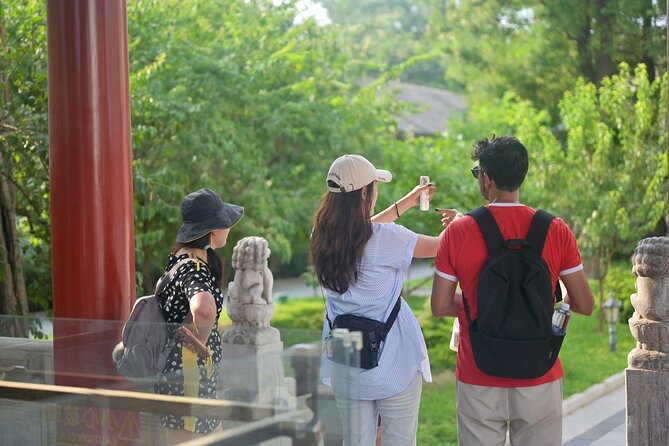
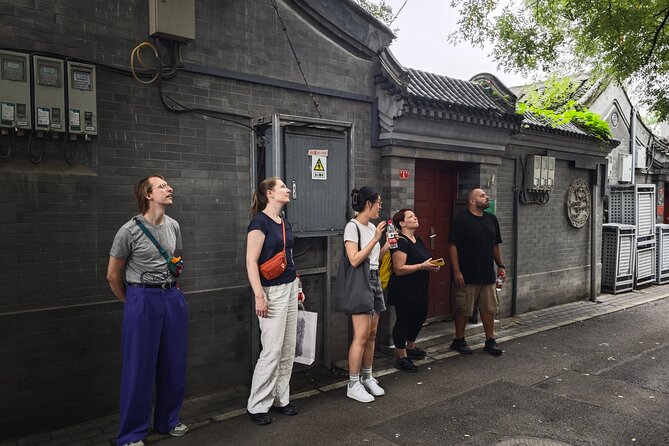
Then you move into Beijing Zhuanta Lane, about 15 minutes. This is where the tour becomes less about landmarks and more about atmosphere.
The guide frames it as one of the oldest hutongs, and the point isn’t just the age. It’s the day-to-day feeling: you pass the kind of narrow lane where life unfolds—where you can sense how neighbors relate to the street.
One review detail that’s worth carrying into your own mindset: the guide explains the significance of doors and the way buildings face the lane. That’s a small detail, but it changes how you read a hutong. Instead of seeing random doorways, you start to see intention.
Wear layers if the weather is temperature-shifty. Hutong lanes can be shaded or breezy, and you don’t want to be distracted by being uncomfortable.
Stop 5: Temple of Previous Dynasties (Temple of Successive Emperors) and ancestor respect
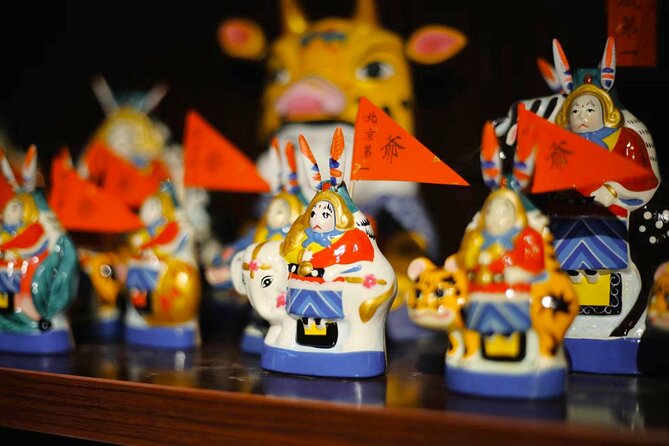
Your next major cultural stop is Lidai Diwang Miao (also referred to as the Temple of Successive Emperors, if open). The schedule says about 20 minutes, and the admission is included when access is possible.
This is the stop built around grand palatial structures and a clear cultural lesson: how Chinese societies honor ancestors and maintain that tradition through architecture and ceremony spaces.
If the temple is open, you’ll get a stronger sense of scale than at the smaller stops. If it isn’t, you might see more exterior focus or a shortened visit. Either way, it’s a useful pivot point, because it connects the earlier religious stops to a broader theme of continuity.
Tip: this is a good time to ask about what you’re seeing in terms of layout. Temple areas usually have a logic for movement and hierarchy, and a good guide can translate that into plain language.
Stop 6: White Stupa Temple (Miaoying / Baita Si) and pagoda types
The final cultural “wow” moment is the White Stupa Temple, also known as Miaoying or Baita Si. It lasts about 15 minutes, and there’s an interesting viewing setup: from a nearby café balcony, the guide shows you the exterior design of the White Stupa and explains different types of Chinese pagodas.
That balcony approach is practical. The White Stupa exterior is easier to read from a distance, and you’re not fighting for a perfect line of sight in a tight queue area.
You also walk away with something that’s hard to get from random photos: understanding how pagodas differ in form. Even a short explanation can help you spot style cues if you later visit other pagoda sites across the city.
What I think works best about this tour style
This isn’t a “run around and snap pictures” plan. It’s a guided mix of:
- Religious architecture (church, temples)
- Courtyard living space (Siheyuan)
- A hutong lane for street-level reality
- A pagoda viewing that teaches you what you’re looking at
What I like is how it turns sightseeing into interpretation. Instead of feeling like you saw six separate places, the route helps you build a mental map: courtyard logic, lane behavior, and landmark hierarchy.
And for practical travelers, the ending near Line 2 at Fuchengmen Station is convenient. You’re not forced into an awkward long transit back through the hutong grid.
Weather and walking pace: the main thing to consider
This experience requires good weather. That’s normal for a route that includes outdoor walking through hutongs.
Also, the total time is about 3 hours, but the walking pace is steady. If you prefer slow, unstructured wandering, you might feel a bit “managed.” If you like a clear path with context, the pace will feel efficient.
Who should book this hutong walking tour
This tour is a strong fit if you:
- Want hutong context without spending a whole day planning tickets
- Like architecture explanations you can use while walking on your own later
- Appreciate small-group questions and short, purposeful stops
- Prefer a route that ends near a major subway line
It may be less satisfying if you want a long, photo-focused session at just one or two sites, or if you hate walking outdoors in anything less than ideal weather.
Should you book it? My take
Yes, I’d book it if your goal is to get oriented in Beijing’s hutongs while still covering several standout cultural stops. For $49, the included water and traditional drink, plus the mix of free and ticketed sites, makes this a well-rounded way to spend a half-morning or afternoon.
The biggest reason to say yes: the guide’s focus on how places are laid out—especially details like door significance and courtyard structure—turns the hutong from a confusing maze into a readable neighborhood.
If you’re flexible on weather and comfortable with a brisk 3-hour walk, this is a solid value.
FAQ
How long is the hutong walking tour?
It’s about 3 hours total, including travel time between stops.
Where does the tour start and end?
It starts in the Xisi area (with the first visit tied to Xishiku Church) near Xisi Subway Station (Exit C/Fuchengmen, Line 2). It ends near Fuchengmen Station, Exit C (Line 2), close to Financial Street.
How much does the tour cost?
The price is $49.00 per person.
What’s included in the tour price?
All fees and taxes are included, along with bottled water and a complimentary traditional Beijing drink.
Are there admission tickets included?
Many stops are listed as free admission. One major stop, Lidai Diwang Miao (Temple of Previous Dynasties / Temple of Successive Emperors), has admission included if it is open. The others are free.
Is this a small group tour?
Yes. The tour has a maximum of 10 travelers.
What if the weather is bad?
The experience requires good weather. If it’s canceled due to poor weather, you’ll be offered a different date or a full refund.
Can I cancel for a refund?
Free cancellation is available. You can cancel up to 24 hours in advance for a full refund.