REVIEW · BELGRADE
Architecture of New Belgrade – Brutalism Decoded
Book on Viator →Operated by Walking Belgrade · Bookable on Viator
New Belgrade Brutalism can look cold at first. Then it starts telling stories in concrete and marble. This private architecture walk-and-drive focuses on five major buildings and the politics, daily life, and design choices behind them.
I love the way the tour connects shapes to real people and routines. You’ll also get a tight plan that keeps you moving from site to site without losing the thread, from the Museum of Contemporary Art to Primary School Laza Kostić.
One thing to keep in mind: it’s only about 2 hours 30 minutes, so if you want lots of time lingering in one place, this might feel fast.
In This Review
- Key Highlights You’ll Actually Notice
- New Belgrade Brutalism: Why This Concrete Style Matters
- Starting at Museum of Contemporary Art (Ušće): Modernism Meets Marble
- Park of Friendship: The Non-Aligned Movement in a Few Acres of Trees
- Drive-Bys and the Government Building: Yugoslavia’s Political Pivot
- Genex Tower at Narodnih heroja 45: The Western City Gate in Concrete
- Sava Center: A Congress Giant Built Fast and Still Relevant
- Block 23 and Primary School Laza Kostić: Concrete Expressionism With a Purpose
- Price and Timing: Is $86.42 Worth It?
- What to Expect From the Guide and the Tone
- Who This Tour Suits Best
- Should You Book Architecture of New Belgrade Brutalism Decoded?
- FAQ
- How long is the tour?
- How much does the tour cost?
- Is this tour private?
- What language is the tour offered in?
- Where do we meet, and where does it end?
- Which stops are included?
- Do I need tickets for the Museum of Contemporary Art?
- Is Park of Friendship admission free?
- What is the cancellation policy?
Key Highlights You’ll Actually Notice
- Five standout stops: contemporary museum, Friendship Park, Genex Tower, Sava Center, and Block 23
- Brutalism explained in plain language with the day-to-day human side of the buildings
- Non-Aligned Movement context tied to Park of Friendship and the 1961 peace-tree idea
- Photo-friendly moments at Genex Tower, aka the Western City Gate
- Still-in-use architecture: Sava Center is functioning and interior details feel current
New Belgrade Brutalism: Why This Concrete Style Matters
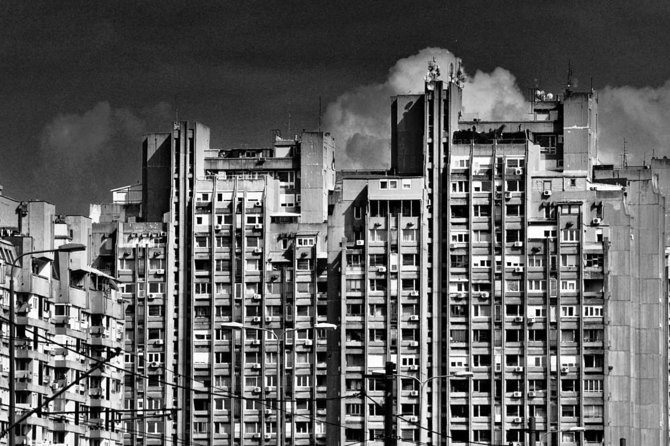
New Belgrade can feel like another planet if you’re used to old-city layers. Here, the main characters are 1960s–1970s ideas about modern life—and concrete is the material that carries them. That’s what makes this tour worth your time: it’s not only about style labels like brutalism or concrete expressionism. It’s about what Yugoslavia was trying to build, and how that ambition shows up in everyday spaces.
The best part is that you don’t get stuck in theory. You get design cues and political context that help you see why these buildings look the way they do. Even the contradictions matter: the Museum of Contemporary Art uses modernist volumes, while its precious marble facades challenge the usual expectations people have about socialist-era architecture.
You’ll come away with a smarter eye. Not just “I saw concrete towers,” but “I understand why this building exists and who it was for.”
You can also read our reviews of more tours and experiences in Belgrade.
Starting at Museum of Contemporary Art (Ušće): Modernism Meets Marble
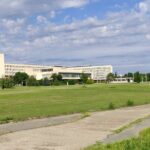
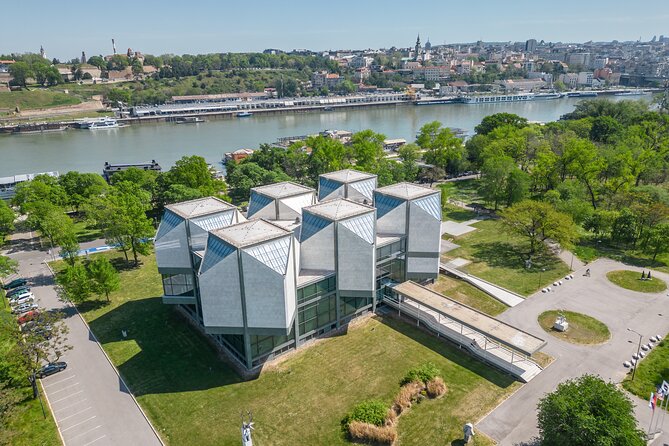
You meet your guide at the Museum of Contemporary Art at Ušće (Ušće 10). This is a smart place to begin because the building sets the tone: modernist, mid-century, and visually self-confident.
This stop is about 20 minutes, with the note that an admission ticket is not included. That matters for your planning. If you’re hoping the tour cost covers every entry, be ready to pay at least for this one site.
What I’d watch for here is the contrast. The museum is described as having 1960s modernist volumes, and the big talking point is that its marble facade is almost a deliberate contradiction to what many people expect from socialist architecture. In other words, the building isn’t just “plain state concrete.” It’s also about taste, prestige, and the way institutions wanted to look when Yugoslavia presented itself to the world.
Practical tip: wear shoes you can stand in for a short museum visit. The architecture matters, but you’ll still be moving around looking up, walking the edges, and checking details.
Possible drawback: since the ticket isn’t included, your experience here depends on being ready to handle the extra cost without stress.
Park of Friendship: The Non-Aligned Movement in a Few Acres of Trees
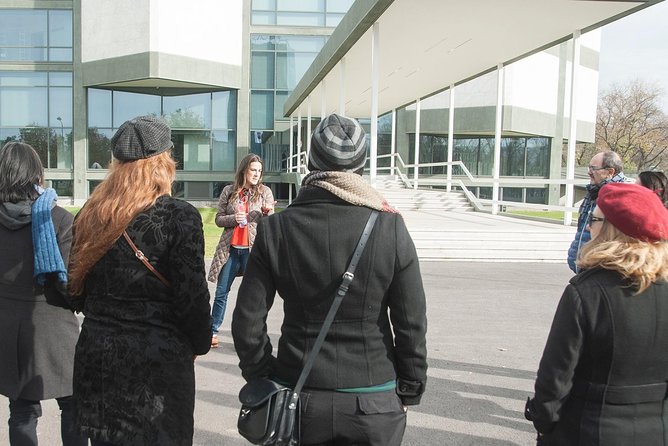
Next comes the Park of Friendship (Park Prijateljstva), a 15-minute stop that feels calmer than the building-heavy surroundings. The tour ties the park directly to the Non-Aligned Movement of 120 countries, founded in 1961 in Belgrade.
Here’s the concrete connection to the theme: the park wasn’t just landscaped for leisure. During the founding era, heads of states planted trees in the park as a symbol of peace. It’s a simple idea, but it’s powerful because it shows how architecture and planning weren’t separated from politics. Even a park can be part of the state’s messaging.
This stop is also free. That makes it a great breather in a compact tour. You can pause, look around, and let the brutalist visuals sink in before you head to the bigger icons.
Small consideration: because it’s only 15 minutes, don’t expect a long, slow picnic-style visit. Think of it as context—then you move on.
Drive-Bys and the Government Building: Yugoslavia’s Political Pivot
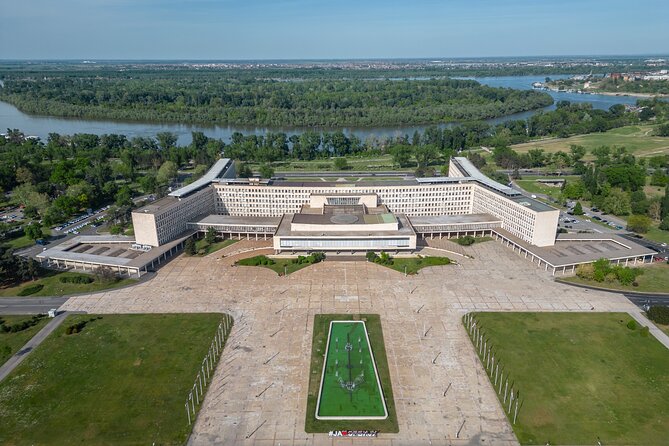
Between major stops, you’ll also get a drive-by of the huge Government Building. The point isn’t that you’re going to study it for hours. The point is the historical layer: it’s described as a monument of an earlier phase of Yugoslav politics, and it experienced the switch away from Stalin while under construction.
Even without spending time inside, this moment helps you read the whole area differently. Brutalism in New Belgrade isn’t just an aesthetic choice; it’s tied to shifting influences, changing leadership, and the long process of turning ideology into built form.
This is one of those parts of the tour that works best if you’re open to “see it briefly, understand it fully.” If you’re only there for close-up photography, you might feel impatient with the time spent on explanation.
Genex Tower at Narodnih heroja 45: The Western City Gate in Concrete
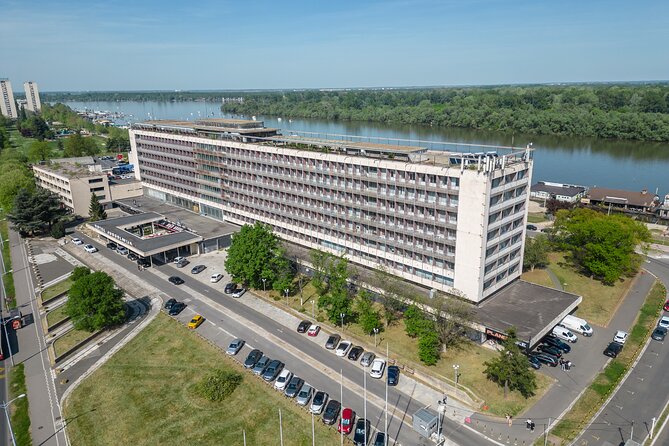
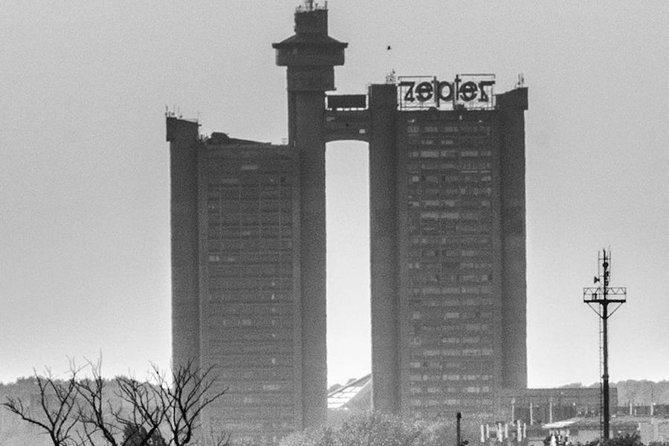
Then you get to one of the true poster subjects of New Belgrade: Genex Tower. The stop is around Narodnih heroja 45, and you’ll spend about 20 minutes for the close-up look.
Genex Tower is also known as the Western City Gate of Belgrade—and it earns that nickname because it’s a huge landmark with a strong silhouette. It’s a 30-floor structure and has become one of the city’s most photographed brutalist icons. The description even notes that it has won Instagram hearts, which is true in practice: this is the kind of building people love to frame.
But the tour goes beyond the photo factor. It’s described as a brutalism example that entered international architecture reviews, and it was built 40 years ago. You’ll also hear the claim that it was the first smart building in the Balkans.
A couple things to pay attention to:
- Look at the tower’s strong geometry and how it reads from different angles.
- Notice how brutalism here isn’t just raw mass—it’s organized.
- If your guide mentions the “smart building” idea, treat it as a clue that the design was meant to do more than look tough.
Stop takeaway: you’ll leave this section with the feeling that New Belgrade’s brutalism wasn’t only about control. It was also about modernization.
Sava Center: A Congress Giant Built Fast and Still Relevant
Your next major landmark is the Sava Center, with the tour finishing at the area near Milentija Popovića 9. This stop takes about 15 minutes, and it’s described as a gigantic congress center built at the end of the 1970s in record times.
The big deal here is that it was described as the first building of that sort in this part of Europe. That makes it more than a local landmark. It’s a regional signal: Belgrade was investing in a major venue for big meetings, performances, and official events.
What makes this stop satisfying is that it isn’t stuck in the past. It’s described as still in function, which is a key word. A lot of 20th-century architecture fails when the original needs disappear. Here, the building still has a job.
Even better, the tour highlights the interior: you’ll hear that there are surprisingly well designed interior solutions that still seem fresh after roughly four decades. You may not be walking through every hall, but the explanation helps you understand why the building still works.
Possible drawback: if you’re expecting a long interior tour with deep inspection, you won’t get that here. It’s a quick, focused stop designed to give you the architecture story and get you to Block 23 while the tour momentum stays strong.
Block 23 and Primary School Laza Kostić: Concrete Expressionism With a Purpose
The final site is Primary School Laza Kostić, located inside Block no. 23. This is where the tour makes its strongest “life inside the buildings” argument.
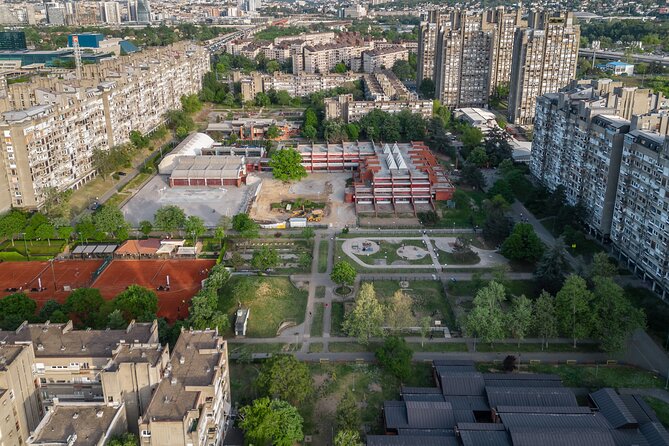
You’ll spend about 15 minutes here, and it’s described as representative public housing in style of concrete expressionism. That’s a useful phrase because it signals that the concrete isn’t just structural; it’s expressive. It helps shape a sense of identity for the whole residential block.
This is also where the tour’s everyday-life storytelling becomes most important. You’ll hear about the idea that the neighborhood was planned to provide everything for inhabitants: apartment buildings, the school, a kindergarten, sport courts, and even a mini shopping mall.
The tour also shares how life changed over time. You’ll get personal stories focused on the golden decades of the 1960s, 1970s, and 1980s, and then what life looked like later, in the 1990s when things were not so great.
If you only see buildings as objects, you’ll miss what’s special here. Block 23 is a lesson in how urban design can support daily routine—or fail later when conditions shift.
Practical tip: this stop is a great moment to ask your guide what they think about the idea of planned communities today. Even if you don’t agree with everything, it gives you a lens for seeing New Belgrade beyond its landmarks.
Price and Timing: Is $86.42 Worth It?
The tour price is $86.42 per person, for an experience of about 2 hours 30 minutes. Since it’s a private tour (only your group participates), you’re paying for one-on-one guide time plus focused routing between New Belgrade sites.
Here’s where the value math works in your favor:
- Several stops are free (Park of Friendship; Genex Tower area; Sava Center; Primary School Laza Kostić).
- The only paid entry mentioned is the Museum of Contemporary Art, and even there you’re only there for 20 minutes.
So your spending mainly goes to the guidance and the structure of the tour, not a stack of admissions. If you like architecture tours where the guide does the “connecting tissue” work—explaining the why behind the what—this is the kind of pricing that can feel fair.
Time reality check: because it’s compact, the tour is designed for seeing the key buildings and getting the interpretive framework fast. If you want a slow, lingering architecture ramble, you might want a longer format instead.
What to Expect From the Guide and the Tone
The strongest praise in the provided feedback centers on guide delivery: arriving on time, giving strong site explanations, and adding a human layer to the buildings. One standout theme is that the tour doesn’t treat architecture as a museum display behind glass. It treats it as something that still holds life—inside apartments, institutions, and public spaces.
You’ll also get a guide’s personal storytelling, especially at Block 23. That’s where the tour becomes more than a photo session.
One possible mismatch: if you’re expecting a long, empathetic discussion style with extra time in each location, you might feel the tour is too short. The route is paced and focused on five stops, not hours of one-on-one at a single site.
Who This Tour Suits Best
This tour fits you if:
- You want to understand New Belgrade beyond its reputation.
- You enjoy architecture when it comes with politics and daily-life context.
- You’d rather have five well-explained stops than wander alone and guess what you’re seeing.
You might skip it if:
- You only want exterior photos and have zero patience for historical framing.
- You prefer long interior time at major venues.
- You dislike “drive-by context” moments and only want close-up study.
Should You Book Architecture of New Belgrade Brutalism Decoded?
I think you should book it if you’re curious about how modern Yugoslavia tried to shape daily life—and you want an organized way to see the big icons of New Belgrade without getting lost in architectural jargon.
Do book if:
- You value guided interpretation and want to connect design choices to real stories.
- You’re comfortable with a tight schedule and want highlights efficiently.
Consider other options if:
- You want more than about 15–20 minutes at each location.
- You’re looking for a purely sightseeing-style tour with minimal explanation.
If you like your architecture with context, this one is a strong bet.
FAQ
How long is the tour?
The tour lasts about 2 hours 30 minutes.
How much does the tour cost?
It costs $86.42 per person.
Is this tour private?
Yes, it’s a private tour/activity, and only your group will participate.
What language is the tour offered in?
It’s offered in English.
Where do we meet, and where does it end?
You start in front of the Museum of Contemporary Art at Ušće (Ušće 10). The tour ends at Sava Center (Milentija Popovića 9).
Which stops are included?
The tour includes five stops: Museum of Contemporary Art (Ušće), Park of Friendship, Genex Tower area (Narodnih heroja 45), Sava Center, and Primary School Laza Kostić in Block 23.
Do I need tickets for the Museum of Contemporary Art?
Yes. The Museum of Contemporary Art admission ticket is not included, so you’ll need to pay separately.
Is Park of Friendship admission free?
Yes. Park of Friendship is free.
What is the cancellation policy?
You can cancel up to 24 hours in advance for a full refund.