REVIEW · BELGRADE
Belgrade: Space architecture tour – brutalist architecture
Book on GetYourGuide →Operated by Balkan roads d.o.o · Bookable on GetYourGuide
Concrete tells the Yugoslavia story. On this small-group brutalist architecture tour, you’ll trace how socialist-era design tried to project power, then get standout city views from Avala Tower on Belgrade’s tallest mountain. I love the way the route mixes close-up building details with big skyline moments, and I especially like that you’re not stuck in one neighborhood. One possible drawback: building interiors are mostly not part of the plan, so expect photos and exterior design study more than inside visits.
You’ll be on a van for short hops, plus some walking, so it’s best if you’re comfortable with uneven sidewalks and stairs now and then. And heads up: the view from the tower depends on weather, since this runs rain or shine.
In This Review
- Key highlights worth centering your plan on
- What this tour actually teaches you about brutalism
- Price and logistics: good value, and why the included parts matter
- Pickup and the first stop: Monument to the Unknown Hero
- Avala Tower: the big skyline payoff (and the rebuilt story)
- What to watch for at the tower
- Ada Bridge crossing: engineering as a visual statement
- Eastern Gate and Western Gate: New Belgrade’s brutalist front doors
- Eastern Gate (Rudo buildings)
- Western Gate (Geneks twin towers + 26th-floor bridge)
- Sava Center: polyhedral design built for a major 1977 conference
- Palace of Serbia: late modernism with ruling-ideology energy
- Walking, weather, and access: how to prepare without frustration
- Guide quality: what makes the experience feel alive
- Who should book this tour (and who might skip it)
- Should you book it?
- FAQ
- How long is the Belgrade space architecture (brutalist architecture) tour?
- What’s included in the price?
- Is the tour walking-heavy?
- Is food included?
- Will the tour run in bad weather?
- Is the tour guided in English?
- How big is the group?
Key highlights worth centering your plan on
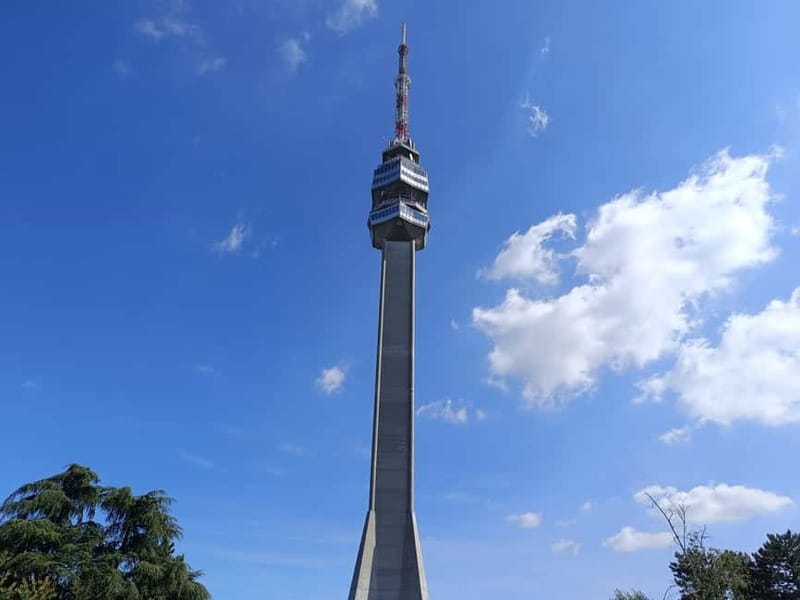
- Avala Tower viewpoint: a high vantage point with a big Belgrade feel
- Brutalism and structuralism on purpose: socialist-era design tied to ideology
- New Belgrade icons: Western Gate, twin towers, Rudo buildings, and more
- Ada Bridge crossing: a rare skyline-moment over the Sava
- Sava Center’s 1977 role: architecture built for a major European-security conference
- Palace of Serbia (ex Federal Executive Council): late modernism linked to ruling power
What this tour actually teaches you about brutalism
Brutalism can look like raw concrete and stubborn geometry at first glance. That’s the joke and the mystery of it. On this tour, the buildings stop being just “weird slabs” and start reading like documents: concrete, repetition, and sharp structure used to say something about the state.
You’ll also get the Yugoslav angle, which matters. This isn’t only about form. It’s about how architecture helped a newly created country show strength, order, and modern identity. You’ll see how that plays out in New Belgrade’s post–World War II urban planning, and then you’ll connect the dots at the stops like the gates, conference buildings, and the late modernism of the Palace of Serbia.
The group size keeps things workable: it’s limited to 10 people, with a professional English-speaking guide. That’s the kind of setup where you can ask follow-ups, not just absorb facts at speed.
You can also read our reviews of more tours and experiences in Belgrade.
Price and logistics: good value, and why the included parts matter
At $88 per person for about 4 hours, this is priced like a focused specialty tour, not a generic sightseeing loop. The value isn’t only the guide. You also get hotel pickup and drop-off, private transportation, and an entry ticket to Avala Tower.
Food and drinks are not included, so plan on buying water or a snack before you start—or carrying something small for the ride. Because the itinerary has photo stops and timed viewing, being hungry can turn “fun concrete time” into “why am I standing here?”
One more practical note: the tour runs rain or shine, and the tower view depends on weather. If it’s foggy, you’ll still see the structure and get the experience, but the big panorama may be muted.
Pickup and the first stop: Monument to the Unknown Hero
You’ll meet in Belgrade and head out by van—about 30 minutes—with a guided start at the Monument to the Unknown Hero. This stop is built for a quick reset: a photo stop, a guided moment, plus a short walk.
It works as an emotional warm-up for what comes next. The rest of the day is about political messages in concrete, and this monument sets the tone of national memory and state storytelling. Even if you’re not a monument person, it helps you understand why these buildings are never only about shelter.
Avala Tower: the big skyline payoff (and the rebuilt story)
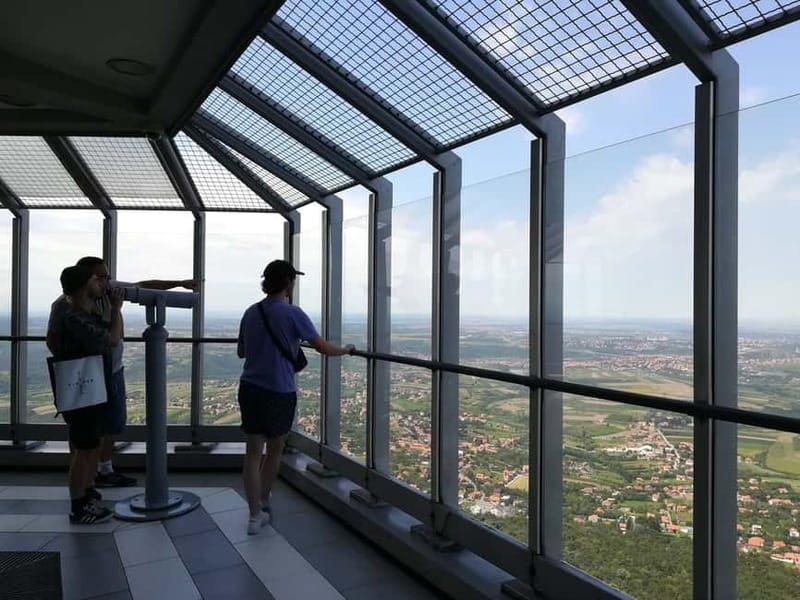
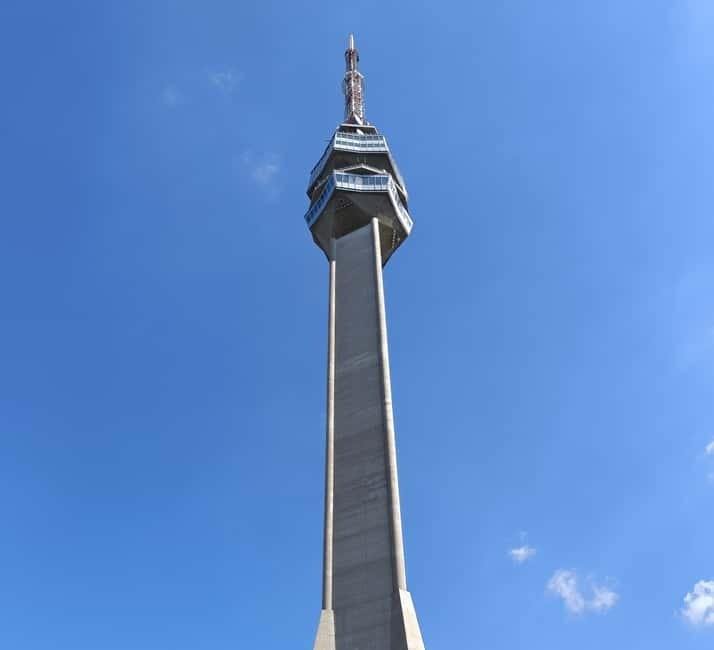
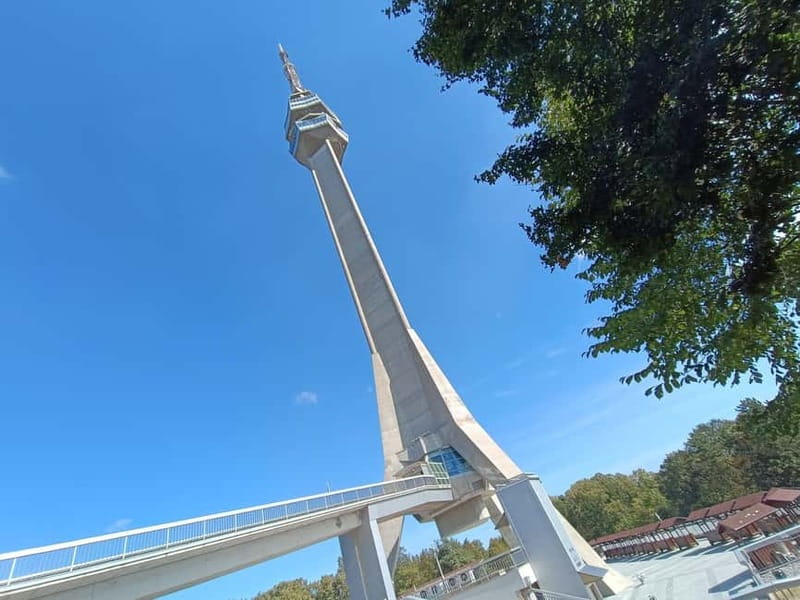
Next comes the star viewpoint: Avala Tower. You’ll have time for a photo stop, guided visit, and sightseeing. It’s also the part where timing and weather collide, so think like this: even on a cloudy day, the architectural experience is still the point; on a clear day, you’ll get the best skyline reward.
Avala Tower has a history that adds weight to the visit. It was destroyed during NATO bombing in 1999, then it resurrected in 2010. That matters because the tour is about what happens when a country rebuilds—physically and symbolically.
What to watch for at the tower
Bring your eyes for angles, not just the city. Look for how the tower frames Belgrade’s direction. On clear weather, you’ll likely be able to trace the city’s blocks and major corridors from above. If it’s not clear, you’ll still learn how Belgrade sits between its rivers and planned zones, which helps the ground-level stops make more sense later.
Ada Bridge crossing: engineering as a visual statement
After the tower, you’ll continue by van with another short transfer. Then you’ll hit Most na Adi (Ada Bridge) for a photo stop.
The bridge is described as the biggest single pylon bridge in Europe, and the tour notes that its construction was shown on Discovery Channel. You don’t need to have watched that to appreciate the moment. From the bridge, you’re switching from architecture-as-museum to architecture-as-movement. You’re literally crossing the Sava, and the angle is different than any street-level view.
A practical tip: keep your camera ready during the transition. The best shots often happen while you’re moving, not after you’ve parked yourself.
Eastern Gate and Western Gate: New Belgrade’s brutalist front doors
Now you enter the “designed city” portion. The tour takes you through Belgrade’s planned zones with Western Gate and Eastern gate stops—plus scenic drives in Novi Beograd between them.
Eastern Gate (Rudo buildings)
You’ll stop at Источна капија (Eastern Gate). The emphasis here is the brutalism style of the Rudo buildings. Think of these as architectural boundaries: entrances to the planned New Belgrade vision, where buildings act like signage for a political project.
Even if you can’t enter, the external logic is the lesson. Brutalism often makes its structure visible—like it doesn’t want to hide the bones. At the gates, that message gets amplified by scale and repetition.
Western Gate (Geneks twin towers + 26th-floor bridge)
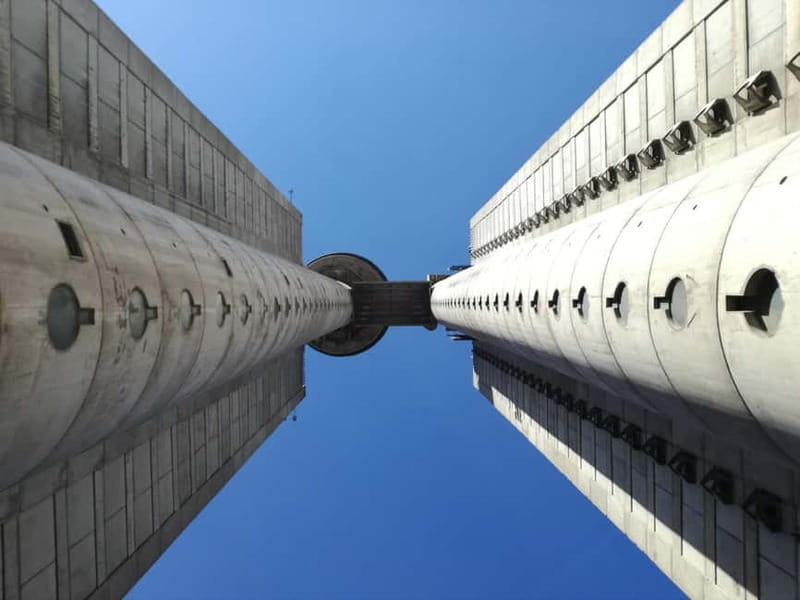
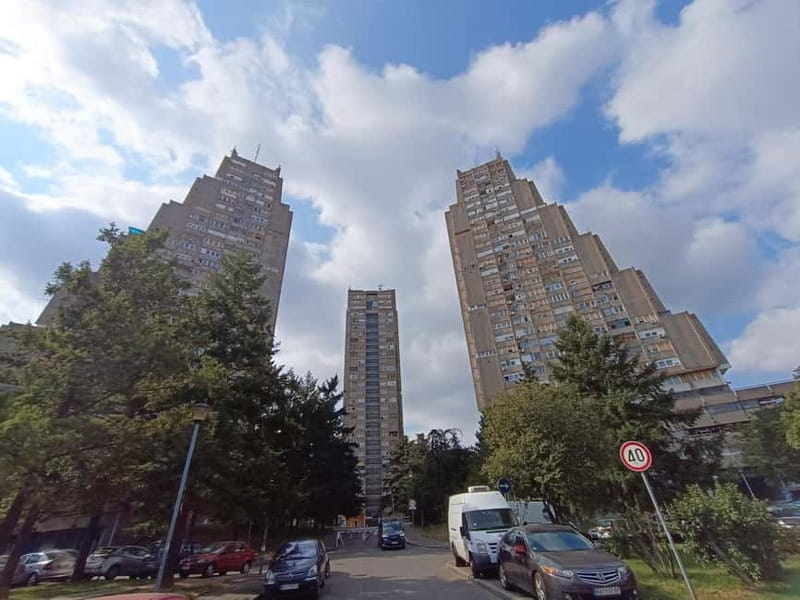
Then comes Belgrade Western Gate with the Geneks twin towers. The key detail is the bridge connecting the towers on the 26th floor. That’s not just a quirky feature—it’s a statement about connection and modern vertical planning.
This stop is one of the best for architecture lovers because you can stand back, compare the two towers, and then zoom in on the connective element. The guide’s job here is to help you see what’s structural vs. what’s symbolic.
Sava Center: polyhedral design built for a major 1977 conference
Next up is Sava Center, with a photo stop and guided overview. This complex was built for the Conference on European Security and Cooperation held in Belgrade in 1977, and the tour frames it as the first and biggest conference center in former Yugoslavia at the time.
What I like about this stop is the way architecture becomes a tool. Conference architecture needs flow, visibility, and structural confidence. Sava Center’s polyhedral building design is part of that story, and you’ll get a look at the structural design ideas behind the huge complex.
If you’re the kind of person who notices how people use buildings—where they walk, where sound might carry, how large spaces are organized—you’ll probably enjoy this part most. The “why” of the design is clearer here than at some purely symbolic monuments.
Palace of Serbia: late modernism with ruling-ideology energy
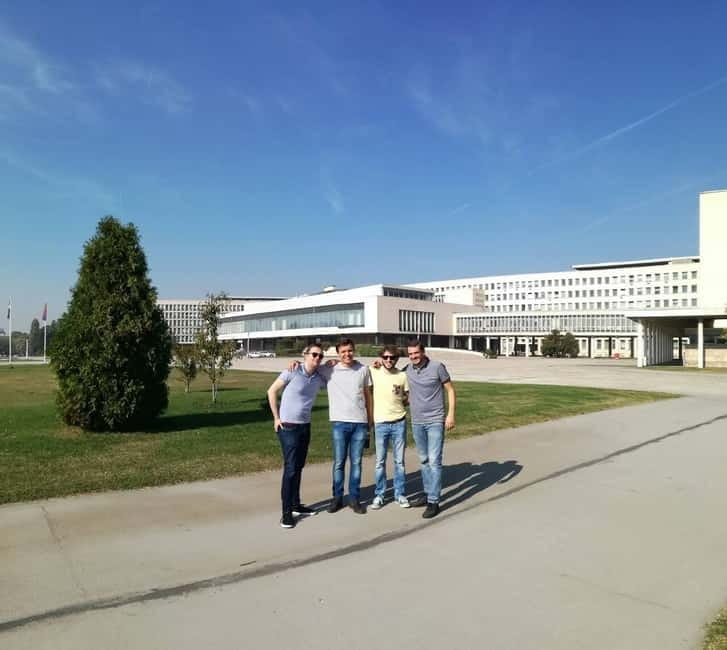
Finally, you’ll reach Palace of Serbia, described as the former Federal Executive Council. This is a late modernism building, and the tour highlights how its design communicates ruling ideology.
This stop can be a little polarizing if you only judge by beauty. But if you want to understand architecture as messaging, it clicks. Late modernism often balances clean lines with authoritative scale. Here, that balance is pointed. The building’s size and presence aren’t accidents—they’re part of the political language of the time.
You’ll have a photo stop and guided visit. Even without interior access, you can still study how the façade and massing communicate control and permanence.
Walking, weather, and access: how to prepare without frustration
This is partly a walking tour, but it’s not an all-day hike. Still, you should expect some standing, some uneven outdoor walking, and time spent at viewpoints.
The other reality is interior access. The tour plan centers on exteriors and observation from key points, especially because some structures you’ll pass are residential or government-related. That’s okay. The point is learning the visual grammar of brutalism and structuralism: form, structure, and urban layout.
Bring a light layer even in warmer months. You’ll be outside at the monuments and gates, and the tower experience changes with weather.
Guide quality: what makes the experience feel alive
One of the strongest signals in the feedback is how much the guide matters. A guide named Nemanja is specifically praised for being very knowledgeable and making the architecture and history click. Another reviewer highlights super-friendly, heartfelt guiding and excellent explanations.
This is exactly what you want for a tour like this. Brutalism can be hard to “get” on your own unless someone explains what to look for. The best moments happen when the guide points out the relationship between ideology and design choices—then you notice it yourself on the next building.
Who should book this tour (and who might skip it)
Book it if you:
- like architecture enough to notice details like structural connections and façade rhythm
- want Yugoslav-era context tied to real buildings you can see
- enjoy a mix of guided stops and skyline viewpoints
Consider skipping it if you:
- expect lots of interior visits (this tour is more about exteriors and view points)
- hate standing around in the rain (it runs rain or shine, though you’ll still keep moving by van)
- only want casual sightseeing without architectural framing
Should you book it?
If your idea of a great day in Belgrade includes concrete, ideology, and city-making on a grand scale, this tour is a strong yes. The included Avala Tower entry, pickup/drop-off, and private transport make it easier than piecing it together yourself, and the small group size keeps the explanations meaningful.
The only reason to hesitate is if you’re mainly chasing museum-style interiors or you’re traveling on days when weather is likely to hide the tower view. Otherwise, you’ll come away understanding why these buildings look the way they do—and why Belgrade’s modern identity was engineered, not accidental.
FAQ
How long is the Belgrade space architecture (brutalist architecture) tour?
It lasts 4 hours.
What’s included in the price?
The tour includes hotel pickup and drop-off, a professional tour guide, private transportation, and an entry ticket to Avala Tower.
Is the tour walking-heavy?
It is partly walking. You’ll have stops that include short walks and time standing for photos.
Is food included?
No. Food and drinks are not included.
Will the tour run in bad weather?
Yes. It takes place rain or shine.
Is the tour guided in English?
Yes. The live tour guide is English.
How big is the group?
It’s a small group, limited to 10 participants.