REVIEW · PALERMO
Palermo Tour: Magnificent Mixture Of Architectural Styles
Book on GetYourGuide →Operated by Italygonia Travel T.O. · Bookable on GetYourGuide
Palermo’s corners change everything. In just 2 hours you get a guided walk through the historic center, where Teatro Massimo and the Cathedral of Palermo sit right beside Arabic-influenced streets and lively markets. I like the way the route turns big landmarks into something you can actually feel on foot. One thing to think about: it’s a walking tour, so plan on standing and strolling for the full session.
This is a licensed-guided private group tour (priced per group up to 25), and the guide quality really shows in the feedback. Examples named in reviews include Roberta and Marilou, both praised for flexibility, deep local-and-world knowledge, and bringing Palermo to life in a very human way. The plan is also language-friendly, with live guiding in Spanish, English, French, German, and Italian.
In This Review
- Key things to look forward to on this Palermo walking tour
- Starting by Teatro Politeama: Finding Your Place in Palermo
- Via Ruggero VII and Principe di Belmonte: Palermo’s Everyday Front Room
- Small reality check
- Teatro Massimo: Getting the Meaning Behind a Giant Lyric Theater
- Arabic-Influenced Alleys to Capo Market: Where the City Gets Noisy and Real
- What to expect at Capo
- Cathedral of Palermo and Frederick II: Power, Memory, and a Separate Ticket
- Vucciria Market to Piazza San Domenico: Wrapping Up Without Losing Momentum
- Price and Value: What $344.39 Covers (and What Doesn’t)
- Who This Palermo Tour Fits Best
- Should you book this Palermo walking tour?
- FAQ
- How long is the Palermo walking tour?
- Where do I meet for the tour?
- Where does the tour end?
- What language options are available for the guide?
- Is this tour private?
- What is included in the tour price?
- What is not included?
- Can I cancel or book without paying right away?
Key things to look forward to on this Palermo walking tour
- Start at Piazza Ruggiero Settimo (Politeama Theater area) so you begin in the heart of city movement.
- See Teatro Massimo on the outside, with enough context to understand why it matters.
- Walk through Arabic-influenced streets and the old neighborhood feel of Palermo.
- Capo Market is a must-stop on the route, not just a pass-by.
- Cathedral of Palermo + Frederick II’s remains connect architecture to real power and history.
- Finish back near Piazza San Domenico so you’re not stuck far from dinner plans.
Starting by Teatro Politeama: Finding Your Place in Palermo
You meet in Piazza Ruggiero Settimo, right in front of the Politeama Theater area, next to the statue. I like start points like this because they’re easy to orient to. You’re not wandering around searching for your guide in a maze before the tour even begins.
Right away, you’ll feel how Palermo works: main streets connect to side alleys quickly, and the city’s architecture changes the mood in steps. Since the tour is only two hours, the first minutes matter. The guide’s job is to get you oriented fast: where you’re going next, what you should notice, and what details will connect later when you reach major sites like the cathedral and the Teatro Massimo.
Also, this tour is a private group, so it’s not one-size-fits-all. If your group wants to slow down for photos at a façade or ask one more question about a neighborhood detail, you’re more likely to get that attention than on a rigid mass tour.
You can also read our reviews of more tours and experiences in Palermo.
Via Ruggero VII and Principe di Belmonte: Palermo’s Everyday Front Room
Early on, the walk follows Via Ruggero VII, a street locals call the living room of Palermo. That phrase isn’t just poetic. It signals that this is where people watch the world, where shopfronts and street life do the storytelling.
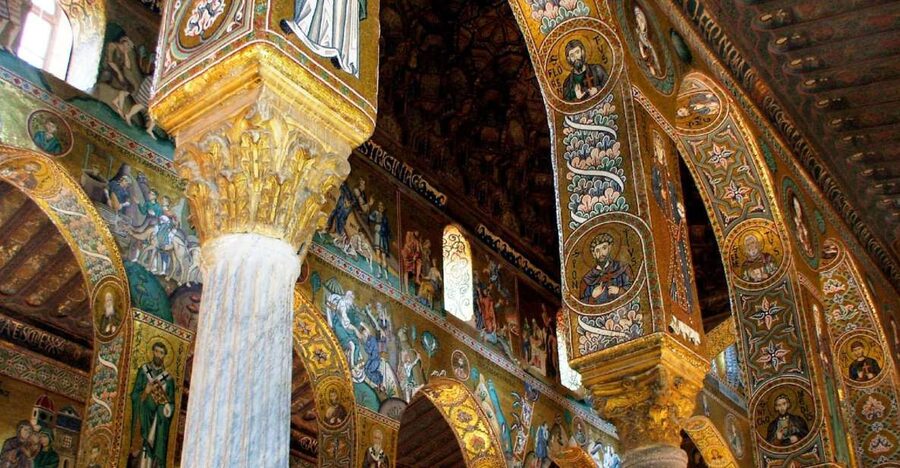
Next comes Via Principe di Belmonte, lined with historic shops. This is one of those stretches where you learn to read the street itself: building rhythms, doorway shapes, and how narrow side lanes feed into larger corridors. Even if you’re not an architecture nerd, you’ll start noticing how Palermo mixes styles instead of keeping them in neat boxes.
What I like most here is that this part of the walk builds your “visual vocabulary.” Later, when you reach places that look monumental, you’ll understand why they fit into the surrounding city instead of feeling like they were dropped in by accident.
Small reality check
You’ll be walking through active city streets. That’s part of the point. If your group prefers quiet museum interiors all day, this might feel a bit too alive. If you want the Palermo vibe—this is your start.
Teatro Massimo: Getting the Meaning Behind a Giant Lyric Theater
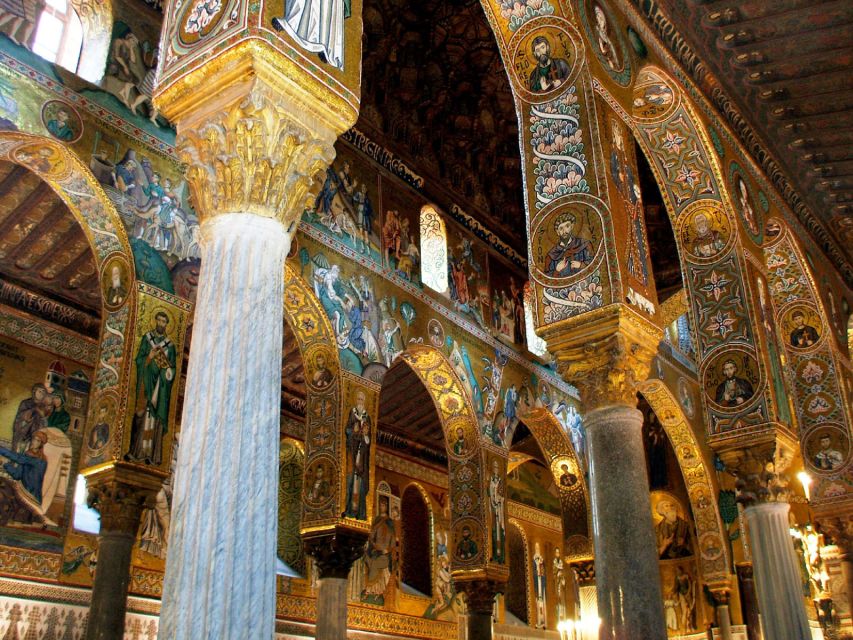
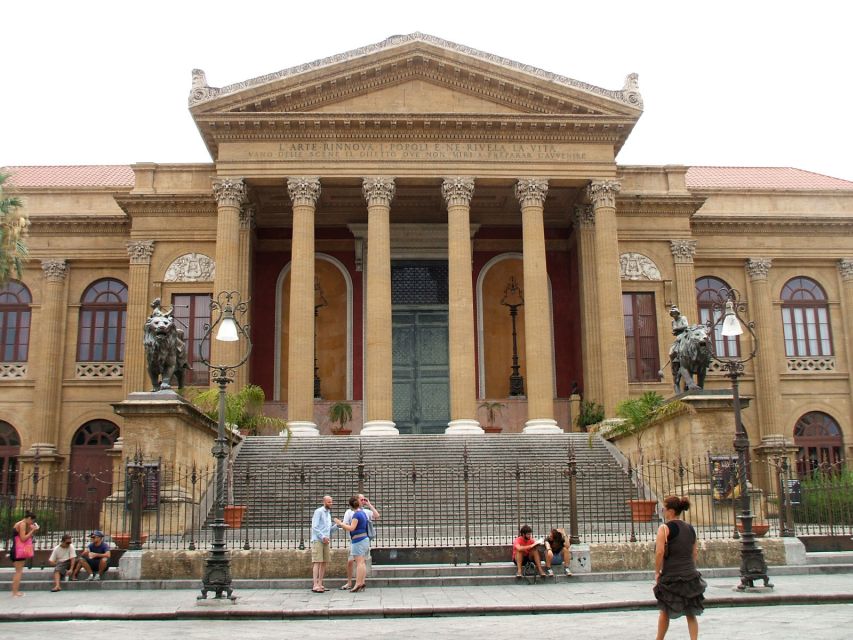
Then you’ll arrive in front of Teatro Massimo, the largest lyric theater in Italy and the third largest in Europe. Seeing it from outside is still a big moment. The building’s scale is obvious from the street, but what the guide does well is connect scale to purpose: why the theater became such a symbol for the city, and why it belongs in the same walk as markets and older neighborhood lanes.
I’d treat this stop as your anchor. Everything after starts to feel more coherent once you’ve seen a landmark that speaks “public life” at grand scale. You’re not just collecting photos; you’re learning the logic of Palermo’s urban mix.
Practical tip: if your group is photo-heavy, give yourselves a few extra seconds here. Teatro Massimo looks best when you can step back and catch the façade in full view, not when you’re squeezed right up against the curb.
Arabic-Influenced Alleys to Capo Market: Where the City Gets Noisy and Real
After Teatro Massimo, the tour shifts character. You head into an area associated with Arabic origins, walking through alleys and streets that feel different from the grander avenues. The architecture influence isn’t always obvious in a quick glance, but the street layout and building details start to make sense as you go.
This neighborhood section matters because it explains Palermo as a crossroads city, not a single-style postcard. When you later reach the cathedral, the walking context makes the stop feel less random.
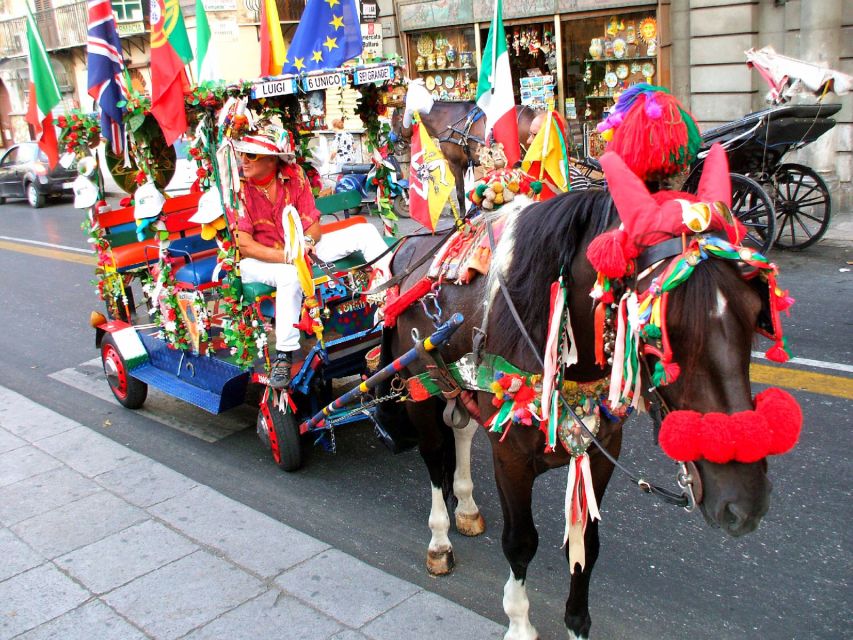
Then comes Capo Market, described as Palermo’s most famous market. This is one of those stops where the guide’s framing makes a difference. You’ll be encouraged to look at everyday commerce as part of the city’s identity—how food, people, and tradition occupy the same space that older power structures once shaped.
What to expect at Capo
Expect crowds, movement, and a lot going on visually. That’s normal. If someone in your group gets overwhelmed in busy markets, agree on a small meeting point before you step in and out of tighter areas.
Cathedral of Palermo and Frederick II: Power, Memory, and a Separate Ticket
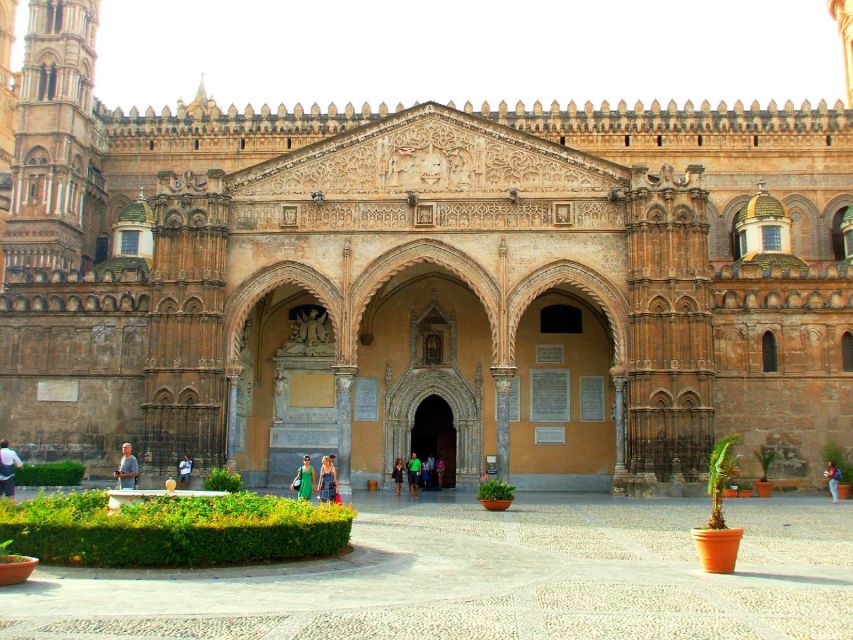
Next you’ll head to the Cathedral of Palermo. The connection that makes this more than a pretty façade is what the tour includes: the cathedral area where the remains of Frederick II of Swabia and his family are kept.
Frederick II isn’t just a name in a textbook. He’s a key figure tied to the kind of rule that shaped Sicily’s identity. In a walking tour, this stop lands differently than it would in a stand-alone museum visit, because you’ve just come from Arabic-influenced streets and market life. The cathedral feels like a real hinge point between everyday Palermo and the big forces that shaped it.
You should also know that tickets for the royal tombs are not included. So if your group wants access beyond what’s visible from public areas, plan for separate ticketing time and cost.
I like tours that flag this clearly, because it keeps your expectations honest. You can still enjoy the cathedral stop, but you’re not surprised later if you need a separate ticket for specific tomb access.
Vucciria Market to Piazza San Domenico: Wrapping Up Without Losing Momentum
After the cathedral, the tour continues to the historic open market of Vucciria. This is a different market experience than Capo. The setup and atmosphere are more open-air, and it gives you a second angle on Palermo’s street-level culture. If you only saw one market, you might miss how Palermo’s commerce shifts from one neighborhood feel to another.
Then you loop back toward Piazza San Domenico Square and finish close to where your day will likely go next. The big value of ending back at the meeting point area is mental energy. You don’t have to solve transport or long-distance navigation right after a compact walk.
If you still have time in your schedule afterward, use the last minutes of the tour to ask your guide what to do next. Even simple suggestions like which nearby streets to walk and what to look for next can help you turn this from a single activity into a full afternoon.
Price and Value: What $344.39 Covers (and What Doesn’t)
The price is listed as $344.39 per group up to 25, for a 2-hour private guided walk. On paper, that might sound like a lot until you break it down by group size and what’s included.
What’s included:
- a licensed guide
What’s not included:
- ticket royal tombs
- tastings/lunch/dinner
- transportation/pickup or drop-off
Here’s how I think about value: you’re paying for a guide who can connect Teatro Massimo, Capo Market, Vucciria, and the Cathedral of Palermo into one understandable story in a short time. With markets and neighborhoods, the “how to look” part matters. You’ll likely get more from the walk than from wandering alone, especially if you want context for Arabic-influenced streets and a serious landmark like Frederick II’s connection.
This tour is a strong value when:
- you have a small group and want private attention
- you want a fast, structured introduction to Palermo’s center
- you care about local framing, not just sightseeing checkboxes
It may not be the best value when:
- your group is mainly interested in spending long hours inside ticketed sites (since royal tomb tickets are separate)
- you prefer a slow paced self-guided day with lots of breaks
Who This Palermo Tour Fits Best
This works best for people who want a “best-of” orientation without turning Palermo into a rushed checklist. You’ll get major stops—Teatro Massimo and the Cathedral of Palermo—plus two market experiences and the Arabic-influenced neighborhood walk that connects them.
I’d also point you toward it if you like guides who adjust to the group. The feedback includes praise for flexibility and “profound knowledge,” plus the idea that guides can show you things beyond typical info sites. That’s exactly what you want in a city like Palermo, where the real story lives in the streets.
If your group needs lots of seated time or avoids busy market areas, you might want a different format. This one is designed for moving.
Should you book this Palermo walking tour?
If you want a 2-hour Palermo intro that mixes architecture, markets, and a cathedral tied to Frederick II, I think you’ll like the structure. The included licensed guide, the private-group format, and the strong guide feedback—flexibility, deep knowledge, and an authentic feel—are the main reasons to choose it.
I’d book it if your priority is learning how Palermo connects different eras and styles while staying grounded in real street life. If your priority is long museum time or guaranteed tomb access without extra tickets, you may want to look for an option that includes those entries.
FAQ
How long is the Palermo walking tour?
It lasts 2 hours.
Where do I meet for the tour?
You meet at Piazza Ruggiero Settimo square, in front of the Politeama Theater next to the statue.
Where does the tour end?
The tour ends back at the meeting point.
What language options are available for the guide?
The live tour guide is available in Spanish, English, French, German, and Italian.
Is this tour private?
Yes, it’s a private group.
What is included in the tour price?
The tour includes a licensed guide.
What is not included?
Tickets for the royal tombs are not included, and tastings/lunch/dinner and transportation/pickup or drop-off are also not included.
Can I cancel or book without paying right away?
Free cancellation is available up to 24 hours in advance for a full refund, and you can reserve now & pay later.