REVIEW · BILBAO
Bilbao: Historical and Architectural Walking Tour
Book on GetYourGuide →Operated by EXPLORA-NORTE · Bookable on GetYourGuide
Two hours, and Bilbao makes sense fast. This small-group tour traces how the Gran Vía area was planned and built, using the homes and families behind the grand facades to explain the city’s growth. You’ll pair architecture stops with a final pintxo-pote, so you’re not just looking—you’re tasting too.
I like two things a lot here. First, the guidance is strong and practical: guides like Javier explain what you’re seeing and connect it to the main chapters of Bilbao’s story. Second, you don’t only pass by sights—you enter emblematic buildings (Chavarri Palace, the train station, and the Old Alhóndiga) and you see a bit of the city’s “new” layout on the other side of the river.
One thing to keep in mind: this is a walking tour, and timing depends on guides and local conditions. Some people have reported trouble with a guide not showing up or last-minute issues around special events, so I’d confirm the day-of details and keep your schedule flexible.
In This Review
- Key points at a glance
- Why Bilbao’s Gran Vía and Ensanche deserve your attention
- Getting started at Plaza Moyua (Federico Moyúa Plaza) without stress
- The palaces theme: reading families into architecture
- Stop with authority: Chavarri Palace and the “who lived here” lesson
- Circular Square area: founder statue, gardens, and the business spine
- Bilbao’s transit as architecture: train station and metro interior
- Provincial Council of Bizkaia and the civic layer you might miss
- Old Alhóndiga: when industry history meets modern use
- Pintxo-pote time: ending with Bilbao flavor (and good guidance)
- Price and value: is $94 worth it?
- Possible hiccups to plan for (so your day stays smooth)
- Should you book this Bilbao historical and architectural walking tour?
- FAQ
- Where is the meeting point for the Bilbao walking tour?
- How long is the tour?
- What’s included in the tour?
- Is transportation to and from the attractions included?
- Which languages are available for the live guide?
- Is the tour wheelchair accessible?
- Does the tour include skip-the-line entry?
- What should I bring for the tour?
- What is the cancellation policy?
Key points at a glance
- Gran Vía + Ensanche context: you’ll understand why Bilbao’s modern center looks the way it does
- Buildings you can actually go inside: Chavarri Palace, the train station, and the Old Alhóndiga
- Transit architecture stop: you’ll also get a look inside the Bilbao Metro
- Pintxos included: a pintxo-pote ends the tour with local food
- Small group feel: easier conversation and more questions for your guide
- Guides matter: people who get Javier-style interpretation tend to rate the tour highly
Why Bilbao’s Gran Vía and Ensanche deserve your attention
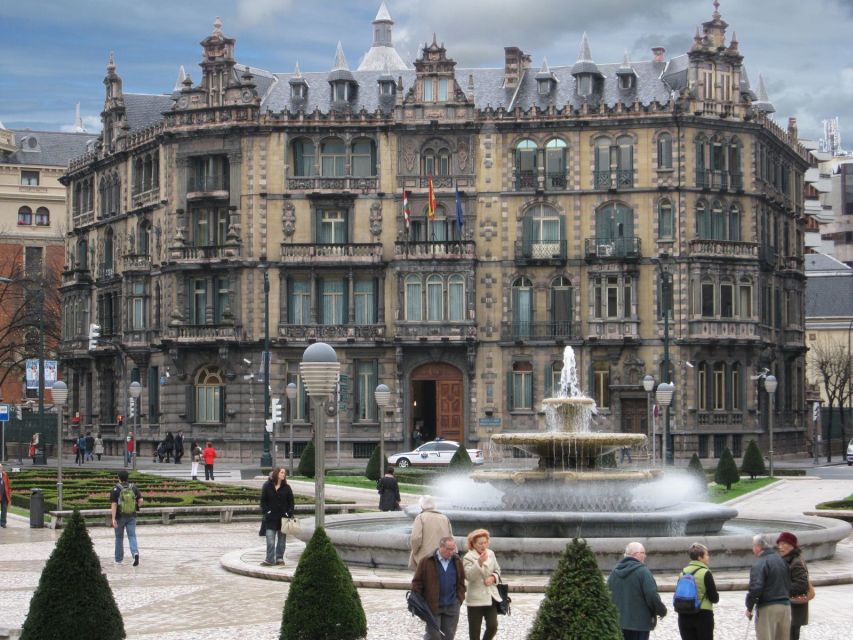
Bilbao doesn’t grow like a sleepy village. In the 1800s, it got a planned “new” side—bright, modern, and built with the confidence of the bourgeoisie. The city’s big idea was to follow the models people associated with Paris and London: wider streets, cleaner blocks, and grand facades that signaled wealth and order.
That’s why this walk works. You’re not hearing generic trivia. You’re walking the streets where influence showed up in stone—particularly along the Gran Vía corridor, where the lime trees line the walk and make the whole experience feel more like strolling than “touring.” The point of the route is to show you how money and industry shaped streets, neighborhoods, and the kind of buildings families wanted to live in.
And once you get that context, the palaces stop being just pretty. They become a readable map of Bilbao’s priorities: commerce first, then civic identity, then the cultural institutions that followed.
You can also read our reviews of more tours and experiences in Bilbao.


Getting started at Plaza Moyua (Federico Moyúa Plaza) without stress
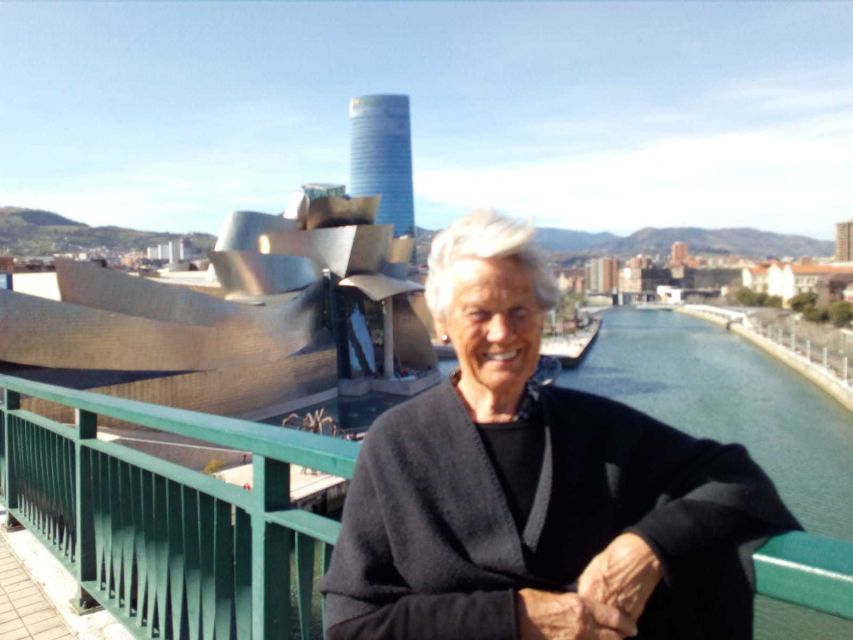
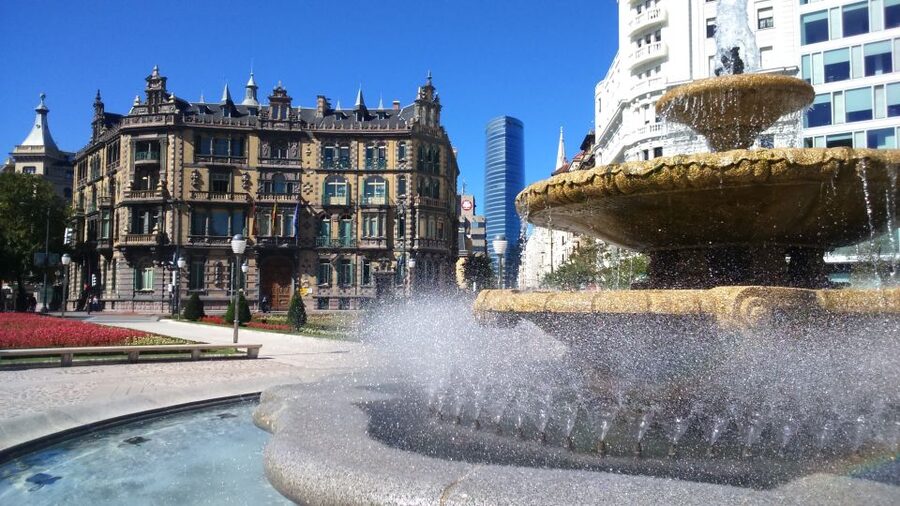
The meeting point is Federico Moyúa Plaza, 1, right by the fountain area in central Bilbao (often referred to as Plaza Moyua). This is a good spot because it’s easy to find and it gets you into the heart of the route fast.
The tour runs about 2 hours. That’s just enough time to cover a lot—without turning into a marathon. Since this is a walking itinerary with interior stops, wear comfortable shoes and assume you’ll be on your feet for most of the time.
Also, transportation isn’t included. So plan to arrive on foot or via your own public transport. Because it’s only two hours, you don’t want to gamble with timing.
Finally, it’s a small group, which matters more than you might think. You’ll get chances to ask questions, and the guide can pace the story to the people in front of them rather than reciting a script at full speed.
The palaces theme: reading families into architecture
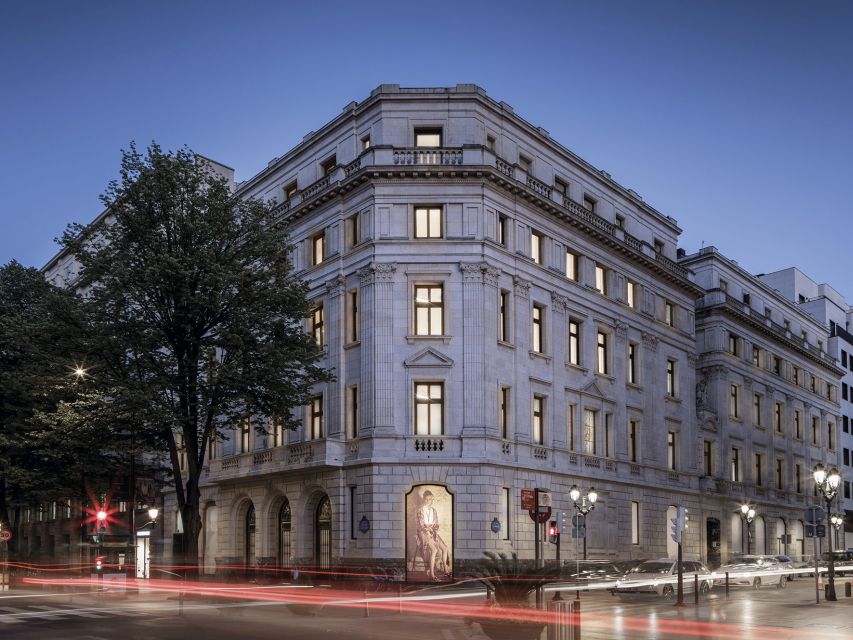
The heart of the experience is learning about the families who lived in the grand palaces along the Gran Vía. Your guide uses those buildings like evidence. Instead of just naming styles, you connect them to who built them, who benefited, and how wealth wanted to be seen.
This is where the tour’s approach shines. When a guide explains that Bilbao’s modern plan was tied to industrialization and the rise of the bourgeois class, the architecture becomes logical. You can look at a facade and start guessing: this was built to impress, this was built for power, this was built for the business center to function as a symbol.
If you end up with a guide like Javier/Javi, you’ll likely get extra value. In particular, people mention he connects architecture to bigger historical periods—not just the look of one building, but what changed across Bilbao’s main phases and how the wider Basque context fits in.
Stop with authority: Chavarri Palace and the “who lived here” lesson
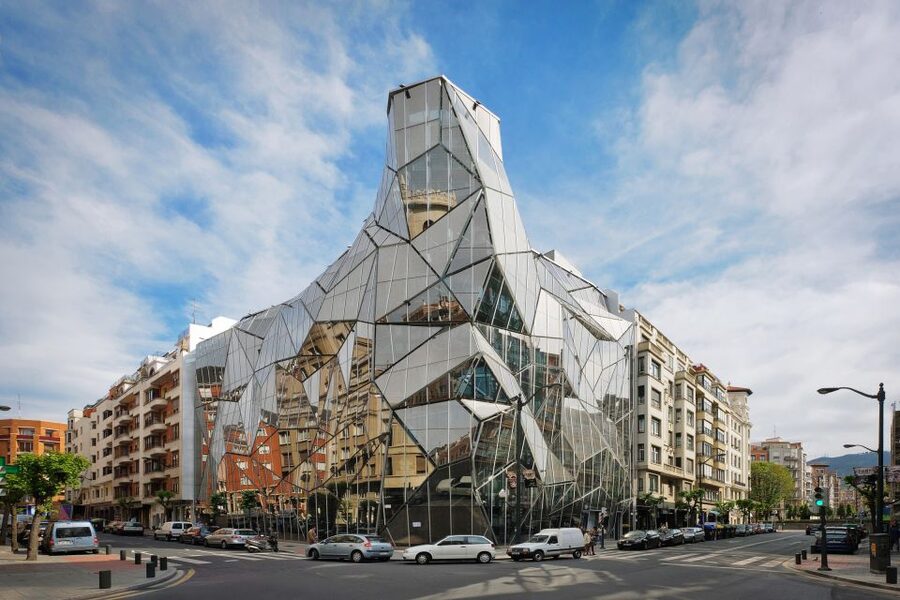
You’ll get inside Chavarri Palace, one of the emblematic buildings included on the tour. This is the kind of stop that works even if you don’t consider yourself an architecture person. Why? Because you’re not just seeing rooms—you’re being shown how those spaces express status, taste, and the social role of the people who commissioned them.
One drawback to interior stops: they can be a little more time-sensitive, so keep a steady walking pace and stay with the group. But the payoff is real: going inside lets you see details you’d completely miss from the sidewalk.
For me, the biggest value is that the palace stop turns the Gran Vía story from broad history into something personal. It’s easier to remember Bilbao when you understand who lived behind the grand front doors.
Circular Square area: founder statue, gardens, and the business spine
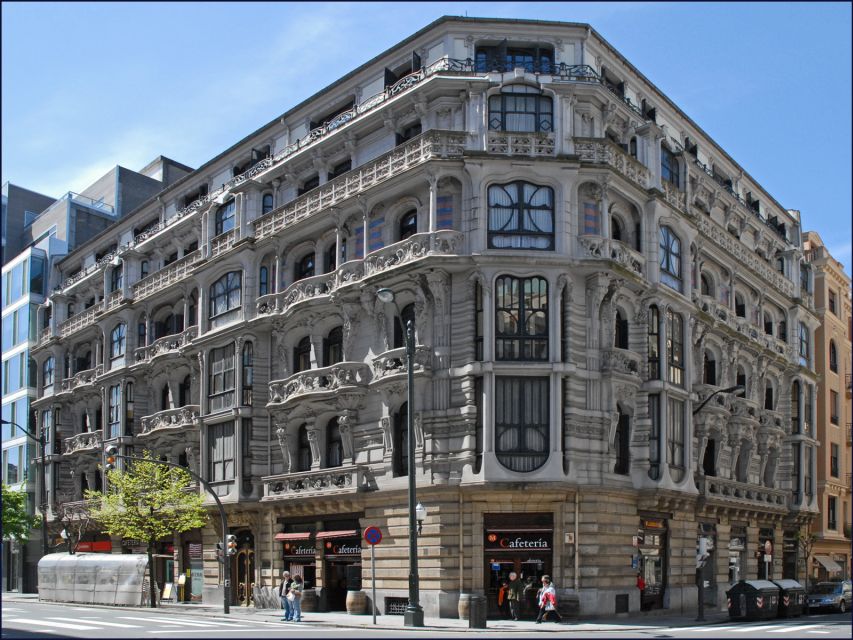
The route ties the modern business core back to the founding narrative. You’ll see the statue of the town founder, and you’ll also spend time around Circular Square, which is described as the business center of Bilbao today.
This section also includes gardens and stops that help you understand how public space works alongside big institutions. The Gran Vía walk itself benefits from the lime trees—shade and scent while you look at facades, shopfronts, and street rhythm.
You’ll also pass by or focus on major banks. Even if you’re not into finance, it’s a useful reminder: in the 19th century, money wasn’t just about wealth. It was about building the city’s identity, funding infrastructure, and backing the growth that turned a regional town into a modern hub.
Bilbao’s transit as architecture: train station and metro interior
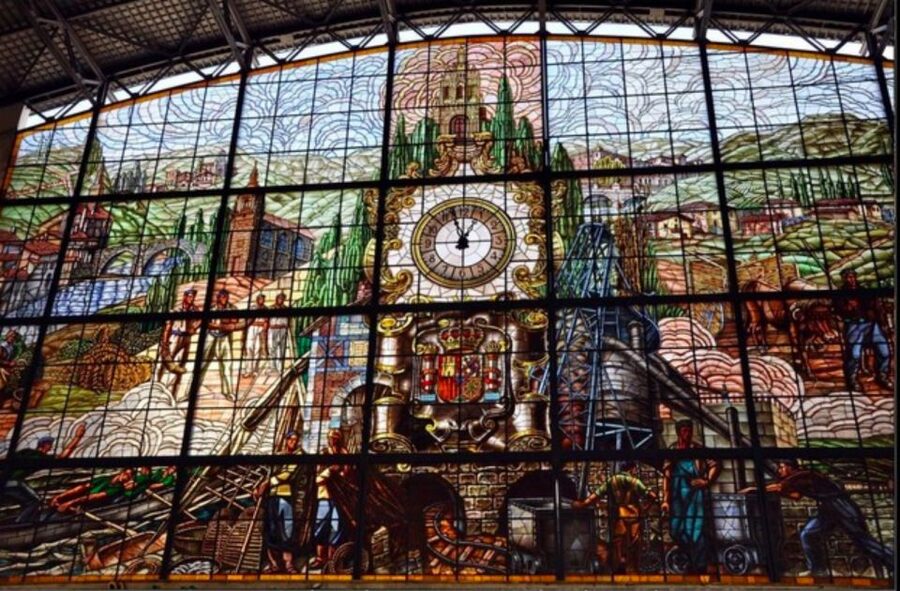
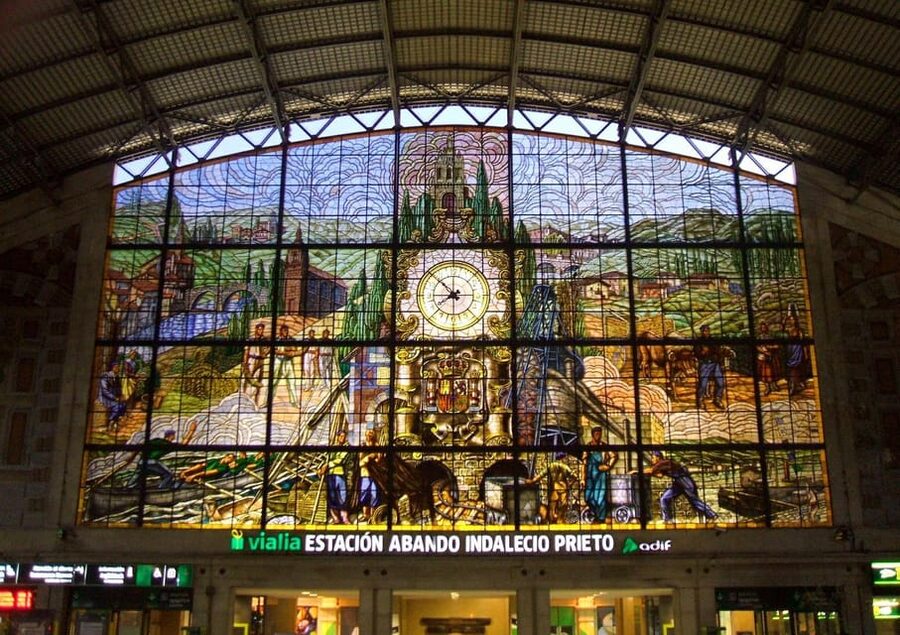
A really smart choice on this itinerary is treating transportation buildings as part of cultural history. You’ll visit the train station, and the tour frames it as a representation of Bilbao’s history. That means you’re not only admiring the station as a pretty landmark—you’re thinking about how movement, trade, and connectivity helped define the city.
Then there’s the stop involving the interior of the Bilbao Metro. Even without a long explanation, seeing transit space from the inside gives you a different perspective on Bilbao’s evolution—how the city kept upgrading its identity as it grew.
If you’re the type of traveler who likes buildings with a purpose—structures that do real work—this portion will click. Stations and metro areas are where a city’s “daily life architecture” lives, and that makes the story feel grounded, not museum-only.
Provincial Council of Bizkaia and the civic layer you might miss
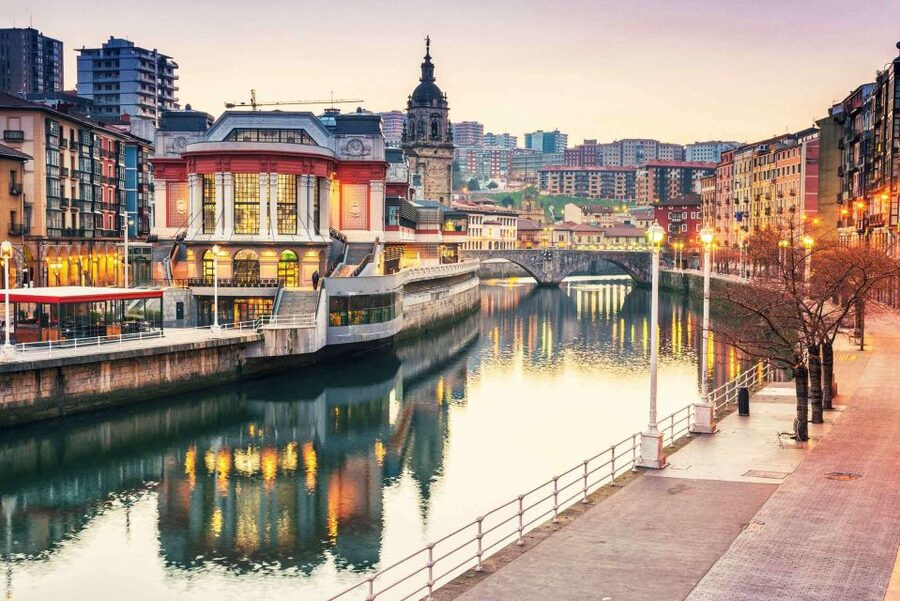
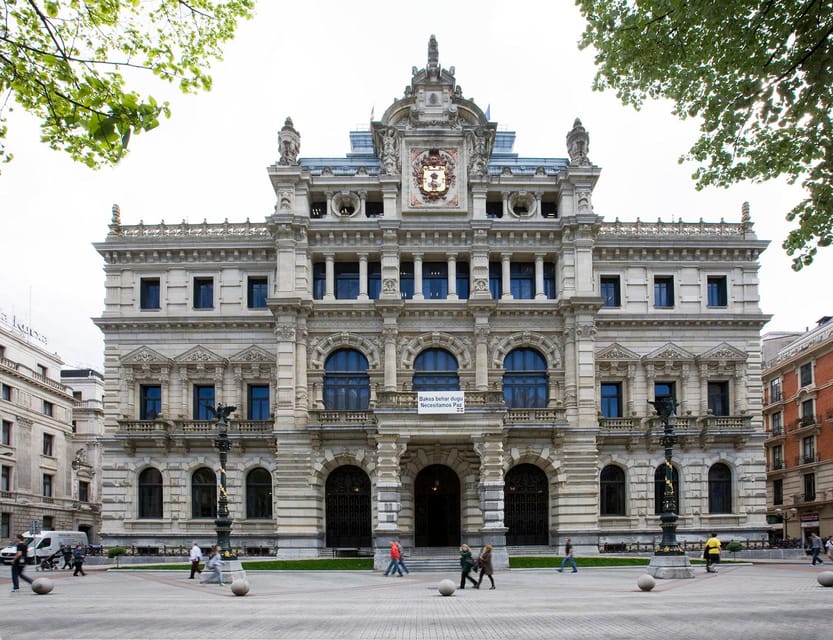
Along the way, you’ll also visit the Provincial Council of Bizkaia. This kind of stop helps balance the palaces-and-banks vibe. It reminds you that Bilbao’s growth wasn’t only private wealth and industrial money. There’s a public civic identity too, and the tour makes room for that.
Practically, it’s also a useful pacing break in the itinerary: you move from one grand architectural moment to another, without the walk feeling like it’s just a straight line forever.
Old Alhóndiga: when industry history meets modern use
One of the included entries is the Old Alhóndiga. It’s a stop that tends to stick with people because it represents a different kind of history than the palaces and banks. You’re looking at a building that connects to the city’s economic life and transformation.
The tour also notes that you’ll get skip-the-line entry through a separate entrance. That’s a small detail, but it matters. It keeps you from spending the best part of your 2 hours stuck in waiting mode.
If you like architecture that carries layers—old purpose evolving into newer meaning—this is the kind of place that rewards your attention.
Pintxo-pote time: ending with Bilbao flavor (and good guidance)
At the end, you go for pintxos, with the pintxo-pote included in the tour. This is a practical way to finish an architecture-and-history walk: you digest what you learned while tasting what the city offers now.
Because pintxos can be overwhelming if you don’t know where to start, having your guide involved is a real advantage. You can ask what to try, how to pace your choices, and how to order efficiently without turning it into an investigative mission.
Also, the group format helps. You’ll likely share bites and compare tastes, which turns the food part into a social wrap-up rather than a solo decision.
Price and value: is $94 worth it?
At $94 per person for a 2-hour small-group tour, you’re paying for a guided story, multiple interior stops, and a built-in food element—not just street walking.
Here’s what you’re getting for your money, based on what’s included:
- A professional guide during the full route
- Skip-the-line style entry using a separate entrance
- Entry to key emblematic buildings: Chavarri Palace, the train station, and the Old Alhóndiga
- A pintxo-pote at the end
That combination is where the value comes from. If you tried to recreate this yourself, you’d spend time researching and buying separate tickets (and you’d miss the “what to look for” explanation that helps the city click). The tour is also designed so the time stays tight—no wandering around hoping you picked the right buildings.
One caution: because it’s described as nonrefundable in the fine print, I’d only book if your schedule is solid. And since you’re walking, plan for shoes and a bit of steady movement.
Possible hiccups to plan for (so your day stays smooth)
Even when a tour is good, two things can go wrong: meeting-up logistics and timing around special events. Some people have described situations where a guide didn’t show up or communication didn’t resolve the issue in time.
So my practical advice is simple:
- Confirm the meeting details the same day
- Arrive a few minutes early at Plaza Moyua (Federico Moyúa Plaza, 1)
- Keep a backup option nearby in case you end up waiting too long
If everything runs properly, you’ll have an easy, story-driven walk. If it doesn’t, a quick plan B saves your trip day.
Should you book this Bilbao historical and architectural walking tour?
Book it if you want Bilbao to feel understandable fast. This tour is best for travelers who like architecture with context: palaces tied to the bourgeois boom, civic buildings that explain identity, and transit architecture that shows how the city keeps moving forward. The included pintxo-pote makes it a strong half-day option, especially if you’re staying in central Bilbao.
Skip it (or be extra careful) if you’re extremely schedule-dependent or can’t handle a possible start-up hiccup. With interior entries and a fixed meeting point, walking tours need everything to line up.
If you like guides who can explain what you’re seeing—people have highlighted Javier/Javi for that kind of clear, engaging interpretation—this is a promising pick.
In short: if your goal is a compact, guided Bilbao architecture story ending with pintxos, this one is worth your attention.
FAQ
Where is the meeting point for the Bilbao walking tour?
The meeting point is Plaza Moyua, in central Bilbao, next to the fountain.
How long is the tour?
The tour duration is 2 hours.
What’s included in the tour?
The tour includes a professional guide, pintxo-pote, and entry to emblematic buildings such as Chavarri Palace, the train station, and the Old Alhóndiga.
Is transportation to and from the attractions included?
No. Transportation to and from attractions is not included.
Which languages are available for the live guide?
The tour has live guides in English, Spanish, and French.
Is the tour wheelchair accessible?
Yes, the tour is listed as wheelchair accessible.
Does the tour include skip-the-line entry?
Yes, it includes skip the line through a separate entrance.
What should I bring for the tour?
Wear comfortable shoes since it’s a walking experience.
What is the cancellation policy?
Free cancellation is offered up to 24 hours in advance for a full refund, but the activity also notes it is nonrefundable.