REVIEW · BANGALORE
Day trip from Bangalore to Lepakshi for Temple architecture & paintings
Book on Viator →Operated by 5 Senses Walks · Bookable on Viator
Lepakshi feels like a time machine. In one long day you’ll see India’s largest single-block Nandi and the Virabhadra Swamy Temple with its famous pillared halls and murals, all explained by a guide. The trade-off is a full, early start and a big chunk of the day on the road.
What makes this outing work well is the setup: pickup and drop from your Bangalore area, a private group experience, and a planned route that gets you into the important spaces without wasting time. A potential drawback: lunch drinks aren’t included, so if you want water, tea, or anything else, budget for it.
In This Review
- Key things that make this trip worth your day
- Morning start: getting from Bangalore to Lepakshi without chaos
- India’s biggest Nandi: a 15-foot granite bull you can’t ignore
- Virabhadra Swamy Temple: reading the building like a puzzle
- Mukha Mandapa: the stage for culture
- Artha Mandapa: where the king’s worship fits
- Garbha Griha: the most sacred core
- The grey sandstone wedding hall with 38 pillars
- Lepakshi murals: orange-red murals with elegant line-work
- Where the day fits: lunch break, wandering time, and the 4pm return
- Price and value: what $145 buys you in real terms
- The guide experience: what good explanations should feel like
- Who this day trip suits best (and who should skip it)
- Should you book this Lepakshi day trip?
- FAQ
- FAQ
- What time does the day trip start from Bangalore?
- How long is the Lepakshi day trip?
- What does the tour include for the price?
- Are admission tickets included?
- What should I know about lunch and drinks?
- What are the main sites you visit?
- Is cancellation free if plans change?
Key things that make this trip worth your day
- Single-block Nandi: a 15-foot-tall granite bull that’s also great for photos.
- Vijayanagara architecture in clear chunks: Mukha Mandapa, Artha Mandapa, and Garbha Griha.
- Orange-red mural style: elegant line-work that you’ll actually have time to notice.
- Private guide pacing: you can ask questions and linger where you want.
- Smooth logistics: hotel pickup, private car, and a return drop in the afternoon.
Morning start: getting from Bangalore to Lepakshi without chaos
You start early, with pickup around 7:30am. For a day trip, that early departure matters. It gives you daylight time to explore calmly, and it reduces the chance you’ll feel rushed in the temple areas.
The drive itself is part of the deal. You’ll be in a private car, with the route handled for you, so you don’t need to worry about navigating or parking stress. One practical bonus from past visitors: the driver is expected to deal with traffic smoothly, so you can focus on the plan instead of the route.
This is also the kind of trip that suits real-world travel needs. You’re not just being dropped at a temple and sent on your way. You’re getting a guide to help you understand what you’re seeing—especially helpful when carvings and painting details can blend together if you don’t know what to look for.
India’s biggest Nandi: a 15-foot granite bull you can’t ignore
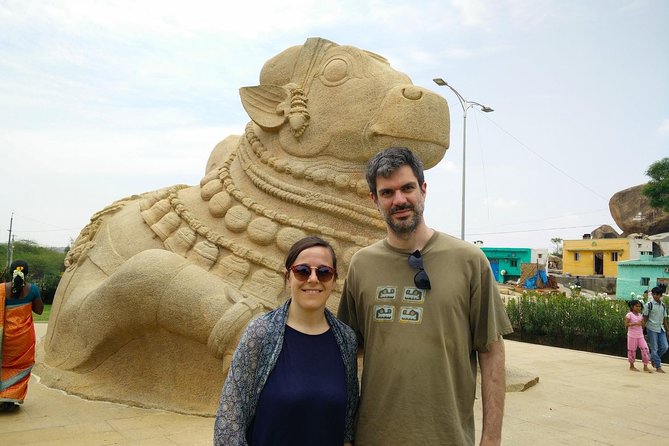
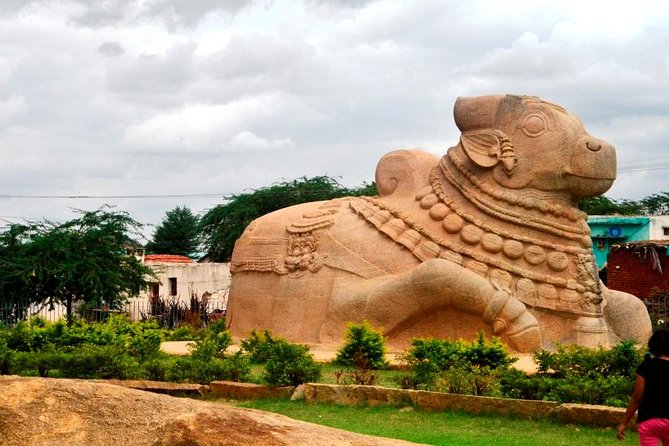
The first true wow-stop is the Lepakshi Nandi—a bull statue standing about 15 feet (4.5 meters) tall, carved from a single granite block. It’s also roughly 27 feet long, so even from a distance you’ll understand this is not a small shrine. It’s a landmark.
Up close, the surface details are what pull you in. The Nandi wears visible jewelry elements—things like a bell chain (often described as kaasu malai), earrings, and other decorative touches. It’s the kind of craftsmanship that rewards slower looking, not just quick snapshots.
And yes, it’s also photo-friendly. You’ll have time after arrival to explore the area around the statue before moving on. That’s smart, because Lepakshi is the sort of place where your first glance tells you it’s impressive, but your second glance shows you how much thought went into the design.
If you’re the type who loves iconic monuments with a story behind them, this stop hits your sweet spot. If you hate early starts and prefer long, unhurried wandering, this is where the schedule can feel like a warm-up rather than the main event—so brace yourself for a big morning.
Virabhadra Swamy Temple: reading the building like a puzzle
Next comes Virabhadra Swamy Temple, a 16th-century masterpiece in Vijayanagara style. What I like about this kind of guided visit is how it turns stone architecture into something you can follow. Instead of a blur of pillars and carvings, you learn what each space was for.
Mukha Mandapa: the stage for culture
The route starts with Mukha Mandapa, described as a venue for dance and other cultural activities. That one detail changes how you see the hall. You stop treating it like “just a room” and start picturing it as a performance space—music, movement, and community life happening here.
If you’re visiting with kids, this is also a good anchor point. You can explain that this wasn’t only about worship; it also had a public cultural role.
Artha Mandapa: where the king’s worship fits
Then you move to the Artha Mandapa, where the king did worship. This is one of those facts that quietly makes the architecture feel human. The space isn’t just ornate; it’s tied to leadership and ritual life.
It also helps you understand why the carvings and layout matter. Royal patronage often meant big investment in design—so the building’s grandeur isn’t random. It’s meant to communicate authority and devotion.
Garbha Griha: the most sacred core
After that, you reach the Garbha Griha, where the deity is housed. In temple design, the Garbha Griha is typically the spiritual center, and here it’s part of the story your guide connects for you.
This section is where you’ll feel the shift from public halls to the focused spiritual space. Even if you’re not deeply religious, you’ll still appreciate the intentional change in scale and purpose.
The grey sandstone wedding hall with 38 pillars
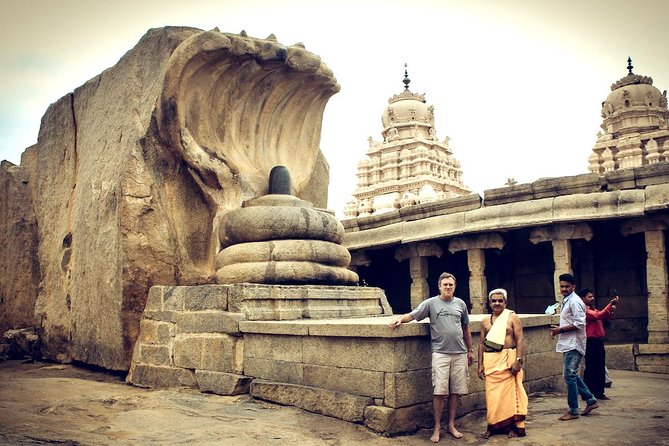
One of the most striking elements is the wedding-hall-style space made from grey sandstone with 38 carved monolithic pillars. The temple tradition ties it to a legendary Shiva–Parvati wedding story from antiquity, which adds a mythic layer to the stonework.
If you like architecture, this is the section you’ll want to slow down in. Pillars multiply the visual rhythm; counting them or tracking their carving differences can become a fun focus game. And with a guide explaining what you’re looking at, it’s easier to see patterns instead of just admiring “how many.”
Lepakshi murals: orange-red murals with elegant line-work
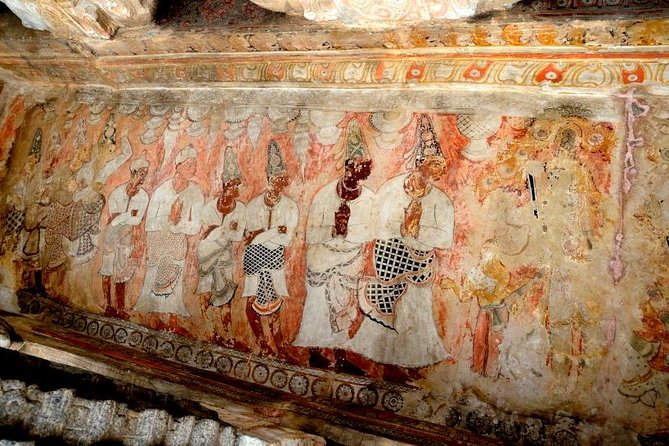
Now for the part many people remember long after the drive: Lepakshi’s paintings. The mural style is described as elegant line-work set against an orange-red background. That color contrast is a clue to how the artists wanted the scenes to read clearly—especially from a distance inside temple spaces.
Here’s the practical advantage of having time with a guide: you’ll often learn what figures are meant to represent (and why those stories matter). That turns the paintings from “pretty walls” into a narrative you can track.
You’ll also see different mandapa spaces that connect to cultural activities and worship functions. That helps you understand the murals in context. The paintings aren’t random decoration; they’re part of a religious-and-social environment.
One small thing worth planning for: temple grounds in this region can include monkeys, and some visitors have noted them as part of the atmosphere. Don’t stress about it, just be mindful. Keep your phone secured and don’t leave food unattended.
Where the day fits: lunch break, wandering time, and the 4pm return
Your day has a clear rhythm. After the morning highlights, you’ll take a lunch break with South Indian vegetarian lunch included. It’s there to keep energy steady for the second half of temple time.
Since beverages aren’t included, I’d plan your hydration around that. Bring a basic water plan, especially in hot months. You’ll still get enough to eat, but you don’t want to be stuck deciding between temple explanations and paying for drinks.
You then continue to finish the temple exploration with your guide filling in the meaning behind what you see. You depart around 4pm and head back to Bangalore for drop-off.
A private day trip like this is a “greatest hits” format. You don’t get endless hours in every corner, but you do get enough time to understand the major architectural elements and at least notice the painting details properly. If you want a slow, day-long roam with zero schedule pressure, this might feel tight. If you want a structured cultural hit with context, it’s a strong match.
Price and value: what $145 buys you in real terms
At $145 per person, the headline number can look steep until you map it to what’s included. You’re not paying for just a driver. You’re getting:
- Private guide
- Private car
- Pickup and drop
- Vegetarian South Indian lunch (with beverages excluded)
- Admission tickets included for the main temple areas covered in the stops
That’s important because entry fees and the guide’s time aren’t free at these kinds of heritage sites. A private guide also changes the experience quality. Even if you’re not a temple expert, the difference between seeing carvings as decoration versus understanding their purpose is huge.
The best value in a trip like this usually comes when you like asking questions or you enjoy details (architecture layouts, myth connections, symbolism). If you’re the type who just wants to click photos and move on, you might feel the guide cost is less justified. But if you want meaning—and you want to be able to place what you’re seeing in your head—this price makes sense.
Also, the group discount note means the company expects multiple people may book together. If you travel with a friend or family member, your per-person value usually feels better because you’re still doing a private setup.
The guide experience: what good explanations should feel like
One thing that comes through in the tour experience is the focus on clarity and organization. Guides such as Mayuri and Vignesh have been singled out for being friendly, well-organized, and strong at explaining the history and details around Lepakshi’s main temple. Hareesh has also been praised for giving informative explanations that help you connect sculptures, paintings, and culture.
This matters more than it sounds. Temple art can feel overwhelming if you’re left alone with a map. A good guide doesn’t just rattle facts; they help you interpret what you’re seeing in a way that sticks after you leave.
On the driving side, names like Thippesh have been associated with smooth navigation and safe traffic handling. That’s not glamorous, but it’s the difference between arriving fresh and arriving stressed.
If you care about practical, on-the-ground guidance, this is where you’ll notice the quality. You’re not just buying transportation; you’re buying a guided understanding of the place.
Who this day trip suits best (and who should skip it)
This trip is a smart fit if:
- You want a one-day way to see Lepakshi’s key heritage spots from Bangalore.
- You’re interested in Vijayanagara-era temple architecture and how mandapa spaces function.
- You love murals and want time to notice their style, not just pass by.
It may be less ideal if:
- You hate early mornings and long travel days.
- You want deep, unhurried exploration with long breaks at each stop.
- You prefer to travel completely independently without a structured route.
If you’re traveling with mixed ages, the pacing can still work because the day has obvious visual anchors: the massive Nandi statue, then the big temple spaces, then the painted walls. Kids often enjoy the spectacle, while adults can enjoy the meaning.
Should you book this Lepakshi day trip?
I’d book it if you want the Lepakshi story told clearly and efficiently, with private guidance and a plan that gets you to the highlights without fuss. The combination of Nandi + Virabhadra Swamy Temple + mural details is exactly the kind of heritage mix that benefits from context.
I’d hesitate if you’re expecting a relaxed day with minimal structure. This is a packed cultural schedule, and the early start means you’ll feel the clock. Also, if beverages matter to you, plan for that since lunch drinks aren’t included.
If you like architecture, art, and mythology you can actually connect to real spaces, this is a strong use of a single day. And if you’re coming from Bangalore looking for something meaningful that doesn’t require overnight logistics, this one hits the sweet spot.
FAQ
FAQ
What time does the day trip start from Bangalore?
The start time is 7:30am with hotel pickup.
How long is the Lepakshi day trip?
The duration is listed as about 10 hours.
What does the tour include for the price?
It includes a private guide, private car, pickup and drop, and vegetarian South Indian lunch (beverages are excluded).
Are admission tickets included?
Yes. Admission tickets are included for the main temple stop (Virabhadra Swamy Temple) and for the Lepakshi Nandi statue stop.
What should I know about lunch and drinks?
Lunch is vegetarian South Indian and is included. Beverages are not included, and any additional food outside the included lunch is not covered.
What are the main sites you visit?
You’ll visit Virabhadra Swamy Temple and the Lepakshi Nandi (India’s largest Nandi statue), with time to explore key mandapa areas and the temple paintings.
Is cancellation free if plans change?
Yes. You can cancel for a full refund up to 24 hours before the experience start time. If you cancel less than 24 hours before, the amount paid is not refunded.