REVIEW · BRASOV
Brasov: Candlelight Tour of Medieval Architecture
Book on GetYourGuide →Operated by Transylvanian Wonders SRL · Bookable on GetYourGuide
Night falls, and Brasov starts whispering legends.
This candlelight-style old-town walk is a tight way to see the city’s medieval layout and its most dramatic buildings, from the Black Church to the gates that once helped defend the city. I like that the tour mixes architecture you can actually point to with stories you remember later, including vampire and ghost folklore tied to specific streets and strongpoints.
One thing to plan for: the “candlelight” mood is partly about the evening atmosphere. Night walking means you should expect uneven lighting in some spots, and the cold can sneak up fast in Brasov after dark—so dress for comfort, not just photos.
In This Review
- Key points at a glance
- Starting at Piata Sfatului: getting your bearings in Brasov fast
- The Black Church at night: gothic-baroque drama with real context
- Katherine’s Gate and Schei Gate: medieval entrances you can picture
- St. Nicholas’ Cathedral: Brasov’s Orthodox landmark in plain sight
- Weaver’s Bastion and the defensive bones of the city
- The Jewish Synagogue (1901) and Rope Street’s squeeze-test
- Vampire and ghost stories: folklore anchored to real streets
- How to pace the walk in 1.5 hours (and not miss the details)
- Price and value: is $47 worth a medieval night loop?
- Who should book this candlelight architecture tour
- Should you book this Brasov medieval night tour?
- FAQ
- How long is the Brasov candlelight tour of medieval architecture?
- Where do I meet for the tour?
- Is the tour offered in English?
- Is the tour wheelchair accessible?
- Does the tour run in bad weather?
- What does the tour cost?
- Can I cancel for a full refund?
Key points at a glance
- Piata Sfatuli start: you begin at Piata Sfatuli nr. 30 in front of the History Museum, then walk into the medieval core
- Black Church focus: you’ll see one of Europe’s biggest gothic-baroque churches and learn how it fits the city’s story
- Katherine’s Gate + Schei Gate: two major checkpoints, including the 14th-century Katherine’s Gate and Schei Gate built almost 200 years later
- Orthodox St. Nicholas’ Cathedral: Brasov’s most important Orthodox Cathedral gets real attention on this route
- Weaver’s Bastion and legends in place: vampire and ghost tales get anchored to major defensive and civic sites
- Narrow streets, big personality: Rope Street (Europe’s 3rd narrowest) and the 1901 Jewish Synagogue add texture to the route
Starting at Piata Sfatului: getting your bearings in Brasov fast
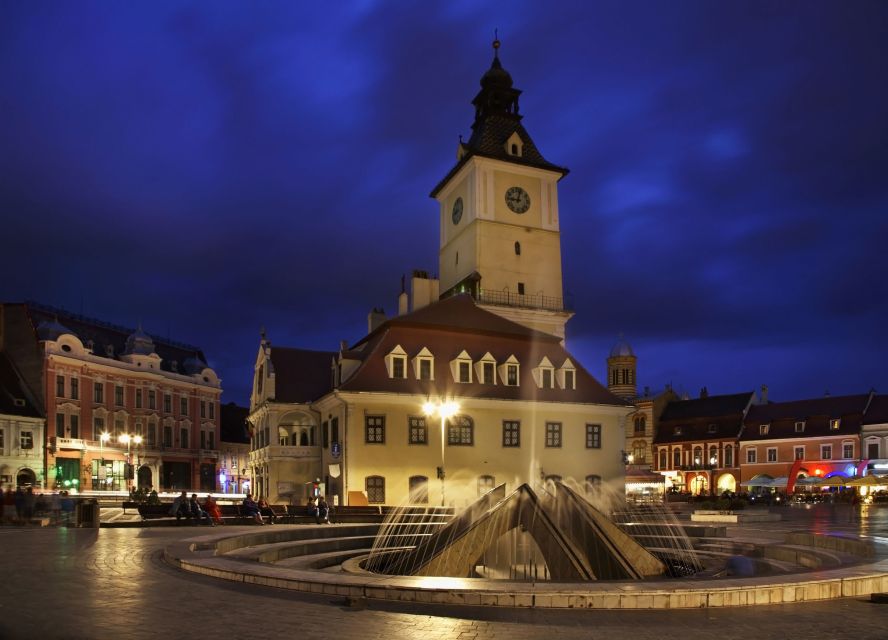
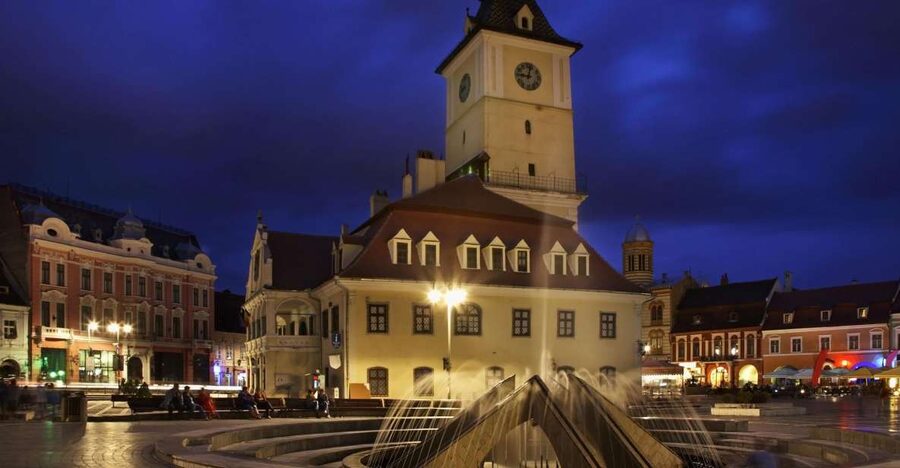
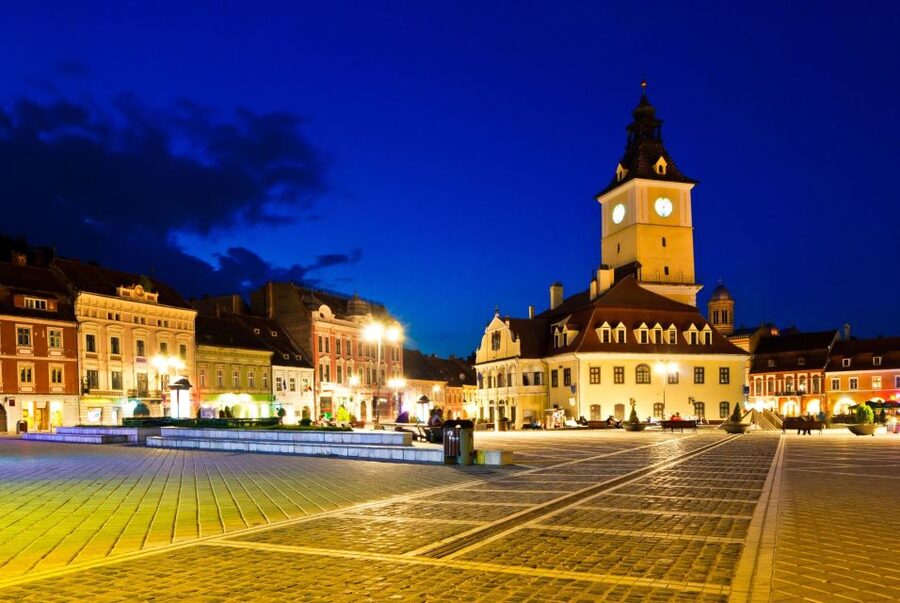
The tour begins at Piata Sfatuli nr. 30, right in front of the History Museum. That’s a smart choice because Piata Sfatuli is the kind of central square where your brain can quickly form a map: from there, the medieval streets make more sense as you move.
I like that the first minutes aren’t just a meet-and-greet. You start with an overview of Brasov’s history, then the guide turns it into walking directions—what to watch for, why certain buildings matter, and how the city’s layout shaped daily life.
This is also where you’ll feel the tour’s pacing. With only 1.5 hours, you’re not trying to “do everything.” Instead, you get a curated circuit of the most narrative-friendly spots, while still having time to pause for details.
The Black Church at night: gothic-baroque drama with real context
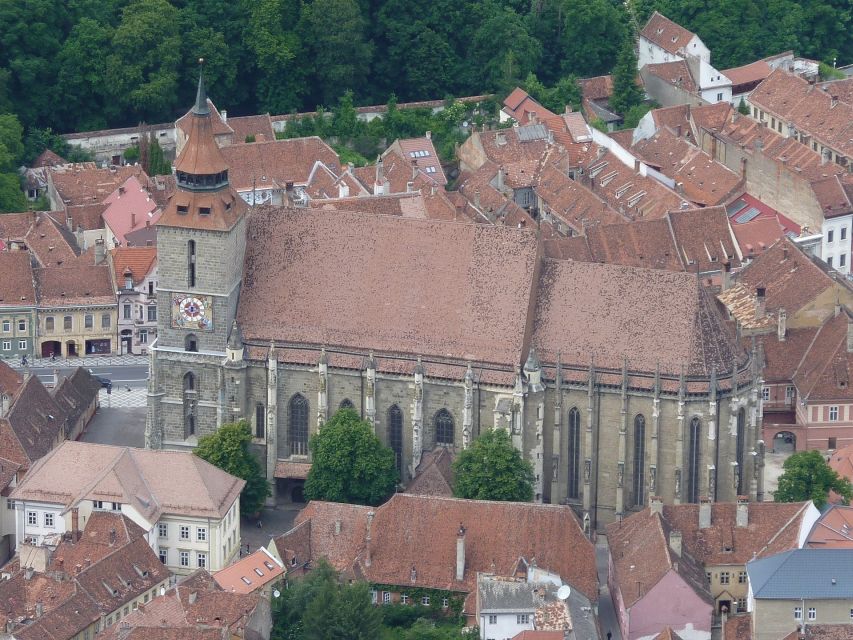
Next comes the Black Church, one of Europe’s largest gothic-baroque churches. Even if you’ve seen churches before, this one hits differently at night because lighting exaggerates angles—arches look sharper, and the facade feels more intentional.
The practical value here is simple: the guide explains the church as part of Brasov’s broader timeline, not as a standalone photo spot. That means when you look up at stonework, you’re not just admiring. You’re linking it to power, faith, and the city’s changing eras.
If you’re the type who likes architecture more when you understand the “why,” this stop tends to land well. It’s visually impressive, yes, but the real payoff is connecting the look of the building to the city’s story the guide keeps building step by step.
Katherine’s Gate and Schei Gate: medieval entrances you can picture
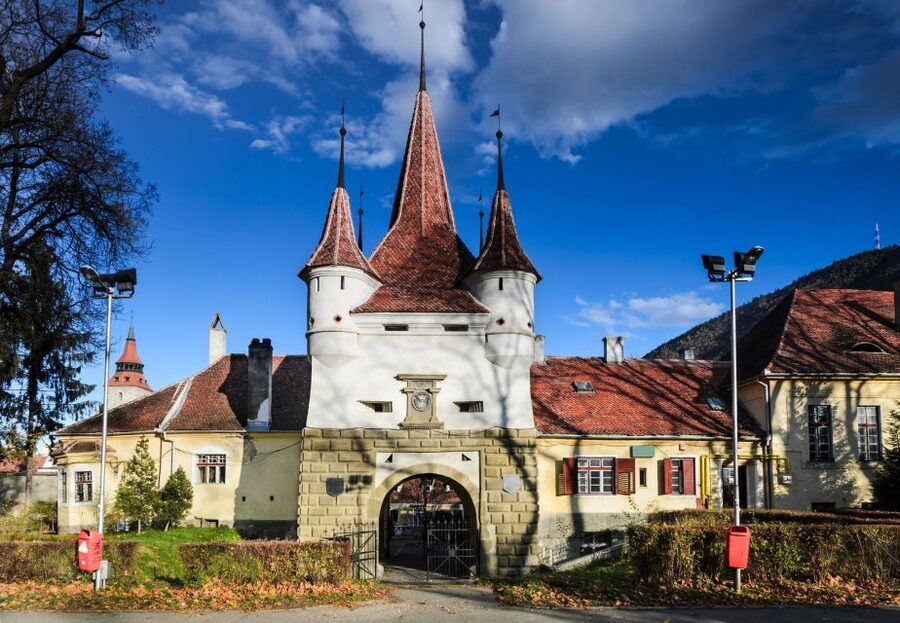
The tour then moves along narrow pathways where the medieval city feels close enough to touch. Two gates anchor this section: Katherine’s Gate, built in the 14th century, and Schei Gate, built almost 200 years later.
Gates are more than stone frames for streets. They’re practical city tools—places where movement, protection, and control met real life. I like that the guide helps you “read” the gates as infrastructure, not just landmarks.
Katherine’s Gate gives you the early medieval sense of defense and boundary-making. Schei Gate adds later layers, showing how Brasov changed as time passed. Together, they’re a fast way to understand that the city didn’t freeze in one era—it kept evolving.
This is also a good moment for photos, since gates and passageways tend to create natural perspective. Just remember: shoes matter more than camera settings here. Uneven paving at night can be slick if it’s wet, and the tour runs rain or shine.
St. Nicholas’ Cathedral: Brasov’s Orthodox landmark in plain sight
After the gates, you reach St. Nicholas’ Cathedral, described as Brasov’s most important Orthodox Cathedral. This stop adds an important balance to what you’ve already seen, since the earlier architecture leans toward Western gothic-baroque influence.
I like that the tour doesn’t treat it as a quick stop-and-go. You learn why it matters within Brasov’s religious and cultural identity, and you get a sense of how different communities shaped the city’s built environment.
At night, cathedrals can feel either too dark to appreciate or too bright to study. The good news is that St. Nicholas’ Cathedral is an anchor point on the route, so you’re not guessing where to focus. You’ll know what to look for while the guide keeps the story moving.
Weaver’s Bastion and the defensive bones of the city
Now the tour turns more atmospheric, and it’s also where the folklore thread becomes more specific. You’ll visit Weaver’s Bastion, one of the biggest buildings of the 14th century.
Bastions are fascinating because they’re where survival and business overlap. They were built to defend, but they also reflect the city’s organization and the people who lived around these structures. A good guide helps you connect the stones to the people and routines that made the city function.
This is also where vampire and ghost stories fit naturally. The tour doesn’t just throw legends at you. It links them to the corners where legends would have grown—places that feel tucked away, strategic, or slightly eerie even without supernatural extras.
The Jewish Synagogue (1901) and Rope Street’s squeeze-test
Two stops deepen the sense of Brasov as a layered European city: the Jewish Synagogue built in 1901, and Rope Street—Europe’s 3rd narrowest street.
Rope Street is the kind of place where your body understands the story fast. A street that narrow forces you to slow down and look outward, not just forward, because the surrounding buildings shape the space. I love when a guide makes you notice how design affects movement, sound, and even social life.
Pair that with the 1901 synagogue, and you get another kind of architectural lesson: not every “historic building” is medieval. Some of the most meaningful traces are later, tied to real communities and their changes over time.
This section is also a good reminder that the tour’s value isn’t only about the biggest, oldest sights. It’s about seeing how different eras overlap on the ground.
Vampire and ghost stories: folklore anchored to real streets
The tour is built to include vampire and ghost stories that haunt Brasov’s streets. What you should expect is a guided mix of legend and place—stories tied to the atmosphere of specific sites like gates, bastions, and lanes.
One nice detail from past tours is that guides often bring a personal voice. Local guides such as Dan—born and raised in Brașov—tend to add firsthand anecdotes, not just textbook facts. That can make folklore feel less like a script and more like part of the city’s living identity.
You might also find the tone ranges from spooky to humorous. Some guides lean into playful storytelling, and on at least some walks there’s been spontaneous music and light theatrics along alley walkways. If you like tours where the guide is engaged with the group, this style is a good match.
If you’re expecting guaranteed full-on ghost theatrics the whole way, keep expectations flexible. The tour still delivers the core: architecture, street-level storytelling, and a memorable evening stroll.
How to pace the walk in 1.5 hours (and not miss the details)
This is a short tour by design: 1.5 hours. That means the route is efficient, and you’ll move at a steady walk between major stops. It’s long enough to cover multiple landmarks, but short enough that you won’t feel trapped for half the evening.
So here’s how to pace it yourself:
- Take photos quickly at each anchor point, then use your eyes after the shutter. Night lighting can trick you, and stone details often reveal themselves in motion.
- Keep one hand free for balance if the sidewalks are uneven. Comfortable shoes aren’t optional here.
- If you have questions, ask them early. The guide’s answers tend to shape the next stops, and you’ll get more out of the rest of the route.
Also note that the tour runs rain or shine. That’s good for planning, but it means you should dress for wet stone, not for dry sidewalks. A light rain layer and warm outerwear are the safer play.
Price and value: is $47 worth a medieval night loop?
At $47 per person for 1.5 hours, this sits in a mid-range band for guided walking tours in Europe. The value comes from concentration: you’re paying for a guide who connects multiple landmarks into one story, instead of dropping you at sites and hoping you connect the dots.
The included live English guide is the big driver. A strong guide can turn a list of buildings into a route you understand—especially with Dracula-era vibes and the specific legends woven into real places like Weaver’s Bastion and Rope Street.
I also think the value improves when the group is small. On some departures, the walk can feel more like a personalized conversation, with more back-and-forth and less crowd noise. Even if your group is larger, the tour’s format still encourages questions because the route is story-based, not just a slideshow.
For many visitors, this is a smart first-night activity. It helps you start using Brasov’s map in your head, so your next day wandering is easier and more satisfying.
Who should book this candlelight architecture tour
This tour fits best if you want your Brasov night to feel meaningful, not random. If you’re interested in medieval architecture, street-level history, and Transylvania-style folklore that’s tied to locations, you’ll likely enjoy the blend.
It’s also a good pick for first-timers. You get a tight overview of the city’s major landmarks—Black Church, Katherine’s Gate, Schei Gate, St. Nicholas’ Cathedral, Weaver’s Bastion, the 1901 Jewish Synagogue, and Rope Street—so you leave with a stronger sense of where to return later.
You may want to skip or adjust expectations if you’re very sensitive to night conditions. The tour is outdoors and runs rain or shine, and some areas may be more streetlit than candlelit in practice. If you prefer daytime touring where you can linger longer and see every surface clearly, pair this with a separate daytime architecture walk instead of treating it as your only sightseeing plan.
Should you book this Brasov medieval night tour?
Yes, if you want a guided night stroll that ties landmarks to stories. The route covers the major architectural hits in a short window, and the guide’s local perspective—often with a characterful, humorous tone—tends to make the city feel less like a checklist.
Book it if you like tours that answer your real questions as you walk. With a live English guide, a manageable 1.5-hour pace, and a route that touches gothic-baroque, Orthodox architecture, defensive structures, and narrow streets, it’s a practical way to use an evening in Brasov.
Skip it only if you strongly dislike night walking or you need full daylight clarity for buildings. In that case, do Brasov’s sights when the sun is up, and save legends for an evening meal.
FAQ
How long is the Brasov candlelight tour of medieval architecture?
The tour lasts 1.5 hours.
Where do I meet for the tour?
Meet at Piata Sfatuli nr. 30, Brasov (in front of the History Museum).
Is the tour offered in English?
Yes, the live tour guide speaks English.
Is the tour wheelchair accessible?
Yes, it is wheelchair accessible.
Does the tour run in bad weather?
The tour runs rain or shine, so dress appropriately for the conditions.
What does the tour cost?
The price is $47 per person.
Can I cancel for a full refund?
Yes. You can cancel up to 24 hours in advance for a full refund.