REVIEW · LAKE BRACCIANO
Caprarola: Villa Farnese, masterpiece of Renaissance architecture
Book on Viator →Operated by Blue Cat Tours · Bookable on Viator
Frescoes inside a fortress. Caprarola’s Palazzo Farnese is one of the most visual Renaissance stops I’ve found. I especially loved the sheer visual punch of the 16th-century frescoes and grotesques, all packed into an imposing pentagonal plan.
The second big win is how much the building makes sense once you have a strong guide and a clear route through the rooms and stairways like the Scala Regia. The one consideration: parts of the upper garden area may be limited (and some water features may not be operating), so go in expecting outdoor sections to be less consistent than the indoor art.
In This Review
- Key things to know before you go
- Where Caprarola sits (and why it is not a Rome day trip)
- Getting to the meeting point and making the 1.5-hour plan work
- Entering Palazzo Farnese: a fortress plan built for art
- Vignola’s Scala Regia and the Hall of the Angels echo
- State rooms and reception spaces: what you should actually look for
- The fresco program becomes unforgettable in the Globe and maps rooms
- The Renaissance gardens: what to expect at the end of the route
- Price and value: what you’re paying for (and where it makes sense)
- Who this tour fits best (and who might want a different plan)
- My booking advice: should you choose Palazzo Farnese in Caprarola?
- FAQ
- How long is the Palazzo Farnese in Caprarola tour?
- Where does the tour start and end?
- Is the tour offered in English?
- What is included in the price?
- Is this a private tour?
- Do I need to print a ticket?
- Can I cancel for free?
- Is Palazzo Farnese in Rome?
- One last thing before you go
Key things to know before you go
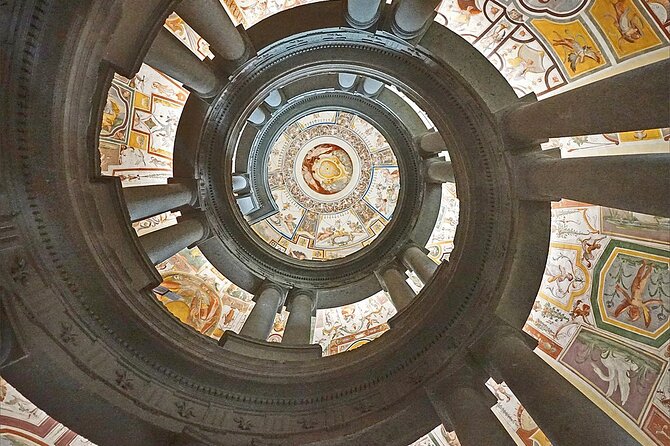
- A pentagonal palace with frescoes everywhere: you’re not looking at one pretty room; you’re walking through a whole painted program.
- Vignola’s Scala Regia: dramatic staircase design plus storytelling about who used it and why.
- Echo in the Hall of the Angels: a specific room detail worth paying attention to as you move.
- Fresco themes with real context: guide explanations help you connect the classical and religious references.
- Renaissance gardens at the end: statues, fountains, chestnut woods, and cypress trees, reached on a planned route.
Where Caprarola sits (and why it is not a Rome day trip)
Caprarola is near Viterbo, in Lazio, and it also fits naturally with a Lake Bracciano plan. The payoff is that you get a major Renaissance masterpiece without the crush and chaos that can follow Rome’s top sites.
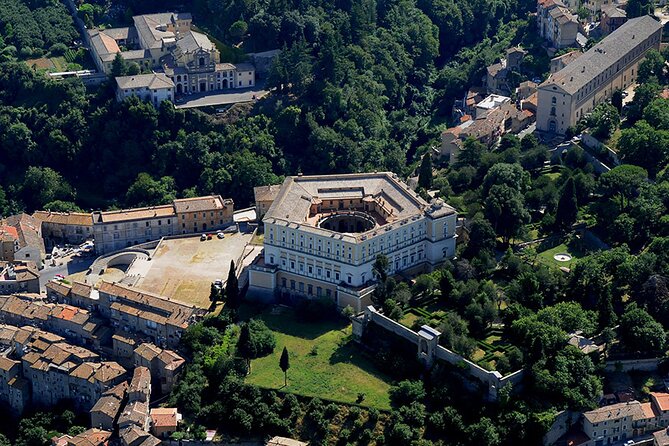
The big practical point: Palazzo Farnese in Caprarola is not in Rome. Double-check this before you load the address into your maps app, because Caprarola is about 60 km from Rome, and getting that wrong is an easy mistake.
Getting to the meeting point and making the 1.5-hour plan work
This tour starts at Via Filippo Nicolai, 1, 01032 Caprarola VT, Italy and finishes back at the same spot. The scheduled time is about 1 hour 30 minutes, with admission included, so you should plan a calm pace rather than trying to cram Caprarola into a rushed hop-between-stops day.
You’ll also want to think about transport. Caprarola is the kind of hill town where a car makes life easier, and narrow streets can make parking and movement less simple than in big-city centers.
Entering Palazzo Farnese: a fortress plan built for art
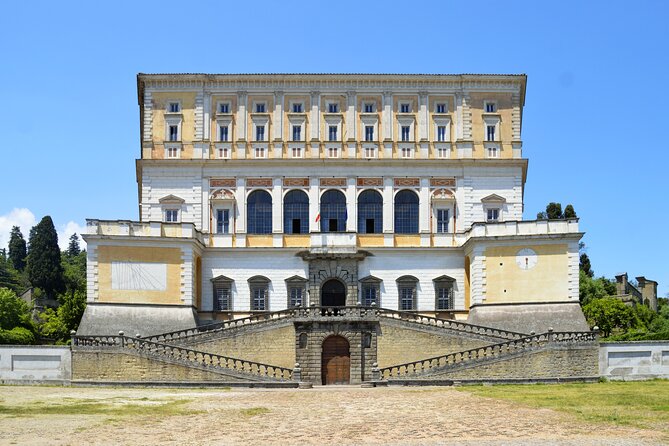
Palazzo Farnese in Caprarola is a late Renaissance mansion designed like a pentagonal fortress. That outer feel matters because it frames how you experience the interior: this place feels guarded and intentional, not just decorative.
Inside, you’re met with 16th-century frescoes and grotesques across walls and ceilings, and it becomes clear quickly that this wasn’t meant to be quiet “look for 10 minutes” sightseeing. The rooms are mostly about surface and story—painting, symbolism, and space—so having a route and guidance really pays off.
Vignola’s Scala Regia and the Hall of the Angels echo
One of the star architectural moments is the Scala Regia, the staircase tied to Cardinal Alessandro Farnese’s access to the main-floor apartments. This is where the building’s design starts doing more than moving you from one level to another; it’s part of the palace’s theater.
The tour also calls out the Sala degli Angeli (Hall of the Angels), where there’s an echo you’re meant to notice. It’s a small detail, but it makes the room feel alive, like the architecture is cooperating with your senses instead of just sitting there.
State rooms and reception spaces: what you should actually look for
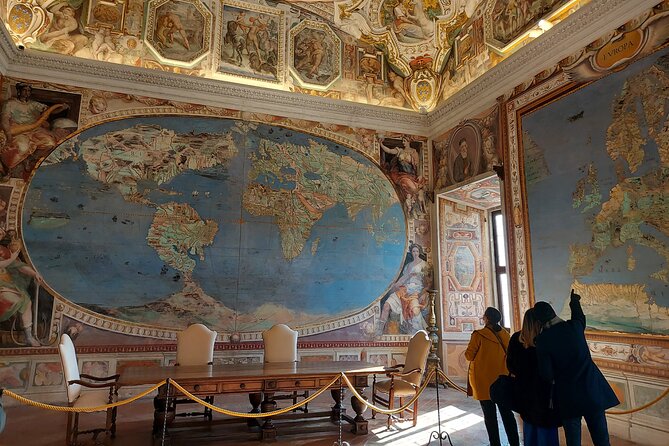
As you move through the main interiors, you’ll see state rooms and the reception hall, plus plenty of painted decoration that covers walls and ceilings. The practical trick is not to try to read everything; instead, look for the big visual structure first—figures, scenes, and how the composition fills the room.
A guided approach makes a noticeable difference here. Fresco programs often mix classical references with religious themes, and the meaning can slide right past you if you only skim the art. With the right explanations, the subjects become more than pretty scenes; they connect to power, taste, and the worldview of the Farnese circle.
The fresco program becomes unforgettable in the Globe and maps rooms
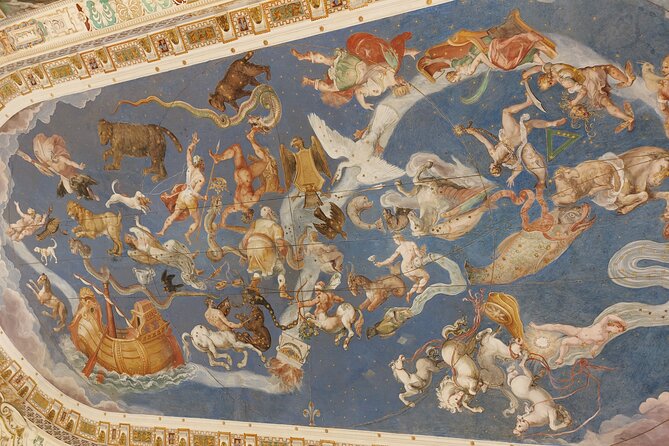
Caprarola’s Palazzo Farnese doesn’t just “do religion and mythology.” One room that people get excited about is the hall often associated with the Globe, and there’s also a notable maps room circa 1573 showing how the papal power understood geography.
If you like the idea of art as a snapshot of how people saw the world, this is where you’ll feel the building turn intellectual. The painted maps and geography-themed imagery can make the whole palace feel less like a decorative shell and more like a statement about knowledge and authority.
The Renaissance gardens: what to expect at the end of the route
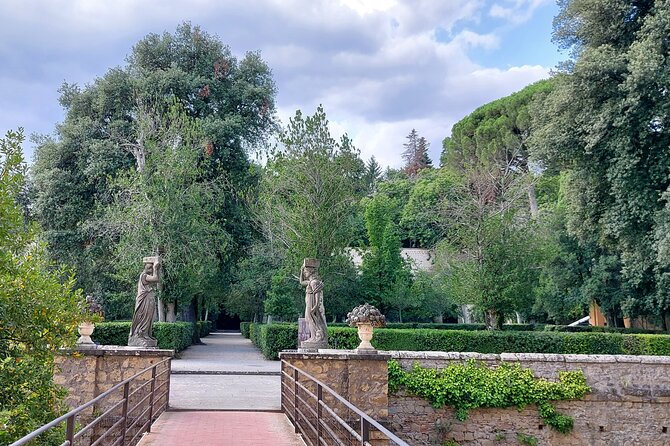
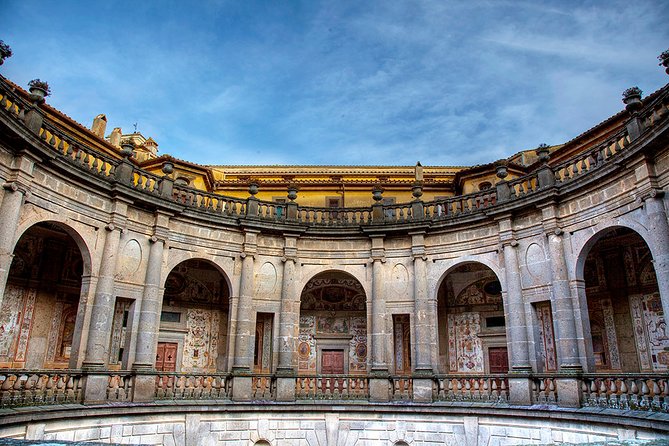
The tour ends in the Renaissance gardens of the Villa, reached after the palace visit. This is where the mood softens from fortress-dark to outdoor light, and you start seeing the palace as part of a larger designed space.
The garden area is described as enriched with statues, fountains, chestnut woods, and cypress trees. You should expect a route that leads you onward and forward, and you may find areas with restoration limits in the upper sections, so don’t count on every corner being open and perfectly functioning.
Price and value: what you’re paying for (and where it makes sense)
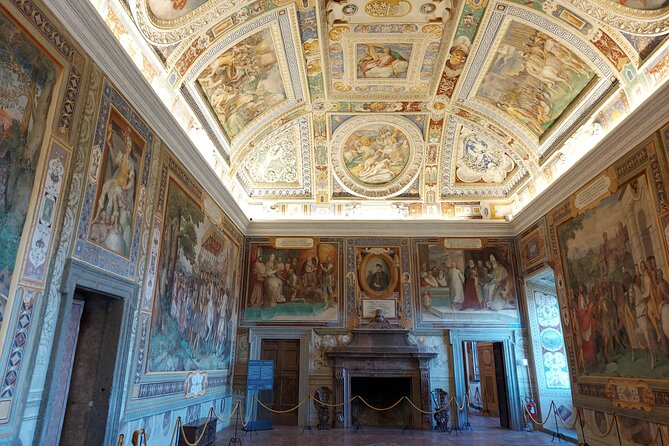
At $138.16 per person, this is not a budget add-on, so you’ll want to feel the value fast. The tour includes entry tickets, which matters because Palazzo Farnese is an attraction where the guided interpretation can feel like the real multiplier.
The strongest value is interpretive: the palace has huge painted walls, but few furnishings, so it can be easy to see color without catching the plan. When a guide connects the fresco themes, architecture, and stairways, you get more than a photo stop—you get a coherent experience.
The rating is solid, with 4.6 out of 5 and 93% recommended, which matches the overall pattern: people tend to rate it highly when they get proper guidance and a full route through the rooms and gardens. There are also some practical complaints (like garden maintenance or non-working water features), but those don’t cancel out the core experience if you go in with realistic expectations.
Who this tour fits best (and who might want a different plan)
I think this tour is ideal for you if you like Renaissance architecture but also want help making sense of it. If you care about what a staircase means, why a room has a particular effect, or what fresco subjects say about who commissioned them, you’ll likely get a lot more out of your hour and a half.
It can also work well as part of a broader day around Viterbo and Lake Bracciano, since Caprarola adds something big and very specific. If you’re only interested in quick exteriors or you prefer to wander entirely on your own with minimal structure, the time format and one-way feel of the route may feel a bit strict.
My booking advice: should you choose Palazzo Farnese in Caprarola?
If you want a Renaissance site that’s art-forward and architecture-heavy, I’d book this. The palace design, the fresco density, and the guided connections (including details like the Hall of the Angels echo and Vignola’s role) add up to a visit that feels more like understanding than just looking.
I would only hesitate if you’re traveling with very limited time and need more flexible pacing, or if you strongly prefer attractions where all outdoor water features and garden areas are guaranteed to be fully operational. For many people, though, the interior painting and the planned garden finish make the tour worth your effort.
FAQ
How long is the Palazzo Farnese in Caprarola tour?
The tour is approximately 1 hour 30 minutes.
Where does the tour start and end?
It starts at Via Filippo Nicolai, 1, 01032 Caprarola VT, Italy, and ends back at the meeting point.
Is the tour offered in English?
Yes, it is offered in English.
What is included in the price?
Entry tickets to Palazzo Farnese in Caprarola are included.
Is this a private tour?
Yes. It’s a private tour/activity, so only your group participates.
Do I need to print a ticket?
No. You get a mobile ticket.
Can I cancel for free?
Yes, free cancellation is available. You can cancel up to 24 hours in advance for a full refund.
Is Palazzo Farnese in Rome?
No. Palazzo Farnese in Caprarola is in Caprarola (near Viterbo), not in Rome.
One last thing before you go
Bring curiosity and slow your brain down for a bit. Palazzo Farnese rewards attention to details—stairways, room effects, and the way painted scenes communicate ideas—so give it the full 1.5 hours and you’ll get much more back than a quick photo circuit.