REVIEW · FLORENCE
Experience Florence’s Art and Architecture on a Walking Tour
Book on Viator →Operated by Free Tour Florence – Another Florence · Bookable on Viator
Florence can feel like a lot at once. This walking tour gives you fast bearings and turns key landmarks into a story you can actually use as you explore on your own. I like that you’re not stuck with a map and a guess—your guide keeps the route moving while you pick up context as you go.
What really makes this tour work is the architecture-first pacing and the way it links big-name places to people, families, and art. Expect stops that range from Santa Maria Novella to Piazza della Signoria, with standout moments tied to the Medici world and famous sculptors. One thing to consider: audio can be an issue in busy outdoor spaces, so if you’re not hearing clearly, you may want to stand closer to the leader.
In This Review
- Key points to know before you go
- Price and logistics that actually matter
- The 10:30am route: what the 2h15 walk feels like
- Stop-by-stop: Santa Maria Novella to Santa Croce
- 1) Basilica of Santa Maria Novella: a calm opening
- 2) Via de’ Tornabuoni: shopping streets with serious architecture
- 3) Piazza della Repubblica: where the city’s older life peeks through
- 4) Cathedral area (Santa Maria del Fiore): the must-see complex, with a cost catch
- 5) Orsanmichele church and museum: sculptures with big names
- 6) Piazza della Signoria: political Florence and sculpture at human scale
- 7) Basilica of Santa Croce: Dante’s monument and a satisfying finish
- Guides: the human difference you’ll feel in the details
- What you’ll learn to look for (so Florence makes more sense)
- Comfort tips for a better morning in the center
- Who this tour suits best
- Should you book this walking tour?
- FAQ
- Is this tour in English?
- How long is the Florence art and architecture walking tour?
- Where do I meet the guide, and where does the tour end?
- Is admission included for the Cathedral of Santa Maria del Fiore area?
- How big is the group?
- Does the tour require good weather?
Key points to know before you go
- Small-group flow: typically capped at 20, which helps with pace and questions.
- Express route: about 2 hours 15 minutes to cover major sights without feeling like a marathon.
- English-led storytelling: guides explain what you’re seeing, not just where it is.
- Big art names, street level: you’ll encounter references to Donatello, Ghiberti, Giambologna, and more.
- One admission catch: the Duomo area (Battistero/Campanile/Cupola views) is not included.
- Ends in a great neighborhood: you finish near Piazza Santa Croce, handy for continuing your day.
Price and logistics that actually matter
At $3.63 per person, this is priced like a “starter move” for your Florence trip. The real value is that you buy your time: a guided morning route that covers a lot of ground in a short window, so you don’t waste your first day wandering in the wrong direction.
There are also two practical upsides to the setup. First, it’s a mobile ticket experience, so you’re not hunting for paper. Second, it’s offered in English, and the group size is kept small enough that you’re usually part of the walk instead of stuck at the back.
Now the caution. If you’re the type who needs perfect audio at a distance, outdoor sound in Florence can be chaotic. Some people have pointed out that they wished for better sound equipment like headsets—so aim to position yourself where you’ll hear the guide clearly.
You can also read our reviews of more tours and experiences in Florence.
The 10:30am route: what the 2h15 walk feels like
This starts at 10:30am at P.za di Santa Maria Novella, 4n. You end at Piazza di Santa Croce (Piazza di Santa Croce, 18R). That end point is not random. Santa Croce sits in a lively zone where it’s easy to keep going—food, viewpoints nearby, and more churches if you still have energy.
The time commitment is short enough for most schedules, but it’s not a “stand around and admire” tour. You’ll be moving through the city center, following your guide from landmark to landmark. One review note that matters: on hot days, good guides try to find shade when they can, and that can make a big difference in how enjoyable the whole morning feels.
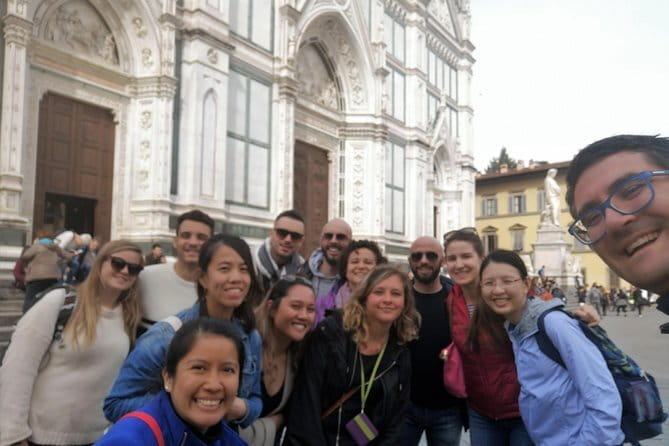
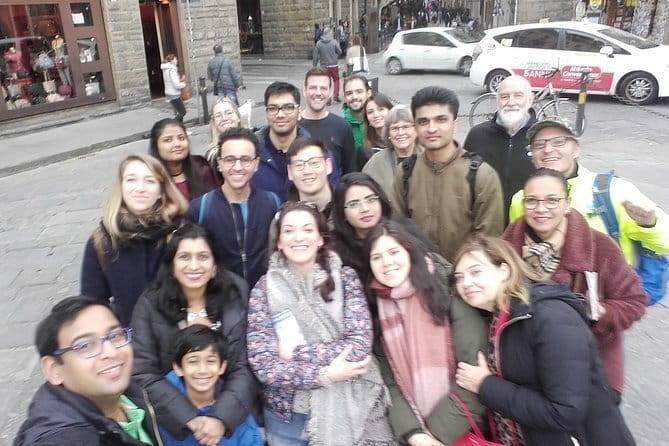
Group size matters too. The tour is described as having a maximum of 20 travelers, and that usually helps the walk stay organized. Still, Florence in peak season can get messy, so if you show up in a packed crowd, do your part: be patient, stand where you can see and hear, and keep your expectations aligned with an outdoor walking experience.
Stop-by-stop: Santa Maria Novella to Santa Croce
1) Basilica of Santa Maria Novella: a calm opening
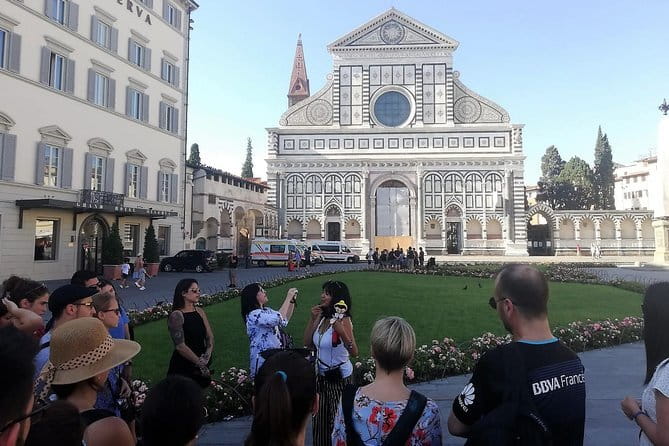
Your first stop is Basilica of Santa Maria Novella. This is a smart place to start because it’s a major church right at the beginning of the historic center. You get oriented fast: the name, the setting, and how Florentine religious architecture anchors the city’s look and rhythm.
Even with a short visit time, the key is interpretation. You’re not just seeing stone—you’re learning how the church sits in Florentine storylines, which makes the later stops hit harder. If you’re used to reading art labels only after the fact, this kind of start helps you look with purpose.
A practical note: the stop is listed with free admission ticket (so you’re not paying extra just to stand and take in the building). If you want interior time, your best move is to pace your energy for later, because the tour stays an express format.
2) Via de’ Tornabuoni: shopping streets with serious architecture
Next comes Via de’ Tornabuoni, a street that looks like it belongs to a fashion magazine but has serious architectural context layered underneath. The route loops by Piazza Antinori, the shopping streets, and you pass by Palazzo Strozzi and Piazza Santa Trinita.
This stretch is valuable because it teaches you how Florence’s identity works outside the biggest museums. You get used to the idea that the “important stuff” isn’t locked behind walls. It’s also in palace facades, piazzas, and street alignments.
The drawback here is simple: this is a place where crowds love to form. If the street is crowded, you’ll want to keep your body flexible—pause when the guide asks you to look, then move quickly to avoid being trapped in a slow-moving pack.
3) Piazza della Repubblica: where the city’s older life peeks through
Then you hit Piazza della Repubblica. The tour frames it around Firenze Romana, the Roman layer of the city. Even if you don’t see Roman ruins with your eyes at every second, the point is learning that Florence has multiple eras overlapping in the same spaces.
This is a good stop for people who like a quick “timeline check.” It helps you stop thinking of Florence as one single style. You start seeing it as a sequence of upgrades—Roman foundations, Renaissance reinventions, and later additions.
Because the stop time is short, don’t expect a long lecture. Instead, treat it like a mental bookmark: you’ll connect it to what you see later when the guide brings in more Medici-era and Renaissance references.
4) Cathedral area (Santa Maria del Fiore): the must-see complex, with a cost catch
Your next major anchor is the Cathedral of Santa Maria del Fiore area, including the Battistero, Campanile di Giotto, and the Cupola del Brunelleschi. This is the Florence postcard zone—and it’s also where your eyes want time.
Here’s the catch: admission is not included. So the tour can still help you understand what you’re seeing from the outside or from accessible areas, but if you specifically want to go inside a paid component, you’ll need to plan that separately.
This stop is still worth it. If you’ve never studied the Duomo complex before, you’ll walk away with a clearer mental map: what’s what, and why the different parts matter. That alone makes the “not included” note less scary because you’re buying understanding, not just access.
5) Orsanmichele church and museum: sculptures with big names
Then you move to Church and Museum of Orsanmichele, where the focus turns to art—especially sculpture. The tour highlights statues linked to Donatello, Ghiberti, Giambologna, Brunelleschi, Verrocchio, Sangallo, Orcagna, and more.
This is where the tour can feel extra valuable, because street-level or outside viewing often leaves you wondering. A guide can connect the dots between the names and the style. Suddenly, you’re not just seeing ornate work; you’re learning who shaped Florence’s sculptural language.
One possible consideration: this is a museum/church type stop, and it may not suit everyone if you want only outdoor views. But if you like art history that stays human and specific, this is one of the more rewarding parts of the route.
6) Piazza della Signoria: political Florence and sculpture at human scale
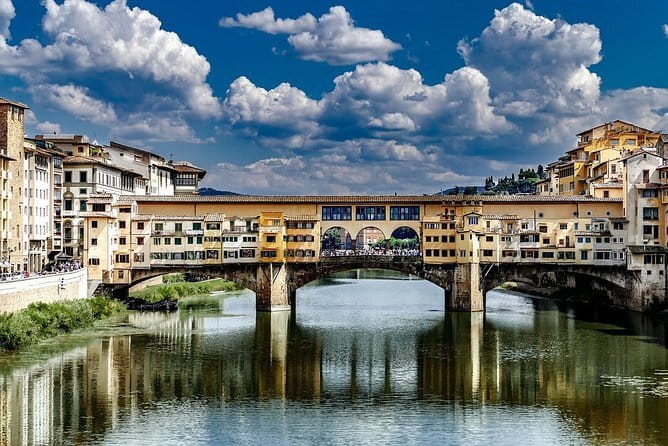
Next is Piazza della Signoria, a top-tier stop if you want Florence’s “power center” feeling. The tour connects the area to Palazzo Vecchio, Uffizi, Ponte Vecchio, Loggia de’ Lanzi, and the Torre di Arnolfo.
What makes this piazza special is how it mixes architecture and sculpture in one public room. The tour also points out famous works associated with names you’ll keep hearing across the city, including David, Marzocco, and references tied to Cosimo de’ Medici, Perseo, and Cellini.
If you’re wondering why guides keep returning to this place, it’s because Signoria is where you can feel Renaissance ideas about art, government, and civic identity meeting in one open space. The pace is quicker here (the stop is longer than some, but still express), so listen closely: the guide will point out how to look, not just what to see.
7) Basilica of Santa Croce: Dante’s monument and a satisfying finish
You end at Basilica of Santa Croce, including its history and the monument to Dante. Finishing here is smart because Santa Croce is both meaningful and practical. You can wrap up the tour and still have energy for nearby walking, a coffee break, or another church or two.
This final stop is a strong emotional close. Florence’s art and architecture can feel heavy if you only focus on masterpieces and money. Santa Croce brings in literary and civic weight—Dante is not background noise; he anchors what “Florence culture” means to many visitors.
Because it’s at the end of your walking arc, the best tip is to take a moment to slow down right here. Don’t rush your photos or your last look. You’ll be glad you did when you compare this ending feel with the more intense cathedral and piazza energy earlier in the morning.
Guides: the human difference you’ll feel in the details
The success of this tour depends heavily on the leader. You’ll see that pattern in the feedback: guides like Ludi, Natalia, Ludovica, and Ryan are repeatedly described as excellent. That’s not random praise. It usually means they do the hard part well—connecting names and dates to what you’re seeing in front of you.
One standout style noted is pacing. A guide who walks slow enough for the group means the story lands. Another common compliment is practical help: where to go next, food hints, and even where to find views. That turns the tour from a checkbox into a morning that sets up the rest of your trip.
There’s also one less-fun lesson: sound. If you’re far from the guide, you might miss explanations, especially in busy squares. If the group gets dense, your best defense is positioning—stick near the leader so you get the full value of the art-and-architecture talk.
What you’ll learn to look for (so Florence makes more sense)
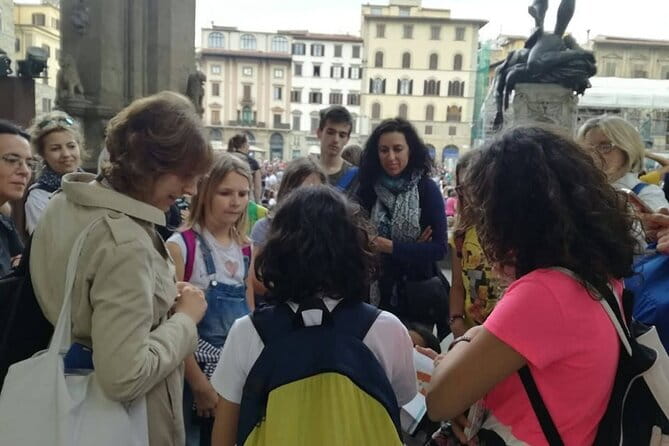
This tour is an introduction, but it’s not a generic “tour of famous buildings.” The stops are designed to train your eyes.
You’ll start noticing that Florentine churches often work like landmarks with identity—Santa Maria Novella is not just a church, it’s an opening key to how the city frames belief and beauty. Then streets like Via de’ Tornabuoni show you how palaces and public squares create a visual timeline you can walk through.
The sculpture stops give you another skill: reading art names in context. When you hear names like Donatello or Ghiberti tied to Orsanmichele, it helps you understand why Florence is considered a sculpture powerhouse, not just a museum city.
Then Piazza della Signoria makes everything political and civic. You stop seeing Florence as purely religious or purely artistic. It becomes a place where art helped define power—and that’s why the Medici and civic symbols keep coming up.
Comfort tips for a better morning in the center
Florence walking can be deceptively tiring because you’re often in sun, stone, and crowds. The guide can help by finding shade when possible, but you still control your personal comfort.
Bring water and something light to cover up for sun. Wear shoes you can handle on uneven old streets. And if you’re sensitive to heat, plan this tour early in the day, which is exactly why a 10:30am start is a good idea.
If audio is a concern for you, keep this simple rule: don’t hang back. In a guided outdoor walk, your distance is your problem solver. Stand where the leader can see you and speak toward you, even if it means you’re a little closer to the front.
Who this tour suits best
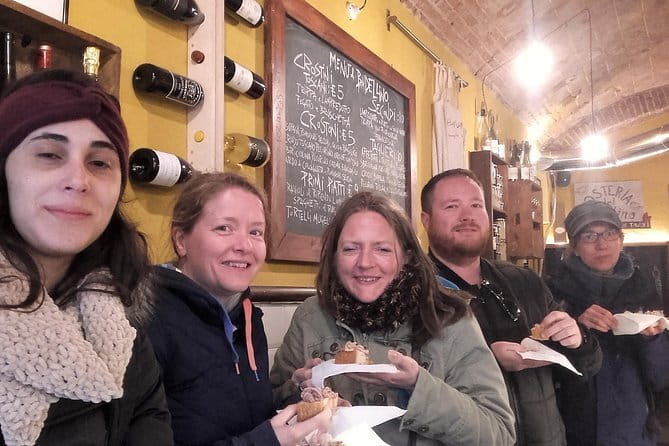
You’ll likely enjoy this most if you’re:
- On your first trip and want a quick map-less orientation through major landmarks
- Interested in how Florentine history shows up in architecture, not only in museums
- Traveling with limited time and want a morning plan that ends in a great area
- The kind of traveler who likes street-level context—piazzas, palaces, and churches as living parts of the city
If you’re looking for long museum time inside paid interiors, this might feel too fast. It’s built as an express overview, not a slow “sit and read every label” day.
Should you book this walking tour?
Yes, book it if you want a strong start for your Florence days without paying big-city tour prices. The route is efficient, the stops are meaningful, and the guide-driven storytelling is where the value sits.
But choose carefully if you’re very sensitive to sound. If you tend to struggle hearing in busy environments, plan to stand nearer the leader and accept that outdoor audio has limits. Also note the Duomo-area admission is not included, so decide ahead of time if you want to add an interior visit on your own.
If you want an art-and-architecture morning that helps you navigate Florence with confidence, this is a smart use of time—especially at a price level that leaves room in your budget for later tickets and meals.
FAQ
Is this tour in English?
Yes. The tour is offered in English.
How long is the Florence art and architecture walking tour?
It runs for about 2 hours 15 minutes.
Where do I meet the guide, and where does the tour end?
You start at P.za di Santa Maria Novella, 4n, and you end at Piazza di Santa Croce (Piazza di Santa Croce, 18R).
Is admission included for the Cathedral of Santa Maria del Fiore area?
No. Admission for the Cathedral complex area (including the Battistero, Campanile di Giotto, and Cupola del Brunelleschi) is not included.
How big is the group?
The tour has a maximum of 20 travelers.
Does the tour require good weather?
Yes. It requires good weather, and if it’s canceled due to poor weather, you’ll be offered a different date or a full refund.