REVIEW · BISHKEK
Ancient Burana Tower (Architectural wonder of Central Asia)
Book on GetYourGuide →Operated by TDP · Bookable on GetYourGuide
That minaret has survived everything.
This Burana Tower trip is a focused dose of Kyrgyzstan’s past, set in the Chui Valley with the Tien Shan mountains as your constant backdrop. I love the way the tower rises above the trees, looking dramatic even before you get close, and it feels like you’re watching time stand still. I also like how the guide ties the stones you see to the bigger story of Balasagun, so the ruins make sense instead of just looking old.
One catch: the price can feel a bit steep if you’re picky about value per hour, since you’re going out of Bishkek for a long drive and the visit is mostly about archaeology and stones, not modern attractions.
In This Review
- Key highlights you’ll feel right away
- Burana Tower: Your first sight of a Chui Valley landmark
- Balasagun and the centuries you’ll hear in the guide’s story
- Museum of Ancient Stones, petroglyphs, balbals, and grinding stones
- Drive time from Bishkek: Tien Shan views and photo planning
- How the 5.5 hours actually feel on the ground
- Price and value: Is $76 for Burana Tower worth it?
- Best fit: Who should book this and who should skip it?
- FAQ
- Is Burana Tower tour in northern Kyrgyzstan?
- How long is the experience?
- How much does it cost?
- What’s included in the tour price?
- Is food or drinks included?
- What languages are available?
- How big is the group?
- What do I need to bring and is anything not allowed?
- Should you book this Burana Tower tour?
Key highlights you’ll feel right away
- Burana Tower’s 11th-century minaret remains: the main structure left from ancient Balasagun
- Museum of Ancient Stones: quick, practical context before you walk the site
- Petroglyphs and balbals: rock art and memorial stones you can actually see up close
- Grinding stones: small details that connect you to daily life, not only legends
- Tien Shan photo moments: the view builds as you move around the tower area
- Small group limit (12 people): enough time to ask questions without feeling rushed
Burana Tower: Your first sight of a Chui Valley landmark
When you’re driving toward Burana Tower, the feeling changes as you get closer. It’s not just a building in the distance. The tower silhouette looks sturdy and old at the same time, like it’s refusing to disappear. Even from viewpoints along the way, you’ll notice how it sits above the greenery, then frames the mountain view behind it.
What makes this stop special is that you’re not only looking at a monument. You’re watching a surviving piece of an older city that once mattered here. Burana Tower is described as the largest minaret in the Chui Valley, and that scale shows in the way it dominates the area around it. If you enjoy architecture, the proportions are what grab you. If you enjoy landscapes, the mountains do that job for you—without needing fancy planning.
You may also have the option to climb the tower. I’ll say this plainly: if you don’t like tight spaces, don’t force it. One traveler skipped the climb due to claustrophobia, and that’s a real consideration for a “you can climb it” site.
Balasagun and the centuries you’ll hear in the guide’s story
This tower isn’t an isolated “random ruin.” It’s the last major reminder of Balasagun, an ancient historical city that formed part of the region’s power for centuries. The key dates you’ll hear are the ones that explain the layers you’re looking at.
Balasagun is linked to the Kalahandi khaganate (9th to 11th centuries). Later, the city suffered heavily: it was ransacked by the Mongols in 1218, and by the 14th century the city was destroyed and left in disrepair. That history isn’t just trivia. It helps you understand why the site feels like fragments—because that’s literally what survived.
This is where a good guide matters. With an English-speaking guide (the tour uses English, and you might also hear Urdu or Russian depending on the situation), you get a way to connect the stones to a timeline. You’ll also cover the region’s history with Islam—including how Islamic influence fits into what came before. The goal isn’t debate. It’s context: the stones come from one era, and the religious and cultural story of the region develops over time.
If you like history that’s tied to physical places, this kind of storytelling turns the stop from scenic to meaningful.
Museum of Ancient Stones, petroglyphs, balbals, and grinding stones
After the initial tower viewing, you’ll switch from “big view” to “hands-on details.” The Museum of Ancient Stones is your quick orientation. It’s the kind of stop that makes the rest of the site easier to read: you get names, themes, and what the guide wants you to notice next.
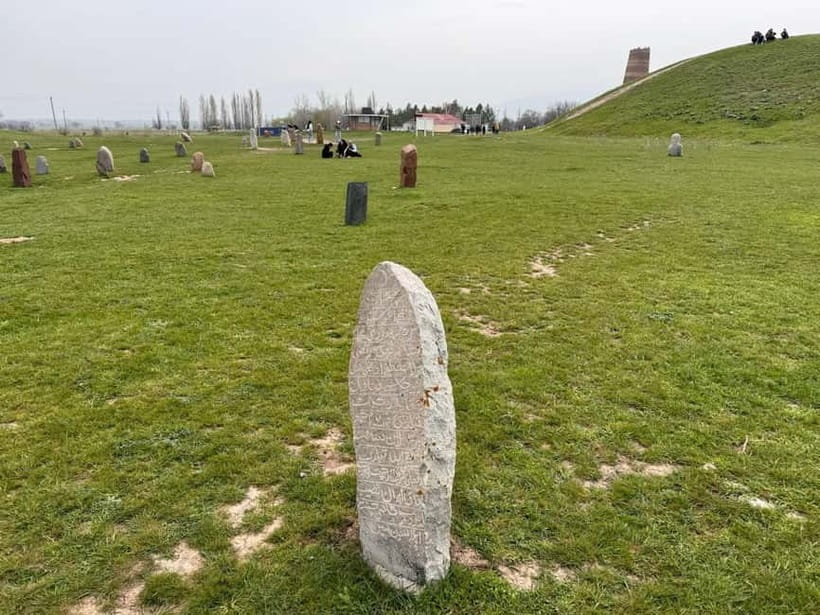
Then comes the stone trail: petroglyphs (rock carvings), balbals (standing stone memorials), and grinding stones. These sound like a list, but each one tells a different kind of story.
- Petroglyphs help you see symbolism and human presence on the rocks themselves.
- Balbals bring in the idea of memory and commemoration—stones placed to represent people or events.
- Grinding stones are the most grounding. They point to the everyday work that kept a community going.
One thing I appreciate about sites like this is that the experience isn’t only about one iconic object. It’s about reading a whole set of clues across multiple spots. If you’ve ever felt annoyed by tours that rush you from photo to photo, this one works better because it gives you time to look closely.
Also, expect a small museum setting and a yurt area as part of the overall stop. The yurt part won’t replace the tower, but it gives you a human-scale contrast to all that stone.
Drive time from Bishkek: Tien Shan views and photo planning
This tour is based in Bishkek, and the drive is part of the experience even when it’s not the main event. You’re looking at about 70 km from Bishkek, and the tower is around 12 km from Tokmok. In real life, that usually translates to roughly 90 minutes each way, depending on road conditions and pickup logistics.
Why does that matter? Because it affects how you prepare your day. If you hate long car time, this may feel like a lot. If you don’t mind riding with a guide, it’s also your buffer time to enjoy changing views—especially the Tien Shan mountain range moments the tour is designed around.
Bring a camera you can operate one-handed, because the best shots often happen when you’re walking from one viewpoint to another and you don’t want to stop your group. Also, have a lens-ready plan: wide angle for the tower with mountains behind it, and a smaller zoom for carvings and stone textures once you’re on-site.
And yes, there are scenic stops on the way. That means you’re not trapped in the car the whole time. Still, the core value of the trip stays the same: it’s built around the Burana Tower area and the stones around it.
How the 5.5 hours actually feel on the ground
The total duration is 5.5 hours, with a clear tower focus. You’ll spend about 2.25 hours at Burana Tower, which typically includes guided time, break time, and free time. That mix matters. You get the facts from the guide, but you also get enough space to slow down, look at details, and take photos without feeling like someone is counting down your moments.
What you’ll be doing during the session is mostly:
- sightseeing and walking around the tower area
- museum time
- viewing petroglyphs, balbals, and grinding stones
- getting scenic views as you move between points
If you plan to climb, factor that into your personal pace. One traveler skipped the climb due to claustrophobia, so the option is real, but it’s also personal. If you’re not climbing, you’ll likely spend more time studying the stone heads and surrounding details at ground level.
The group size is kept small—up to 12 participants—which helps if you have questions or want the guide to explain what you’re looking at right now. You’ll also get pickups tied to the Bishkek area; the tour starts at the Paramount Kyrgyz Republic Flag location, and transport from Bishkek city is included.
One practical note: this is a stones-and-history day, not a sit-down lunch-and-shop day. Food and drinks aren’t included, so plan around that.
Price and value: Is $76 for Burana Tower worth it?
At $76 per person, the real question is what you get for the money. This tour includes:
- an English-speaking guide
- all transport from Bishkek city
- museum tickets
- guided learning tied to the stones and historical themes
What’s not included is food and drinks. So you’re paying for the guide plus the logistics of getting you to a site that’s about an hour-ish outside the city, and for the time to see multiple stone-focused stops in one half-day.
In value terms, I think it’s strongest if:
- you want a structured history explanation without doing the driving yourself
- you care about archaeology details (petroglyphs, balbals, grinding stones)
- you like small-group touring rather than a rushed bus day
It’s weaker if you’re hoping for a full day of activities. This isn’t a long stay in a nature park. It’s a concentrated, guided visit built around the Burana Tower area. One traveler even compared it to a national park day trip and said a park can be nicer for pure day-out vibes. That tracks: choose this one when you want culture and stones.
Also, price can feel different depending on whether the tour runs as a shared group or more of a private-style pickup experience. If you’re cost-sensitive, it helps to confirm that you’ll be in a small shared group rather than paying premium convenience.
Best fit: Who should book this and who should skip it?
I’d recommend this tour to you if you:
- enjoy Central Asian history tied to real sites
- like guided explanations that help you “read” carvings and memorial stones
- want a manageable half-day outing from Bishkek
- appreciate mountain views and strong photo opportunities
You might want to skip or reconsider if you:
- dislike long car rides for a short site visit
- are uncomfortable with tight spaces if you’re tempted to climb
- have mobility concerns that make walking and stone viewing difficult (the tour is wheelchair accessible, but the site itself may still be uneven)
There’s also a strict note: the tour is not suitable for people over 95 years. If you’re traveling with older family members, plan carefully.
Finally, a simple rule that keeps the day smooth: alcohol and drugs aren’t allowed.
FAQ
Is Burana Tower tour in northern Kyrgyzstan?
The tour focuses on Burana Tower in the Kyrgyz Republic, near Tokmok in the Chui Valley, with pickups from Bishkek.
How long is the experience?
It runs for 5.5 hours total.
How much does it cost?
The price is $76 per person.
What’s included in the tour price?
You get an English-speaking guide, transport from Bishkek city, and tickets for the museum entrance, plus guided history and site themes.
Is food or drinks included?
No. Food and drinks are not included.
What languages are available?
The live tour guide is listed as English, Urdu, and Russian.
How big is the group?
It’s a small group, limited to up to 12 participants.
What do I need to bring and is anything not allowed?
Bring weather-appropriate clothing and a passport or ID card (a copy is accepted). Alcohol and drugs are not allowed.
Should you book this Burana Tower tour?
If you want a straightforward, guide-led half-day with Burana Tower, petroglyphs, balbals, and grinding stones, I think it’s a solid choice. The $76 price makes sense when you factor in transport from Bishkek, museum entry, and a guide who helps you connect what you see to Balasagun’s timeline.
Book it when your ideal day is: stones, explanations, and mountain photos—more than shopping or staying out late. Skip it if you’re looking for a full nature escape or you strongly prefer long, leisurely stops.