REVIEW · DUPONT CIRCLE
Washington DC: Dupont Circle & Embassy Row Architecture Tour
Book on GetYourGuide →Operated by DC Design Tours · Bookable on GetYourGuide
Mansions and embassies, on a city block tour. This Dupont Circle to Embassy Row architecture walk is interesting because it turns DC’s facades into real stories, from moneyed Gilded Age homes to grand international buildings. I especially like how the tour covers big design styles in a practical way, so you start noticing details instead of just taking photos.
My other favorite part is the way the guide connects architecture to the people behind it, including the scandals and political drama that helped shape the nation. One thing to plan for: you’ll be outside and walking—your feet need to be ready for 1–2 miles, and it runs in all weather unless conditions get dangerous.
If you want a quick, focused way to understand why this neighborhood looks the way it does, this is a strong choice for a short DC day. You’ll see the kind of properties people talk about for years, but you’ll get a clearer picture in about two hours.
In This Review
- Key things you’ll notice on this Dupont Circle & Embassy Row tour
- Dupont Circle fountain start: what the 2 hours really feels like
- Embassy Row architecture: how Neo-classical, Beaux-Arts, and Queen Anne show up in real life
- Walsh-McLean House and the Embassy of Indonesia: where diplomacy meets mansion scale
- Anderson Mansion: the Gilded Age vibe, with a story attached
- Woodrow Wilson House: politics, design, and why this neighborhood matters
- The guide’s stories: scandals and humor that keep it from turning into a lecture
- Price and weather: is $44 worth your time?
- Who should book this Embassy Row architecture tour?
- Should you book this Dupont Circle & Embassy Row architecture tour?
- FAQ
- Where does the tour meet?
- How long is the tour, and how much do I walk?
- Is the tour wheelchair accessible?
- What should I bring?
- Does the tour run in bad weather?
- How many people are in the group?
Key things you’ll notice on this Dupont Circle & Embassy Row tour
- Meet at the Dupont Circle fountain in the center of the neighborhood, so you’re not wandering at the start
- Small group size (up to 10) keeps the pace conversational, not a lecture from the curb
- Architecture styles side-by-side: Neo-classical, Beaux-Arts, and Queen Anne all show up on one walk
- Notable stops include the Embassy of Indonesia (Walsh-McLean House) plus the Anderson Mansion and the Woodrow Wilson House
- Stories include intrigue and scandals, not just building facts or trivia
Dupont Circle fountain start: what the 2 hours really feels like
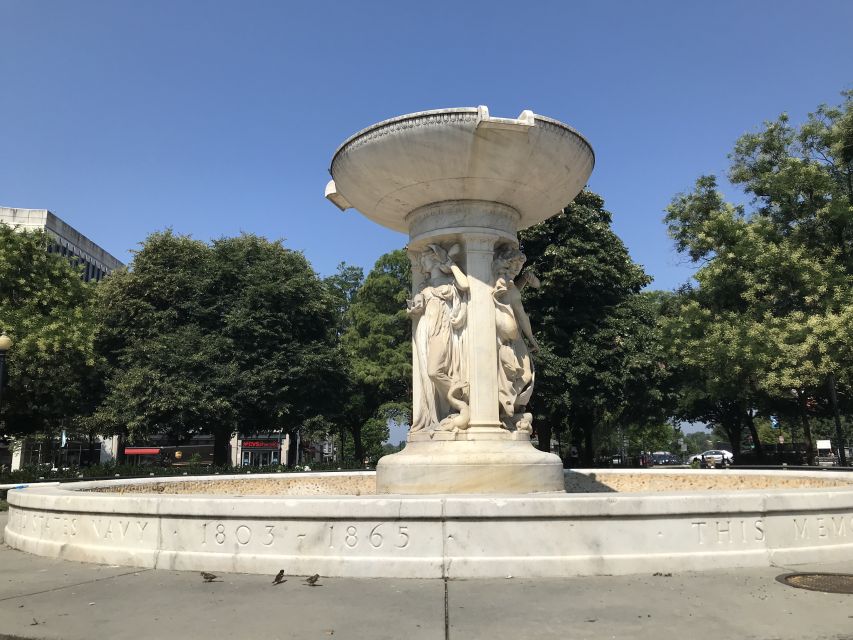
The tour meets right at the center of Dupont Circle, at the base of the fountain. That’s a good setup because the meeting point is obvious and you can re-check directions fast if your phone battery gives up.
Plan on about two hours outside with stops along the way. The walking requirement is 1–2 miles, so this isn’t a sit-and-stare museum outing. It’s a true neighborhood walk: you’ll slow down often, but you’ll keep moving.
It’s also listed as wheelchair accessible, with a live English guide. Still, because the tour requires walking 1–2 miles, think about your own comfort level first—especially if you use a mobility aid and need steady pacing.
The small group matters here. With up to 10 people, you get more back-and-forth. And when the guide is describing why a building was designed a certain way—or what went wrong later—you’ll hear it without fighting over volume.
Embassy Row architecture: how Neo-classical, Beaux-Arts, and Queen Anne show up in real life
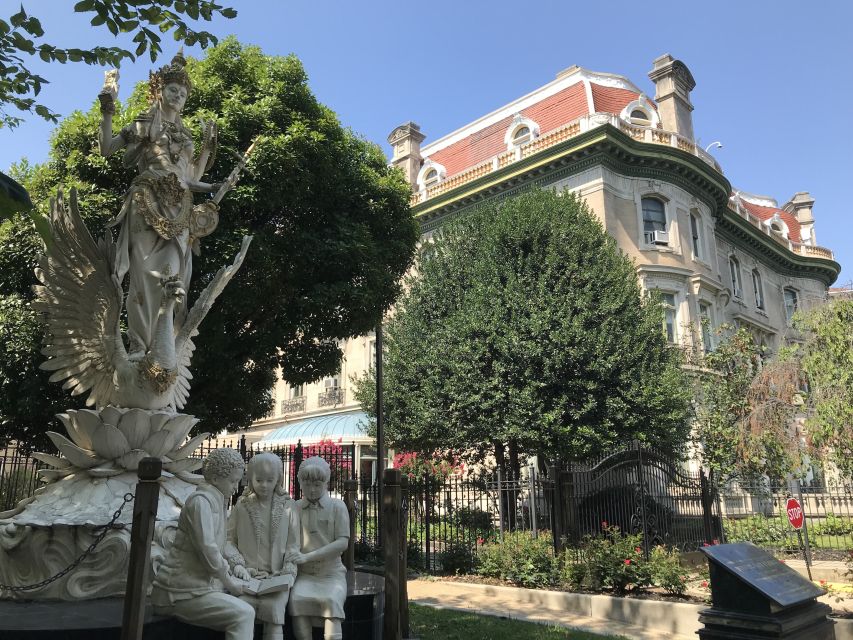
Embassy Row is often described as impressive. The better way to experience it is to treat it like an outdoor design textbook.
On this walk, you’ll see the architectural range DC is known for. The tour highlights styles including Neo-classical, Beaux-Arts, and Queen Anne. The practical value is that you’ll learn to spot differences faster than you could by reading one paragraph online.
Here’s what you can watch for as you stroll:
- Neo-classical tends to feel formal and rule-based, with a clear sense of symmetry and classic detailing.
- Beaux-Arts often looks grand and ceremonial, with design that signals power and status.
- Queen Anne can feel more decorative and varied, with a different texture to the facade than the more rigid classical styles.
You won’t need to be an architecture nerd to enjoy it. The guide’s job is to connect the visual language to the story—who built these places, what they wanted to project, and why DC became a stage for wealth and diplomacy.
One drawback to keep in mind: you’re viewing most properties from the sidewalk. Some buildings will impress most through their street presence and entrance design. If you expect interior access, adjust your expectations now.
Walsh-McLean House and the Embassy of Indonesia: where diplomacy meets mansion scale
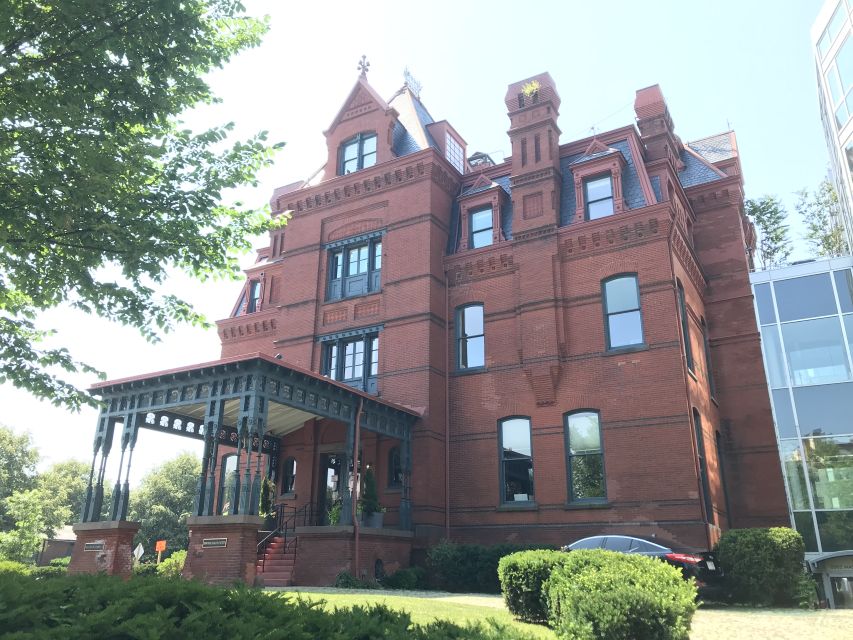
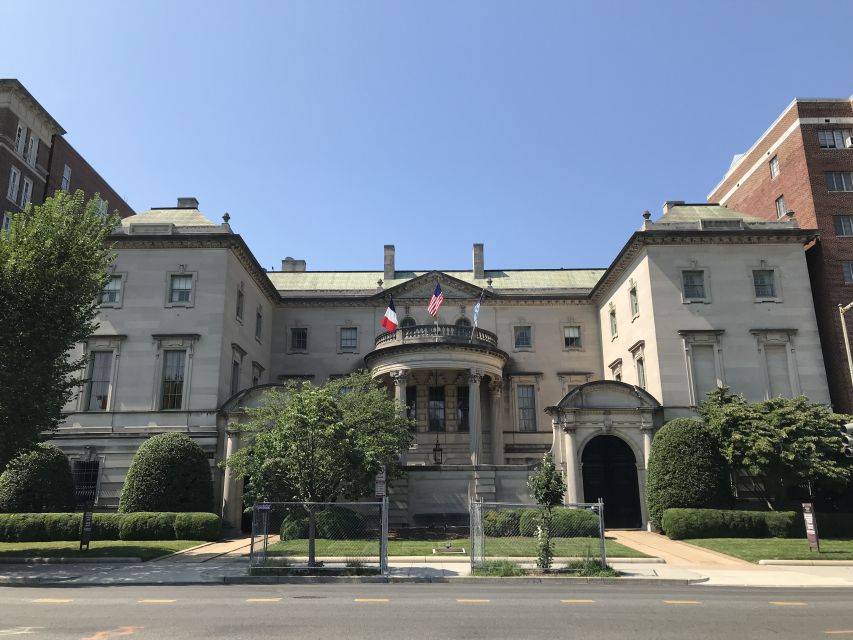
One standout stop is the Embassy of Indonesia, also known as the Walsh-McLean House. Even if you’ve seen photos of the building, it hits differently in person because you can judge the scale and proportions from the street.
This is the kind of property where the design is doing heavy lifting. A mansion like this isn’t just about comfort—it’s a statement. The “why” matters on this tour, because the guide links architectural choices to the people who lived or represented themselves there.
What you can focus on at this stop:
- How the building’s facade reads from a walking distance.
- The way the entrance area is designed to control the first impression.
- The contrast between old wealth energy and the modern role of an embassy setting.
This mix—private-opulence design paired with an international institution—is part of what makes the area feel like DC’s identity in miniature. You’re watching the city’s past get re-used for today.
If you like architecture, this stop is a reminder that these buildings aren’t random. They were built to make an impression, and that goal still works even after the building’s purpose changes.
Anderson Mansion: the Gilded Age vibe, with a story attached
Another highlighted site is the Anderson Mansion. This is one of those places where “mansion” sounds simple, but the street-level details tell you it’s not. The guide’s approach helps you read the building like a clue.
On this tour, the value of a stop like Anderson Mansion isn’t just seeing a pretty facade. It’s learning what the exterior is communicating—status, taste, and power—at a time when architecture was a way to broadcast your place in society.
As you stand there, look for the building features that suggest personality rather than plain function. Think decorative elements, how the structure breaks up massing, and how the facade feels designed for public attention.
The Anderson Mansion stop also fits the tour’s overall theme: homes and institutions that sit at the intersection of personal ambition and national life. The guide doesn’t treat the history as distant. It connects it to the kinds of scandals and conflicts that can follow people with big money and big influence.
If you’re the type who enjoys context—who benefited, who suffered, and what changed—this is a meaningful moment.
Woodrow Wilson House: politics, design, and why this neighborhood matters
The tour also includes the Woodrow Wilson House. You don’t have to know a lot about DC politics to get something out of this stop. The benefit is that you’re seeing how the neighborhood’s physical grandeur ties into the nation’s power centers.
This house is a reminder that some of DC’s most famous people weren’t just public figures. Their lives were built into the city’s streets and architecture.
Here’s how you can make this stop work for you on the walk:
- Compare the building’s presence to nearby embassies and mansions.
- Notice how the neighborhood’s “serious” mood feels consistent, even when the purpose differs.
- Pay attention to how design choices create a sense of permanence.
The guide’s storytelling angle helps here too. When you hear the scandals and behind-the-scenes drama tied to these homes, the architecture stops feeling like background. It becomes part of the bigger picture of how influence operated.
One practical note: because this is still a walking tour, you won’t linger forever at each site. If this stop is your favorite, plan to slow down when you arrive and take in what the guide points out.
The guide’s stories: scandals and humor that keep it from turning into a lecture
The tour’s pitch isn’t just architecture. It’s the human drama behind it—stories and scandals tied to extravagant homes and influential institutions.
That matters because it gives you a way to remember what you saw. When a guide connects design choices to the people who lived there, your brain has something to hold onto: motives, reputations, and consequences.
You may hear examples of guide styles ranging from straight-up fact delivery to a more playful tone. In particular, past participants have highlighted guides (including names like Carolyn and Natalie) for being both personable and thorough, with a good sense of humor and a strong grasp of how these homes connect to the people who shaped DC.
On a tour like this, that’s not fluff. It changes the experience. Humor keeps you from zoning out, and solid detail means you leave with understanding instead of just pictures.
Just be aware of the balance. This is still a walking architecture tour, not a full historical documentary. You’ll get bite-size context and vivid explanations that fit the pace of the neighborhood.
Price and weather: is $44 worth your time?
At $44 per person for two hours, the value depends on what you’re trying to get out of DC.
If your goal is to see several notable properties with an expert guide and learn what you’re looking at, this price is reasonable. You’re not just paying for moving from stop to stop. You’re paying for interpretation—how to understand Neo-classical vs Beaux-Arts vs Queen Anne, and why certain homes and embassies matter.
Also, the small group limit (10) helps justify the cost. Larger group tours often feel rushed. This format tends to keep questions possible and explanations clearer.
Weather is the other big variable. The tour runs in all weather unless conditions make it dangerous. That’s normal for DC walking. Plan for rain, wind, and cold snaps even when the forecast looks harmless.
What to bring makes a real difference:
- Comfortable shoes (non-negotiable)
- Water
- Weather-appropriate clothing
If you show up ready, the tour feels smooth. If you show up under-prepared, even great architecture starts to feel like a chore.
Who should book this Embassy Row architecture tour?
I think this tour is a strong match for you if:
- You want a quick DC experience that covers serious design variety in a tight time window.
- You enjoy architecture but also want stories that explain why these buildings exist, not just what style they are.
- You like small groups and a guide who can connect the dots between homes, institutions, and national life.
It’s also a good fit if you’re on a first visit to DC and want a practical grounding. Embassy Row and Dupont Circle give you a readable “why DC looks like this” snapshot.
If you hate walking or you’re sensitive to weather, you might feel constrained by the 1–2 mile requirement and all-weather format. If your ideal tour is mostly sitting in a climate-controlled space, pick something else.
Should you book this Dupont Circle & Embassy Row architecture tour?
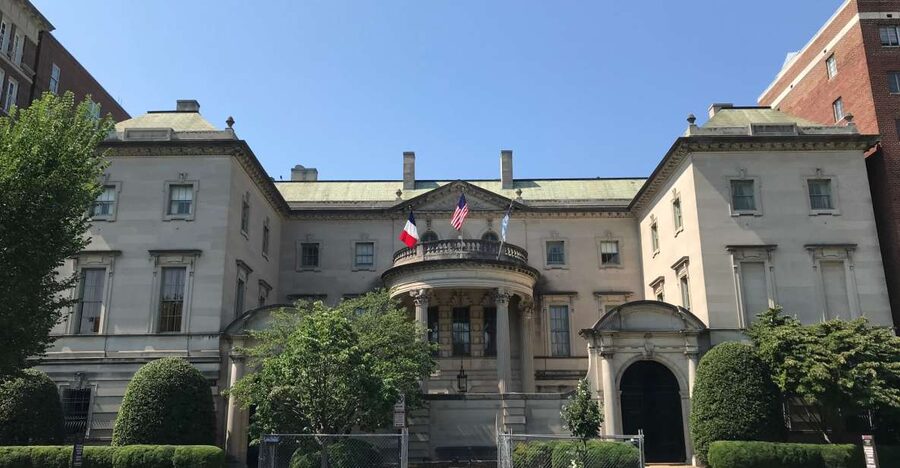
Yes, I’d book it if you’re ready to walk, look closely, and learn the stories behind the street scene. For $44 and two hours, you get a guided route through the kind of neighborhood that can feel intimidating if you show up without context.
This is also a smart choice when you want something different from the standard “monuments first” day. Dupont Circle and Embassy Row give you a side of Washington that’s about design, ambition, and power—written in stone and detail.
If you want, tell me your travel month and your walking comfort level. I can suggest whether a morning slot makes more sense for your day plan and what to prioritize on the route.
FAQ
Where does the tour meet?
The tour meets in the center of Dupont Circle at the base of the fountain.
How long is the tour, and how much do I walk?
The tour lasts 2 hours. You must be able to walk 1–2 miles during the experience.
Is the tour wheelchair accessible?
It’s listed as wheelchair accessible. The tour is still a walking tour with a 1–2 mile walking requirement, so plan based on your comfort level.
What should I bring?
Bring comfortable shoes, water, and weather-appropriate clothing.
Does the tour run in bad weather?
Yes, it happens in all weather unless conditions make it dangerous.
How many people are in the group?
The tour is a small group limited to 10 participants, and it’s led by a live English guide.