REVIEW · AMSTERDAM
Walking Tour about Golden Age Architecture, private local guide
Book on Viator →Operated by Artsy Tours · Bookable on Viator
Old Amsterdam is still whispering to you.
This private Golden Age architecture walk links major sights into one smart route, with Anna guiding you through what you’re actually seeing and why it was built that way. I especially like the one-on-one feel of a private local guide and the design-and-engineering stories that explain the details most street-level stops gloss over.
You’ll cover the core stretch from Dam Square toward the Westerkerk, with frequent pauses at canal-belt façades, trading houses, and landmark architecture. The pacing is built for sightseeing without rushing you off to the next block every five seconds.
One drawback to keep in mind: it’s a 1.5-hour walk and it is not recommended if you use a walker or have trouble standing and walking for that long. Mobility aids aren’t available, and bottled water isn’t included, so plan accordingly.
In This Review
- Key highlights worth planning around
- What this Golden Age architecture tour is really about
- Route and timing: Dam Square to Westerkerk in about 1.5 hours
- Dam Square: where Amsterdam’s power story comes into focus
- Royal Palace Amsterdam: from town hall to royal residence
- Huis Bartolotti: red brick wealth and Italian trading connections
- Torensluis and the four mercantile façades (plus the story of crooked houses)
- De Dolphijn: the dolphin symbol and Frans Banning Cocq
- Ronde Lutherse Kerk: Renaissance domes and a different architectural rhythm
- Prinsengracht warehouses: hoisting beams that made commerce work
- Jordaan gevelstenen: reading the small stone clues in the façades
- Westerkerk: Rembrandt’s resting place and a spire you can measure
- Price and value: why $73.59 makes sense for a private architectural walk
- Who should book this, and who should skip it
- Should you book this Golden Age architecture walk?
- FAQ
- How long is the Golden Age architecture walking tour?
- Where does the tour start and where does it end?
- Is the tour private or group-based?
- What language is the tour offered in?
- What is included in the price?
- Are entrance tickets included for the stops?
- Is bottled water included?
- Is the tour suitable if I use a walker or have limited mobility?
Key highlights worth planning around
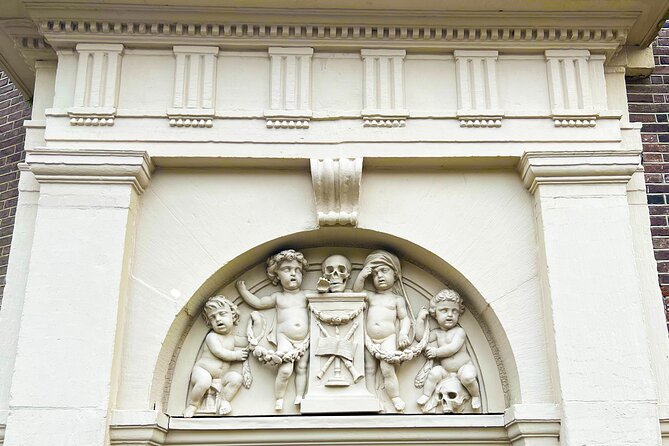
- Golden Age architecture explained visually, so you understand façades, materials, and how buildings worked in daily trade.
- Private guide with Anna’s local storytelling, including how owners, professions, and wealth shaped what you see on the canals.
- Engineering on challenging ground, including the Netherlands’ clay and marshy foundation problems.
- Gevelstenen (facade stones) in the Jordaan, where small plaques can tell you who lived and what the building did.
- Canal-belt trade design, with Prinsengracht warehouses and their hoisting-beam logic.
- Westerkerk as a history and skyline stop, including Rembrandt’s connection and the spire’s famous height.
What this Golden Age architecture tour is really about
Amsterdam’s 17th-century Golden Age didn’t just produce famous buildings. It produced a building style with purpose. The wealthy merchants, ship captains, and builders had to solve real problems: soft marsh ground, heavy cargo, water management, and the need to show status—visibly.
That’s the point of this tour. You don’t just look. You learn to read the city like a document. You’ll connect public power (Dam Square and the Royal Palace) to private wealth and trade (canal houses, warehouses, and façades). And you’ll get the behind-the-scenes engineering too, like what it takes to build on clay and marshy ground.
Also, because it’s private, you can ask questions and take photos without feeling like you’re part of a cattle line. Anna is the kind of guide who points out features you might otherwise miss—those little cues that make the architecture make sense.
You can also read our reviews of more tours and experiences in Amsterdam.
Route and timing: Dam Square to Westerkerk in about 1.5 hours
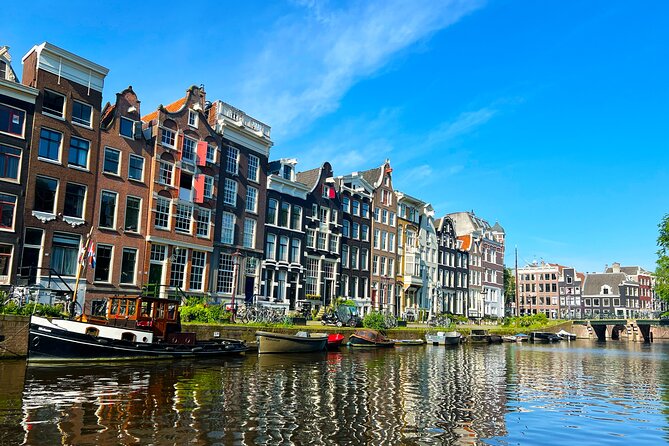
Plan on an approximately 1 hour 30 minutes walking tour. It’s not a slow museum loop. Expect steady walking between stops, with short moments to look closely and listen.
Start point: Royal Palace Amsterdam, Nieuwezijds Voorburgwal 147, 1012 RJ Amsterdam
End point: near Westerkerk at Prinsengracht 279, 1016 DL Amsterdam (right next to the area associated with the Anne Frank House)
This end point is convenient. Once you finish at the Westerkerk area, you’re already in a good position to keep exploring on foot. If you want to stack your day, this tour pairs well with more canal-belt wandering and nearby cultural stops.
One practical note: this is a walking experience. There’s no mention of mobility aids, so keep your own comfort range realistic. If standing for the full 1.5 hours is tricky, you may want a different format.
Dam Square: where Amsterdam’s power story comes into focus
The tour begins at Dam Square, and that first stop matters. It’s easy to treat the square like just another busy city landmark. On this walk, you use it as a historical anchor.
You’ll get the big-picture story of how Amsterdam rose to prominence during the 17th century as a global trade hub. That sets up what you’ll see later: architecture built not only for beauty, but for trade networks, wealth display, and political identity.
If you’ve ever wondered why the canal belt looks so intentional, this start answers it. Amsterdam’s Golden Age growth shaped building choices for decades, and you’ll keep seeing that cause-and-effect as the tour moves street to street.
Royal Palace Amsterdam: from town hall to royal residence
Next is Royal Palace Amsterdam, and you’ll get more than the postcard view. The guide shares that the building was originally constructed as Amsterdam’s town hall during the Dutch Golden Age, then transformed into the royal residence it is today.
What I find useful here is how the tour connects style to function:
- You’ll learn about the Dutch Neoclassical look that defines the palace.
- You’ll get specific attention on materials and techniques used to create the grand structure.
- You’ll also hear about the engineering challenge of building on clay and marshy ground.
That foundation detail is key for understanding Amsterdam. The city’s soft ground isn’t just trivia—it affects how buildings lean, how they age, and how builders solve structural problems. When your guide flags that earlier, later stops like the crooked-house area make instant sense.
Huis Bartolotti: red brick wealth and Italian trading connections
At Huis Bartolotti, you shift from civic power to private status. This canal-side house is a strong example of 17th-century Dutch baroque architecture, and the guide helps you notice the parts that signal wealth at a glance.
The standout visuals:
- Striking red brick façade
- Large windows
- Intricate sculptural details in sandstone
The story behind the decoration is equally important. You’ll hear how the ornament reflects the original owner’s status and strong trading ties with Italy. In other words, the building is a billboard for networks. You’re not just looking at design—you’re seeing a map of connections.
This stop is short, but it’s a great reset moment. It reminds you that the canal belt wasn’t built by faceless developers. Real people with real ambitions paid for visible markers.
Torensluis and the four mercantile façades (plus the story of crooked houses)
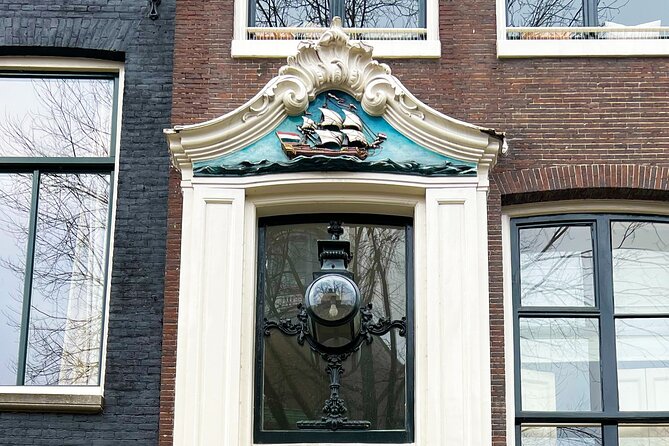
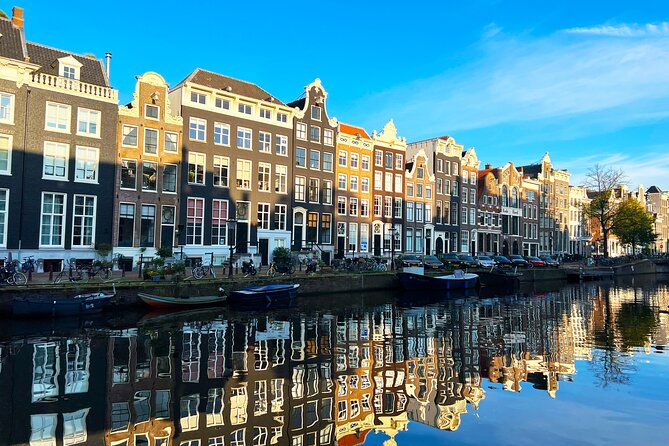
Torensluis is one of those places where the architecture feels playful, even when the story behind it is practical. You’ll get a view of four unique façade designs that were popular with the mercantile class during the Golden Age.
You’ll also learn how baroque style was adapted locally in the Netherlands, with details and contrast that reflect both taste and constraints.
Then comes the feature Amsterdam lovers love to point out: the crooked houses. Your guide ties the leaning effect to Amsterdam’s soft, marshy ground. It sounds like a quirky photo moment until you understand it as structural reality.
This is a stop where listening pays off. If you only look quickly, the façades can blend together. With the guide, you notice the design differences that are otherwise invisible.
De Dolphijn: the dolphin symbol and Frans Banning Cocq
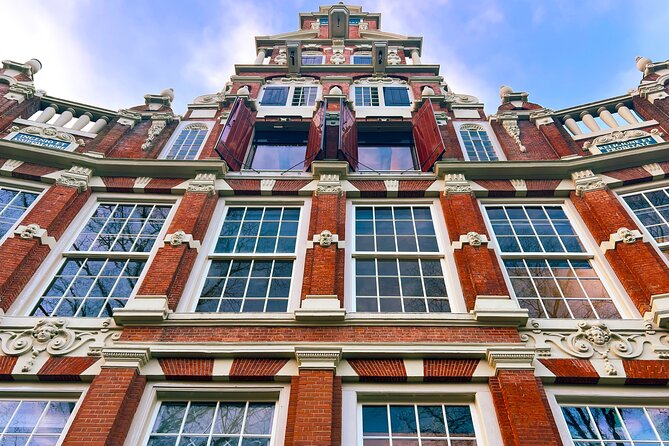
At De Dolphijn, you’ll connect a symbolic detail to a famous cultural reference. The house name points to the dolphin symbol of wealth, tied to the prosperity of Amsterdam’s maritime trade during the Dutch Golden Age.
You’ll also hear the ownership link to Frans Banning Cocq, the captain who is immortalized in Rembrandt’s The Night Watch.
Here’s what this kind of stop does for your tour experience: it turns a canal house into a character. You remember a name. You remember a symbol. And suddenly the canal belt feels like a timeline with people in it, not just pretty façades.
Ronde Lutherse Kerk: Renaissance domes and a different architectural rhythm
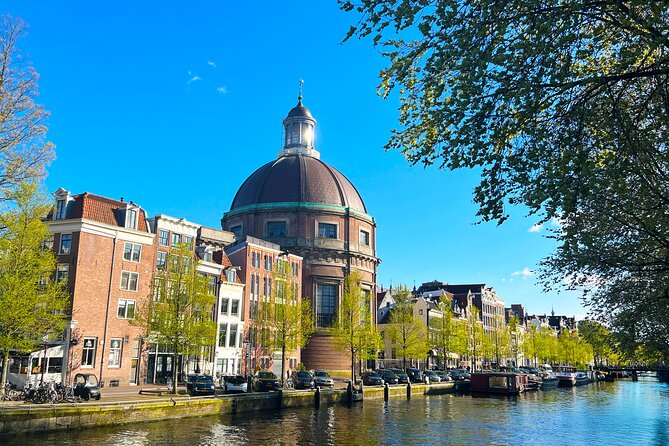
Then the walk touches Ronde Lutherse Kerk, with attention on what domes represented during the Renaissance period. Even with a brief stop, it helps you balance the tour’s Golden Age focus.
Amsterdam’s architectural story isn’t one straight line. You’ll see how different eras express themselves in shape and scale. The dome topic gives you another way to notice the city: not just merchant wealth, but changing architectural priorities over time.
It’s a short moment, but it breaks the pattern nicely before you head back into canal-belt trade zones.
Prinsengracht warehouses: hoisting beams that made commerce work
Now you shift from display to function at Prinsengracht. The warehouses along this canal are iconic for a reason: their design reflects trade.
Your guide explains the key features to look for:
- Tall, steeply pitched gables
- Large windows
- Wooden hoisting beams on the roof used to lift heavy cargo from ships docked along the canal
This is where the tour earns its keep for people who like practical design. You realize the buildings weren’t just decorative shells. They were built around a workflow: ships arrive, cargo gets lifted, goods move to the next stage.
You’ll also hear why the exteriors can feel relatively simple. The design leans utilitarian—clean lines and minimal ornament—yet the scale still signals wealth and power. It’s a reminder that sometimes “less decoration” still equals status, because the capacity to store and handle goods is itself impressive.
If you’re trying to learn how Amsterdam worked as a trading machine, this part is the strongest payoff.
Jordaan gevelstenen: reading the small stone clues in the façades
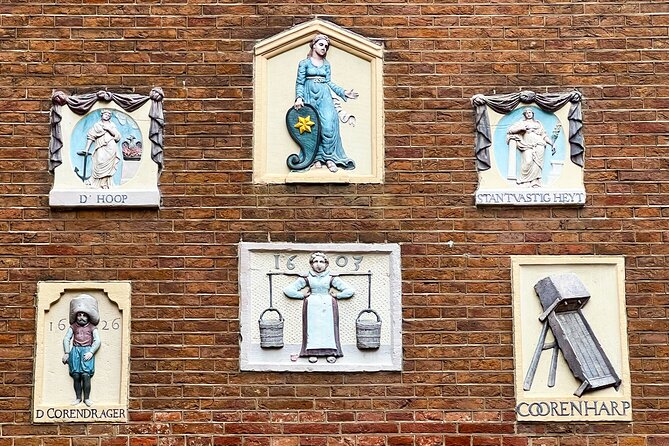
The Jordaan segment is built around a detail many visitors miss: gevelstenen, or facade stones. Instead of only talking about the big architecture, your focus turns to small plaques built into building façades.
Your guide explains what they often communicate:
- How the building was used
- The profession of the building’s owner
- Other significant facts about people living and working there
The carvings can be intricate, turning the street into a kind of visual file system. You’ll start spotting these stones more easily once you know what to look for.
This section also makes the neighborhoods feel more personal. You’re no longer only thinking about merchants as a class. You’re seeing evidence of individual roles—who did what—and how those roles shaped building identity.
If you’ve ever wished a walking tour would tell you what daily life looked like behind the big monuments, this is the part that delivers.
Westerkerk: Rembrandt’s resting place and a spire you can measure
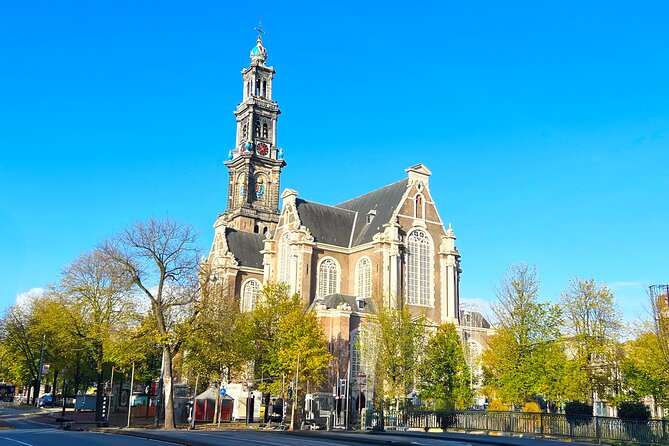
The tour ends at Westerkerk, and it’s a fitting finish because the building hits two needs at once: skyline impact and historical weight.
You’ll learn that it was originally constructed as a Calvinist church for the growing population. The interior is described as large and airy with simple, elegant design—very much aligned with Calvinist worship spaces.
The historical anchor here includes Rembrandt van Rijn, whose final resting place is connected to this church.
Then there’s the tower:
- The spire was completed in 1638
- It rises 85 meters (280 feet) above the Jordaan district
- It’s crowned with the imperial crown, a symbol of Amsterdam’s status since the 15th century
Finally, you’ll hear about the clock chimes. The guide notes that Anne Frank described them in her diary. That gives the final stop a modern emotional link without changing the fact that you’re standing in a structure shaped for centuries of timekeeping.
Price and value: why $73.59 makes sense for a private architectural walk
At $73.59 per person for about 1 hour 30 minutes, this doesn’t feel like the cheapest thing on a sightseeing list. But it also isn’t priced like a huge, timed bus tour either.
You’re paying for two things you can’t easily replicate on your own:
- A private local guide who can explain design choices and engineering issues on the spot
- A tight route that strings together the key buildings and canal-belt examples in one outing
This tour is also offered in English, uses a mobile ticket, and includes admission ticket free for the stops mentioned. Group discounts are listed too, which can help if you’re traveling with friends or family.
For me, the value comes from the way the tour teaches you to look. If you walk Amsterdam on your own, you see buildings. With this tour, you start seeing structure, trade logic, and the social clues embedded in details.
One practical cost note: bottled water isn’t included, so I’d plan on bringing your own.
Who should book this, and who should skip it
This is a good fit if you:
- Like architecture but want it explained in plain language
- Want the canal belt to feel less random
- Enjoy asking questions and getting specific answers in English
- Want a local’s eye for details, including the kind of street-level features most guidebooks ignore
It may not be the best choice if:
- You use a walker
- Standing and walking for about 1.5 hours is a challenge
- You need mobility aids (none are available on this experience)
Good news: service animals are allowed, and the starting area is near public transportation—so you won’t feel totally stranded if you’re getting around the city that day.
Should you book this Golden Age architecture walk?
If you want a smarter way to understand Amsterdam’s 17th-century build boom, I’d book it. The tour’s strength is that it turns façades into meaning—wealth symbols, trade tools, and engineering choices—without making it feel like a lecture.
I’d especially recommend it if you’re the kind of traveler who pauses when you spot a carved stone or wonders why a building sits the way it does. You’ll leave with a mental checklist of what to notice next time you wander the canals.
Just be honest with yourself about the walking. If you need more seating time or easier mobility support, you may want to choose a different format.
FAQ
How long is the Golden Age architecture walking tour?
It runs for approximately 1 hour 30 minutes.
Where does the tour start and where does it end?
It starts at Royal Palace Amsterdam, Nieuwezijds Voorburgwal 147, 1012 RJ Amsterdam, and ends near Westerkerk at Prinsengracht 279, 1016 DL Amsterdam.
Is the tour private or group-based?
It’s a private tour/activity, so only your group participates.
What language is the tour offered in?
The tour is offered in English.
What is included in the price?
A private guide is included.
Are entrance tickets included for the stops?
Admission ticket fees are listed as free for the stops described.
Is bottled water included?
No, bottled water is not included.
Is the tour suitable if I use a walker or have limited mobility?
It’s not recommended for participants who use a walker, or for those who have trouble walking and standing for 1.5 hours. Mobility aids are not available. Service animals are allowed.