REVIEW · VALENCIA
Valencia: Art & Architecture Guided Tour with Monuments Tickets
Book on Viator →Operated by Valencia & Go · Bookable on Viator
Valencia’s art is close enough to touch. This 3-hour walking tour strings together Valencia’s most important sights in Ciutat Vella with an art historian guide and mobile tickets for a small-group experience (up to 20 people).
I love the stop at San Nicolás, often nicknamed the Valencian Sistine Chapel for its massive, restored frescoes. I also love how the route gets you into La Lonja de la Seda and the Valencia Cathedral, including the Holy Chalice. One possible drawback: if you’re hunting for deep, purely architectural analysis, the experience can feel more like a sequence of standout places, and English quality can vary by guide.
In This Review
- Key highlights at a glance
- A focused 3-hour walk through Valencia’s “old walls” zone
- Where the tour starts (and how to not feel rushed): Plaça de la Verge
- Torres dels Serranos: the medieval gate that ties into the Turia
- Palau de la Generalitat: why Valencia has so many palaces
- San Nicolás de Bari y San Pedro Mártir: the Valencian Sistine Chapel
- La Lonja de la Seda: UNESCO Gothic built for trade power
- Valencia Cathedral: Roman roots, mosque layers, and the Holy Chalice
- Plaça de la Mare de Déu: finish where the stories face each other
- What the guide brings (and why the guide name can matter)
- Price and value: what $66.54 gets you in real terms
- Who this tour is best for (and who should think twice)
- Should you book this Valencia art and architecture tour?
- FAQ
- How long is the guided tour?
- Is the tour offered in English?
- What is the group size limit?
- What’s the meeting point?
- Where does the tour end?
- Are tickets included for all monuments?
- Do I need hotel pickup?
- Is it okay for children?
- Does weather affect the tour?
- Is there free cancellation?
Key highlights at a glance
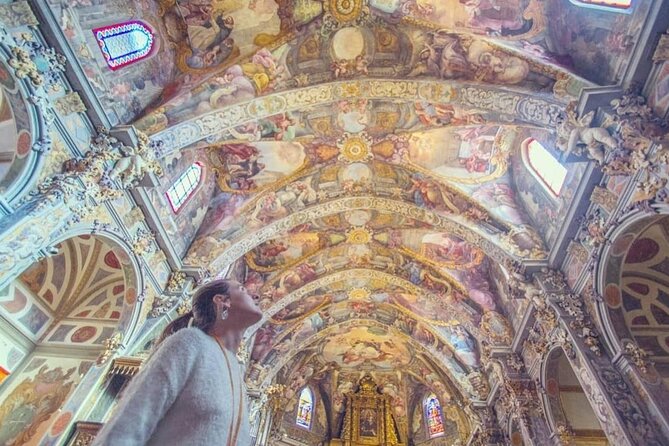
- San Nicolás is the star interior, with admission included and a light-show moment many people call a highlight
- La Lonja de la Seda brings UNESCO civil Gothic to life, tied to the power of Mediterranean silk trade
- Valencia Cathedral packs layers in one building, from Roman and mosque roots to Romanesque through Baroque touches
- Skip-the-line access matters, since key sites include tickets handled through your guide
- The tour is made for walking, so you reach details big-bus routes tend to miss
- You end in Plaça de la Mare de Déu, right in the heart of the cathedral/basilica square
A focused 3-hour walk through Valencia’s “old walls” zone
Valencia’s center (Ciutat Vella) is the kind of place where the best stuff is just far enough apart that you’d either rush it or miss it. This tour keeps the pace tight but doable, so you get context while you’re moving on foot. Expect a walk that many people describe as about 2–3 miles, depending on how long you stop to look.
A small group helps. With a maximum of 20 travelers, your guide can slow down when questions pop up, instead of rushing everyone through like a parade. And because the tour runs with mobile tickets, you’re not hunting for paperwork the moment you reach a door.
Where the tour starts (and how to not feel rushed): Plaça de la Verge
You’ll meet at Plaça de la Verge in Ciutat Vella and finish in the same spot area. That matters because you’re starting inside the old-town rhythm, not commuting to monuments scattered across town.
This is also a practical setup for your first afternoon in Valencia. The walk acts like an orientation tool: you learn which sights cluster together, and you get a feel for the neighborhoods around Barrio del Carmen.
Tip: arrive a few minutes early with comfortable shoes. Even when the stops are well-paced, you’ll still be standing, looking up, and moving through church interiors where you don’t want to rush your feet.
Torres dels Serranos: the medieval gate that ties into the Turia
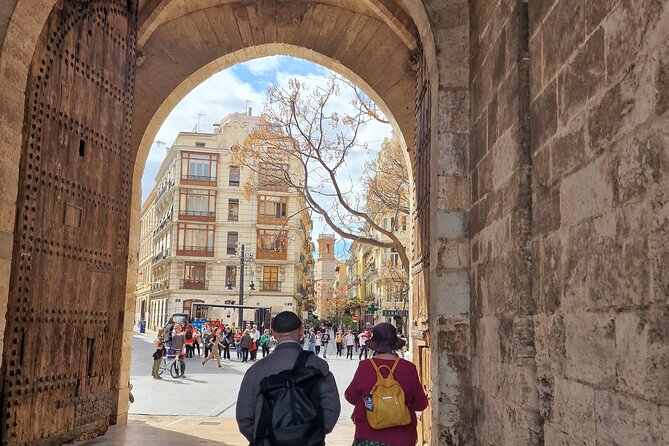
The tour begins at Torres de Serranos, the medieval main gate of the old wall system. This is a strong opening because it grounds the whole city story in the physical structure you can still see.
Your guide connects the towers to the Turia River and explains how Valencia’s defenses and walls changed over time. That “why this gate looks like this” context makes later stops feel less random.
Admission at this start point is free, which is a nice way to ease into the tour before ticketed interiors begin. You’ll get an intro rather than a long lecture, then move on.
Palau de la Generalitat: why Valencia has so many palaces
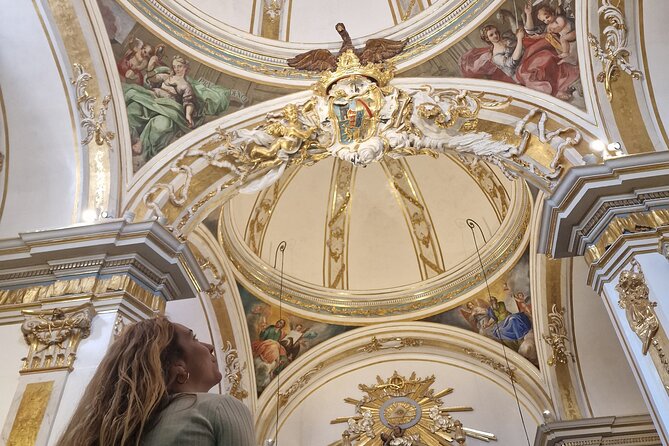
Next you’ll head toward Palau de la Generalitat, with a short, story-driven stop focused on Valencia’s political and architectural presence. The angle here is specific: you’ll wonder why Valencia has so many palaces, and your guide will give you the thread that links them to the city’s identity.
One key detail for planning: admission isn’t included for this stop. Even if you don’t go inside, the exterior context still helps you read Valencia’s power buildings in the old quarter.
If you’re the type who hates “brief stops” for photo ops, this one may feel short. But it’s designed as a bridge between church art and civic architecture.
San Nicolás de Bari y San Pedro Mártir: the Valencian Sistine Chapel
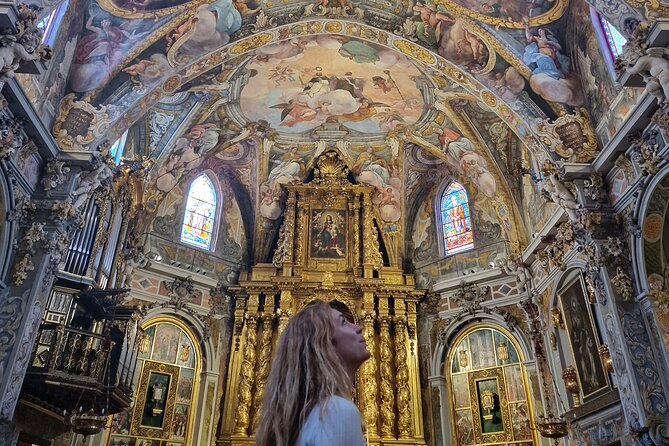
This is the stop most people remember. San Nicolás is famous for its restored frescoes, and the numbers are the kind that stop you in your tracks: nearly 2,000 square meters of painted surface. Your guide also frames the scale by comparing it to the Sistine Chapel in Rome—because when you stand under the vault, you understand why the nickname stuck.
What I like about this church as a “tour anchor” is the layers. You’re not just seeing decoration; you’re seeing a timeline. Saint Nicholas worship predates Christianity in the area, then later shifts into other eras (including a mosque phase) before becoming the church you visit today. The result is a building where Gothic structure meets Baroque decoration, which creates a very real feeling of cultural overlap.
You’ll also have admission included here. Many people highlight a light show set to music inside the church, and it’s easy to see why. Even if you’re not a “church person,” this is one of those moments where the building turns into an experience, not just a room.
Practical note: frescoes are made for looking up. Give yourself a minute to adjust your neck and your eyes. Your guide usually points out key panels, so follow along instead of trying to map the ceiling on your own.
La Lonja de la Seda: UNESCO Gothic built for trade power
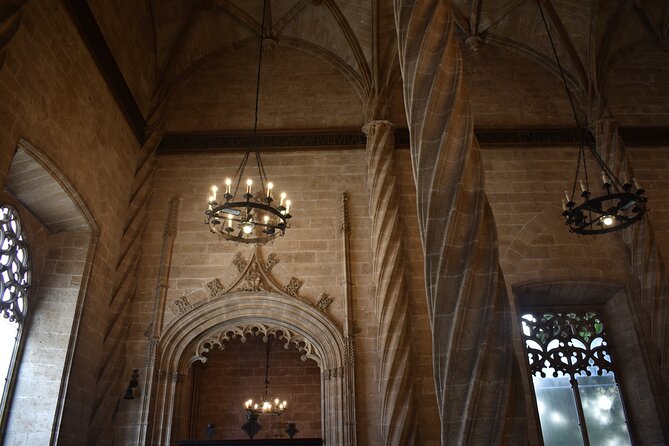
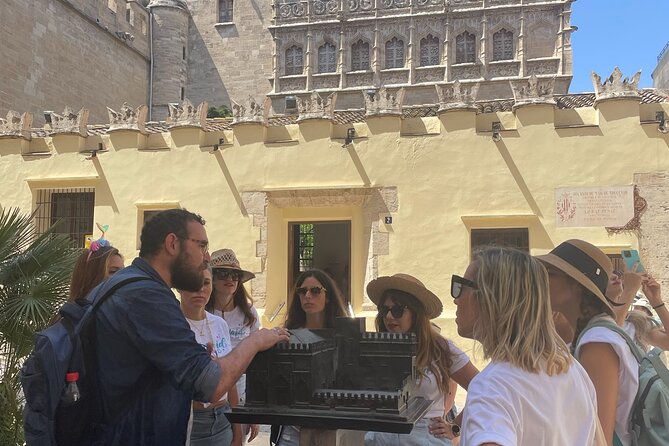
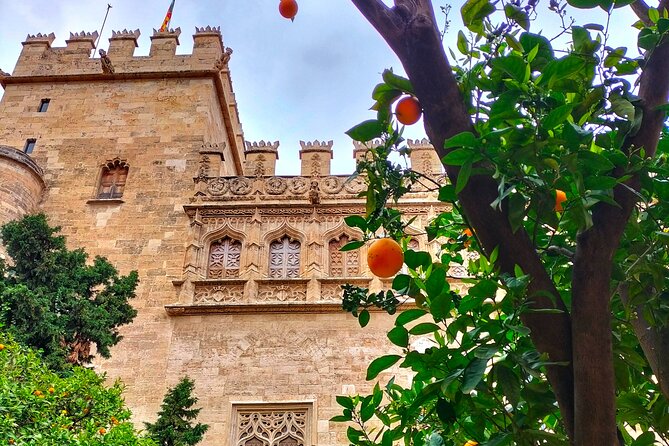
Then comes La Lonja de la Seda (the Silk Exchange). This is one of Valencia’s best “wait until you see it” buildings. It’s Gothic, but not the cathedral-on-a-hill type you might expect. It’s a civic building—built for commerce—so the architecture feels different: practical, confident, and tightly connected to Mediterranean trade.
The UNESCO story is part of what makes this stop satisfying. Lonja de la Seda was declared a World Heritage Site in 1996, and the explanation centers on it being an exceptional example of civil Gothic tied to the strength of trade in Mediterranean cities. Even the build timeline is dramatic: it was constructed in just 15 years during the 15th century.
Your admission is included, and that’s a big value point for your time. You’re not spending half your visit hunting entry points or waiting behind people who didn’t have tickets set up.
If you care about how architecture communicates power, this building is a great lesson. It shows that “Gothic” wasn’t only for churches and monasteries; it was also for finance, shipping, and everyday city ambition.
Valencia Cathedral: Roman roots, mosque layers, and the Holy Chalice
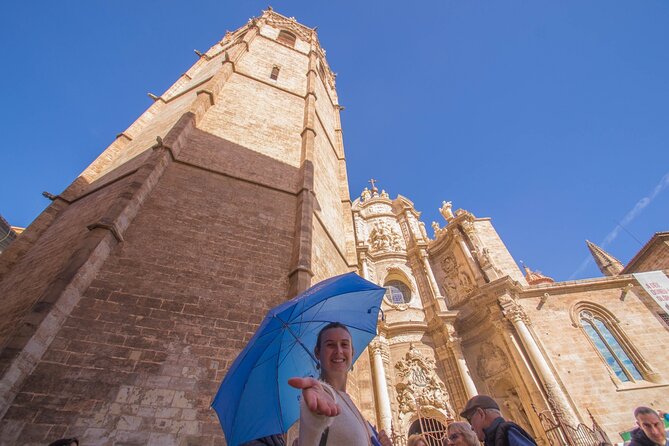
Valencia Cathedral is where the tour earns its title. You’re stepping into a building that has absorbed different eras on top of each other. Construction began in the 13th century, but the site itself began as a Roman temple, then became a mosque, before transforming into the Christian cathedral complex.
That’s why you’ll notice a mix of styles: from Romanesque through the later periods up to Baroque elements. It’s not one uniform look. It’s a timeline you walk through.
The most famous detail is the Holy Chalice housed here. The tour also frames the tradition around the Grail of Valencia—the belief that it’s connected to the cup used at the Last Supper. Your guide may mention major papal visits, including Popes John Paul II and Benedict XVI, who are linked to using the relic during Eucharist celebrations in Valencia.
You’ll also learn about the Cathedral’s art in a very concrete way. Renaissance frescoes on the High Altar were reportedly rediscovered after the baroque vault covering them was removed about a decade earlier. Standing in the Cathedral, that kind of “what’s hidden becomes visible” story makes the building feel alive.
Admission is included at the Cathedral. And in practice, that means less dead time while others sort out lines and entrances—especially helpful during peak hours.
Plaça de la Mare de Déu: finish where the stories face each other
The tour ends at Plaça de la Mare de Déu, a square where the Basilica and the Cathedral share the same view. It’s a smart place to end because your eyes can take in the grand scale of the complex right after the interior moments.
This final stop is short (about 20 minutes) but useful. You get one more wrap-up look at the monuments as part of the neighborhood, not just as “things you entered.”
If you want photos, this is the easiest spot. You can step back and capture the whole setting instead of trying to frame ceilings and chapels from the inside.
What the guide brings (and why the guide name can matter)
This tour is led by a professional art historian guide, and the guide’s job is more than facts. The best guides connect what you’re seeing to Valencia’s wider story—walls and rivers, trade and civic power, and how places change hands across centuries.
The strongest praise in real-world experiences centers on guides who explain clearly and keep the context tight. Names that have come up include Benito, Uriel, Monika, Manuel, Jorge, Carmen, Anais, Paulino, and Joaquín—often singled out for strong explanation and smooth pacing.
English is offered, but one review note to keep in mind: if you’re very strict about language precision, double-check that you’ll be comfortable with your guide’s English level. Most people are fine, but experience can depend on who you’re assigned.
Price and value: what $66.54 gets you in real terms
At $66.54 per person for about 3 hours, you’re paying for four big things:
1) a guide with an art-historian approach
2) built-in context so you don’t treat each stop like a random photo stop
3) admission included for San Nicolás, Valencia Cathedral, and La Lonja de la Seda
4) time-saving access benefits like skipping queues at major entrances (when tickets are handled through the tour)
Two additional notes affect value. First, Palau de la Generalitat is not included, and Torres de Serranos and the final square are free/without ticket fees. That means your money concentrates on the highest-impact interiors.
Second, a guided walk can be cheaper than going totally independent once you add up multiple paid entries plus your time. If you only wanted one or two sites, you might spend less alone. But if you want a well-paced “core Valencia” overview with interiors, the math tends to work.
Who this tour is best for (and who should think twice)
This tour fits best if you:
- are doing Valencia for the first time and want a strong old-town overview
- care about art and architecture but don’t want to piece together every ticket and explanation yourself
- want access to interior highlights like San Nicolás, La Lonja, and the Cathedral
You might think twice if you:
- want an ultra-technical architecture seminar with deep building-history analysis at every stop
- get impatient with walking in older streets, since you should plan on 2–3 miles
- have a low tolerance for language differences; English is available, but guide quality can vary
Should you book this Valencia art and architecture tour?
If you’re excited by frescoes, Gothic civic buildings, and Cathedral stories tied to relic tradition, I’d book it. The included admissions and the small-group format make it a time-smart way to cover the core monuments without wasting your afternoon in lines.
If your main goal is purely architectural theory, you may feel the emphasis is more “see these places well” than “study construction details for hours.” Still, even with that caveat, the core interiors here are the kind you’ll remember long after you leave the square.
FAQ
How long is the guided tour?
It runs for about 3 hours.
Is the tour offered in English?
Yes, it’s offered in English.
What is the group size limit?
The tour has a maximum of 20 travelers.
What’s the meeting point?
You meet at Plaça de la Verge in Ciutat Vella, València.
Where does the tour end?
It ends at Plaça de la Verge in Ciutat Vella, València.
Are tickets included for all monuments?
Admission is included for San Nicolás, Valencia Cathedral, and La Lonja de la Seda. Palau de la Generalitat is not included, and Torres de Serranos is free.
Do I need hotel pickup?
No hotel pickup is included.
Is it okay for children?
Children must be accompanied by an adult.
Does weather affect the tour?
Yes. The tour requires good weather, and if it’s canceled due to poor weather, you’ll be offered a different date or a full refund.
Is there free cancellation?
Yes. You can cancel up to 24 hours in advance for a full refund.