REVIEW · NOTO ITALY
Noto: Sicilian Baroque Architecture Guided Walking Tour
Book on GetYourGuide →Operated by Italygonia Travel T.O. · Bookable on GetYourGuide
Noto’s Baroque feels like theater on stone. This guided walk is all about up-close architecture (think frescoed interiors and sculpted staircases) and the city’s UNESCO-level planning, starting at Porta Reale and ending at major landmarks like the Cathedral of San Nicolò and the Loggia del Mercato. The main trade-off: it’s a concentrated 2-hour loop, so you’ll want comfortable shoes and patience for sun and stone steps.
I also like how the tour is designed to help you “read” Noto instead of just looking at it. The pace can be flexible in the moment, and the guide’s style tends to keep things practical on warmer days, including time to stand in shade when possible. One more consideration: you’ll spend a lot of the experience outdoors between stops, so plan for weather.
Best of all, you get a licensed guide walking you through the city’s signature Baroque ingredients: dramatic staircases, honey-colored church stone, and street-level details like the infiorata flower layout on Via Nicolaci. If you’re into architecture, this is a very efficient way to see the story Noto is telling—without turning your day into a long slog.
In This Review
- Key things you’ll notice on this Noto Baroque walking tour
- Starting at Porta Reale: the right entrance to Noto’s Baroque mindset
- The early “stairs + frescoes” stop: Noto’s interior drama hits fast
- Church of Santa Chiara: stucco columns and statuary you can actually spot
- Piazza del Duomo and Palazzo Ducezio: the Town Hall as a Baroque centerpiece
- The monumental staircase to Cathedral of San Nicolò: honey stone and survival
- Via Nicolaci and the infiorata street: where Baroque meets street ritual
- Loggia del Mercato and the Fountain of Hercules: civic life, then stone swagger
- Tina di Lorenzo Theater finale: neoclassical air after Baroque intensity
- Price and value: what $346.65 for up to 25 really means
- Who this Noto Baroque tour is best for
- A quick booking check: decide based on your tolerance for sun and steps
- Should you book this Noto Sicilian Baroque walking tour?
- FAQ
- How long is the Noto Sicilian Baroque architecture walking tour?
- Where does the tour start and end?
- Is this tour private?
- What languages are offered?
- What should I wear or bring?
- How many people are in a group?
- Can I cancel for a refund?
- Is there a pay-later option?
Key things you’ll notice on this Noto Baroque walking tour
- Porta Reale (or Ferdinandea) as the proper kickoff near the Church of St. Francis and the Convent of the Holy Savior
- A staircase-and-fresco moment early on, aimed at one of Noto’s most beautiful interiors
- Church of Santa Chiara’s stucco and statuary (columns, apostle figures, and putti)
- Piazza del Duomo set piece: Palazzo Ducezio plus the monumental stairs to the Cathedral of San Nicolò
- Via Nicolaci and Palazzo Nicolaci: where the Baroque balconies and infiorata street tradition live
- A clean finale with the Loggia del Mercato, the Fountain of Hercules, and the neoclassical Tina di Lorenzo Theater
Starting at Porta Reale: the right entrance to Noto’s Baroque mindset
The tour begins at the gate Porta Reale (also called Porta Ferdinandea), right by the historic center. That matters more than it sounds. Starting here puts you immediately in the right frame of mind: you’re not just wandering into pretty buildings—you’re walking into a planned Baroque “stage set.”
Expect the guide to point out how the city flows from entrance to center, and how Noto’s Baroque identity shows up in both grand structures and small street cues. Right nearby, the focus is the area around the Church of St. Francis of Assisi and the nearby Convent of the Holy Savior, which helps you understand why Noto’s Baroque reputation isn’t only about palaces and domes. It’s also about faith, monastic life, and the dramatic way interiors were made to impress.
Practical tip: You’ll cover a lot of ground on foot. If you know your pace, you’ll be happier—this is “short-and-strong,” not “slow stroll with no urgency.”
The early “stairs + frescoes” stop: Noto’s interior drama hits fast
A key part of this tour is the way it starts you with an interior moment. You’ll go up a beautiful staircase so you can admire one of Noto’s most eye-catching interiors, with frescoes and decorative details that make the Baroque style feel like it’s moving.
This is one of the best parts of the whole experience because it teaches you what to look for. Baroque architecture can feel like visual noise if you don’t know where to focus. The staircase-and-interior build-up gives you that “decoder ring” early: you’ll start noticing how ceilings pull your gaze, how ornament frames sacred space, and how symmetry and spectacle work together.
Also, this is a smart time to do it first. If you save interiors for later, you can end up tied up when the sun is high. Starting with a showy interior keeps the day balanced.
Church of Santa Chiara: stucco columns and statuary you can actually spot
Next up is the Church of Santa Chiara, located next to a former Benedictine monastery. The exterior may be impressive, but the real magic here is inside, where the Baroque style is very recognizable.
What I love about this stop is how specific the details are. The church features columns embellished with stuccoes, along with statues of the apostles and putti. That’s not vague “Baroque ornament.” It’s tangible, identifiable artwork you can track while you look around.
And this matters for your photos, too. If you know there are apostle statues and putti, you’re more likely to compose shots that feel meaningful instead of random marble and ceiling.
Consideration: Churches often mean dimmer light than you expect. Bring your eyes more than your camera settings. Use your time to study the main features the guide points out.
Piazza del Duomo and Palazzo Ducezio: the Town Hall as a Baroque centerpiece
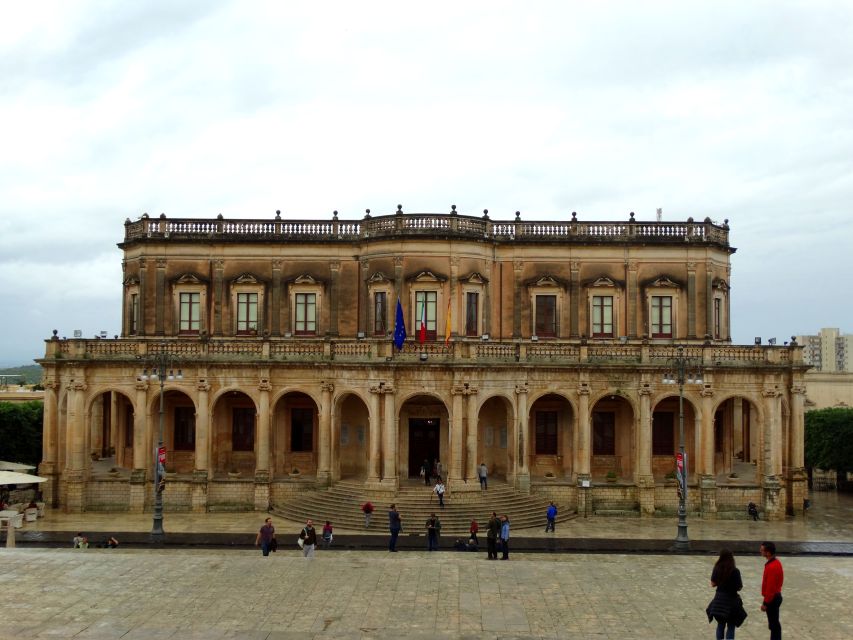
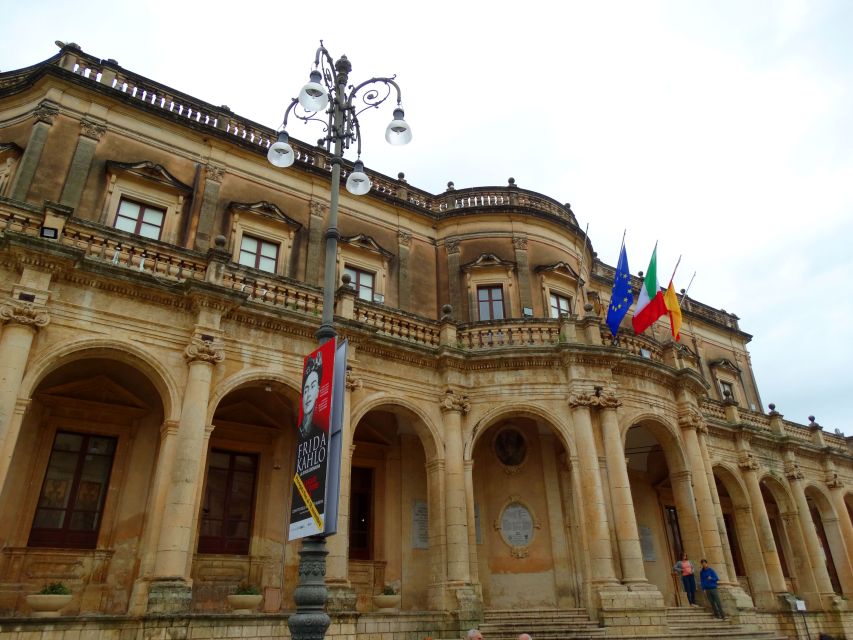
Now you reach Piazza del Duomo, where Noto’s Baroque storytelling shifts from churches to civic grandeur. The centerpiece here is the Palazzo Ducezio, the seat of the Town Hall. The building dates to the 18th and 19th centuries, and the atmosphere is pure Noto: impressive facade presence, plus interior visual effects.
The tour spotlights the frescoed roof and the way mirrors create visual illusions, making rooms appear larger. That kind of design choice is very Baroque. It’s about controlling perception—light, scale, and drama—whether you’re in a church or a civic building.
A quick note on why this matters: if you only think of Baroque as religious art, Palazzo Ducezio corrects that. It shows the same theatrical thinking applied to government and public life.
The monumental staircase to Cathedral of San Nicolò: honey stone and survival
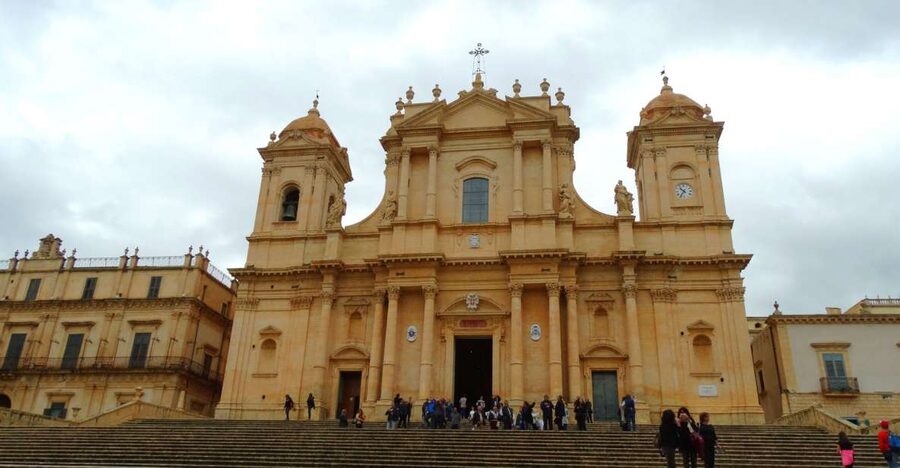
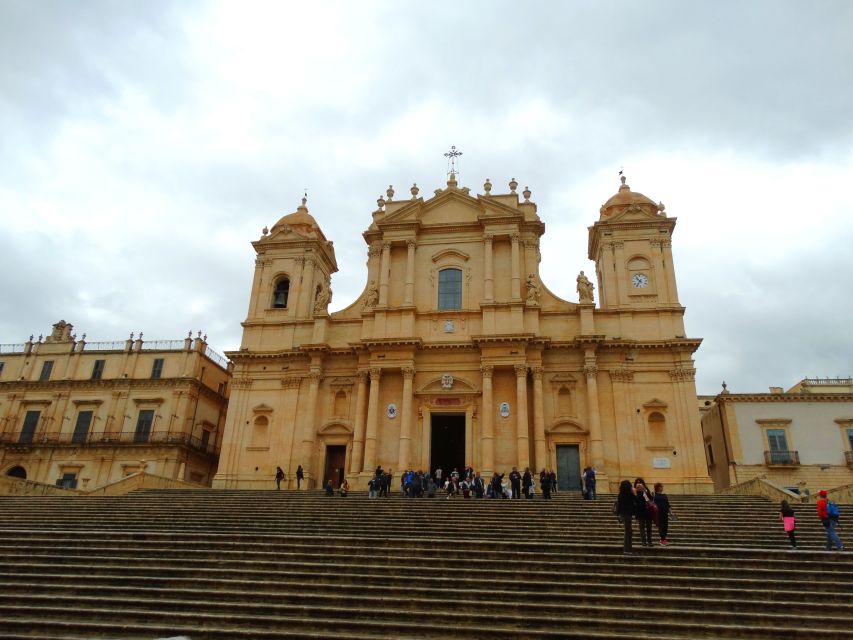
One of the biggest moments comes next: the monumental staircase in front of the Cathedral of San Nicolò (S. Nicolò). The cathedral is widely treated as a symbol of Noto, and the guide frames it with the city’s signature honey-colored stone, especially noticeable around sunset.
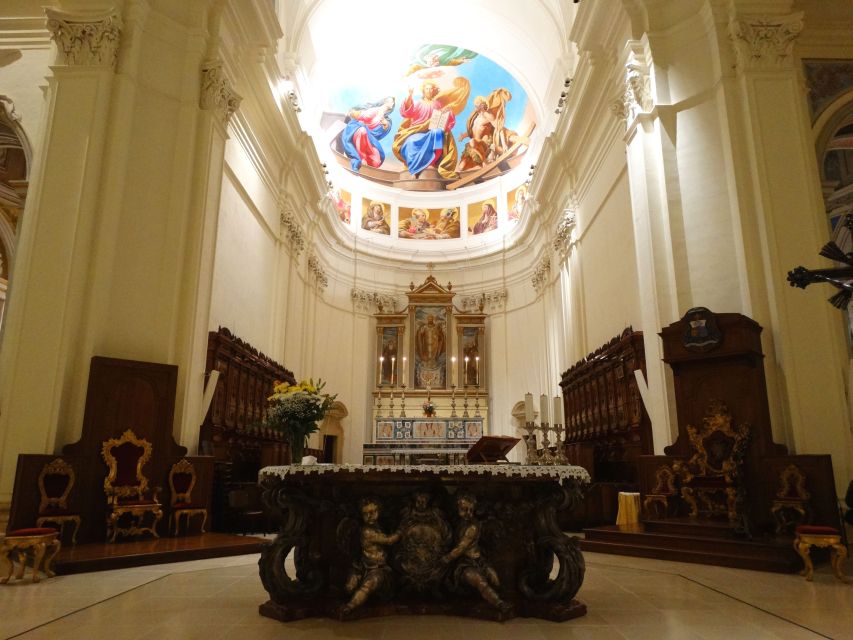
You’ll visit inside, and that’s important because the cathedral’s story is more than color. It was built in the eighteenth century, and it has reportedly collapsed three times over time. It was rebuilt, though many frescoes have been lost. That blend of glory and damage makes the cathedral feel human, not museum-perfect.
From the outside, pay attention to the two bell towers—one houses a bell, the other a clock. These aren’t just features; they help you “read” the facade quickly as you move around the square.
Photo tip: If the timing is right, the cathedral’s stone tone is a major selling point. Even without sunset, the guide’s framing helps you catch the best angles.
Via Nicolaci and the infiorata street: where Baroque meets street ritual
After the cathedral, the tour shifts from big architecture to street-level tradition. This is Via Nicolaci, famous for the infiorata—a flower carpet laid on the road. Even if you’re not seeing a full event at that moment, the guide’s explanation gives you context for why the street draws attention.
From here, you also get external views of some of Noto’s standout buildings, including Palazzo Nicolaci. This palace is known for its decorated balconies, especially in the lower parts, where you’ll find statues, masks, animals, and various limestone figures in a typical Baroque style.
This is one of those stops that feels instantly different from the churches. It’s all about human-scale spectacle—ornament meant to be looked at from street level, not only from a worship position. It’s also a great place to slow down, because the details are dense and you’ll want a second look.
If you’re doing this tour for photos: Palazzo Nicolaci and Via Nicolaci are where you’ll likely come away with the strongest “this is Noto” images.
Loggia del Mercato and the Fountain of Hercules: civic life, then stone swagger
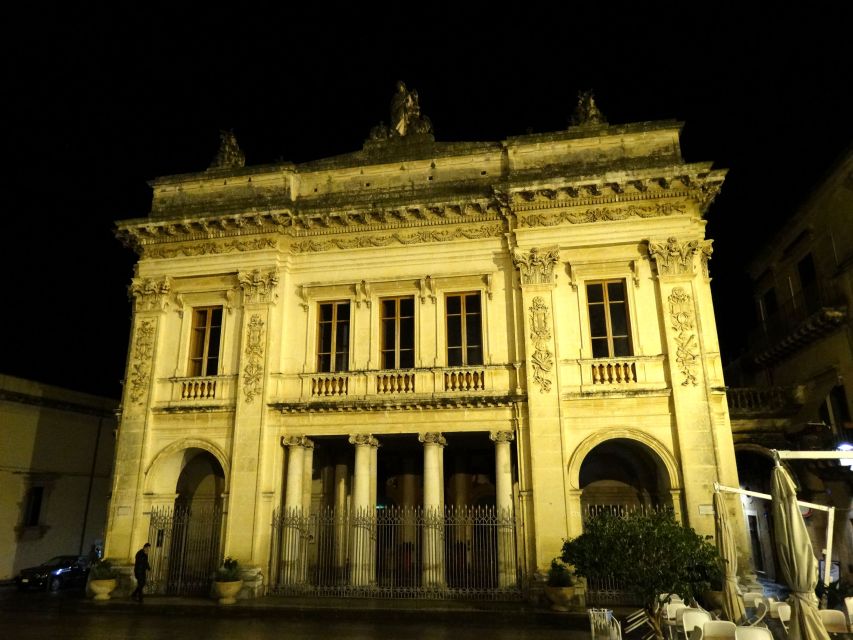
Next you’ll pass through the Loggia del Mercato, once the seat of the Noto market. It features a wrought iron loggia and today it’s used for cultural events. That’s a smart pairing on the tour: the market space helps you understand the city as a living place, not just a collection of landmarks.
From there, the tour ends with the marble Fountain of Hercules, built in the 1700s. This stop keeps the tone playful and grounded. It’s not about ceilings and paintings—it’s about public decoration, the kind of art that makes a town feel like it has personality.
Tina di Lorenzo Theater finale: neoclassical air after Baroque intensity
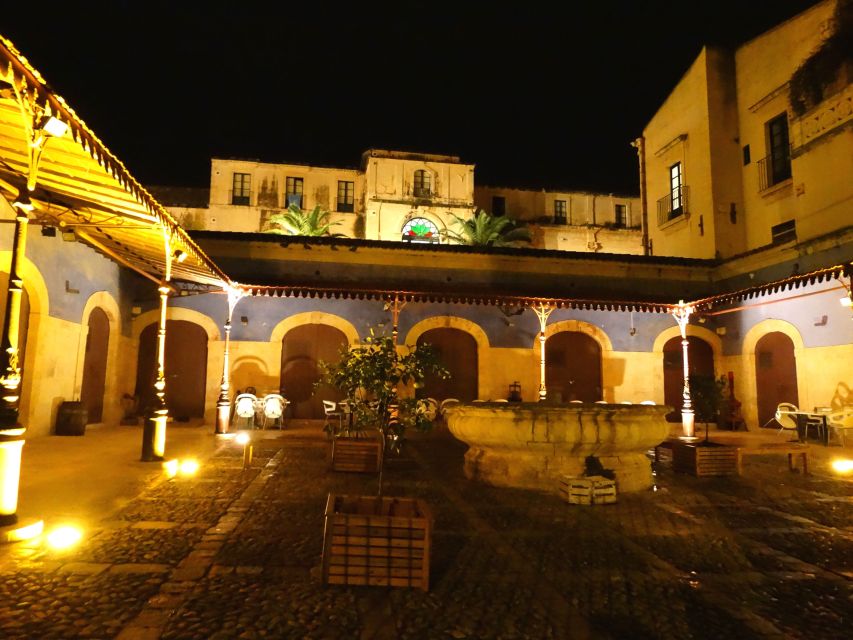
To close things out, you’ll visit the building that houses the Tina di Lorenzo Theater, described as neoclassical. Ending here is a nice contrast. After Baroque churches and palaces, the neoclassical style feels cleaner and more structured—like a breath of order after a lot of ornament.
It also reinforces the idea that Noto’s beauty isn’t frozen in one era. The city’s character evolves, and this tour quietly demonstrates that by moving you from Baroque extremes toward a different design language before you finish back at the meeting point.
Price and value: what $346.65 for up to 25 really means
This tour costs $346.65 per group for up to 25 people, and it runs about 2 hours. That pricing structure can be a great deal if you’re traveling with a small party or multiple friends, because the price is grouped rather than strictly per person.
So how do you judge value? Ask what you get for your time:
- A licensed guide who can point out what matters (especially inside churches where details get missed).
- A tight route that hits major UNESCO-linked Baroque landmarks without requiring you to plan the sequence yourself.
- A manageable duration. Two hours is short enough for a cruise stop vibe, but long enough to feel like you didn’t just pop out for a quick look.
If you’re coming solo and you’re not sharing the group cost, it may feel pricier on a per-person basis. But if you can split with friends or you prefer a guided walk over self-guided guessing, the format can still feel worth it.
Who this Noto Baroque tour is best for
I think this works best if you fall into one of these groups:
- You want high-impact architecture in a short time window.
- You enjoy churches but want help seeing the details: stucco, statues, and fresco-focused interiors.
- You’re okay with a concentrated route and you bring comfortable shoes.
It’s also a good fit for first-timers to Sicily’s Baroque side, because it hits the key “anchors” you’ll hear about later: Palazzo Ducezio, the Cathedral of San Nicolò, Via Nicolaci, and the Loggia del Mercato.
A quick booking check: decide based on your tolerance for sun and steps
Before you book, be honest about two things:
- You’ll likely spend time outdoors between stops, so warmer days can feel long. The guide’s approach can be shade-friendly, but you still need to dress for walking.
- Expect stair use. This tour includes an early staircase and the monumental stairs leading to the cathedral area.
If that sounds good, you’ll probably love it.
Should you book this Noto Sicilian Baroque walking tour?
If your goal is to understand Noto’s Baroque style fast—through the right sequence of civic buildings, churches, and street-level ornament—this tour is a strong choice. The highlights are concrete: fresco interiors, Santa Chiara’s stucco-and-statues, Palazzo Ducezio’s mirror illusions, the Cathedral of San Nicolò with its dramatic survival story, and the infiorata-famous Via Nicolaci paired with Palazzo Nicolaci’s balcony sculptures.
Book it if you want value from a guided route and you like architecture you can actually study. Pass if you’re chasing a relaxed, slow pace with lots of free time to wander without instruction. For most people who want Noto’s Baroque in two efficient hours, this is the kind of tour that earns its place.
FAQ
How long is the Noto Sicilian Baroque architecture walking tour?
The tour lasts 2 hours.
Where does the tour start and end?
It starts at the meeting point under the gate Porta Reale or Ferdinandea, and it ends back at the same meeting point.
Is this tour private?
Yes, it is a private group tour.
What languages are offered?
The guide offers the tour in Italian and English.
What should I wear or bring?
Bring comfortable shoes and comfortable clothes.
How many people are in a group?
The price is set per group up to 25 people.
Can I cancel for a refund?
Yes. You can cancel up to 24 hours in advance for a full refund.
Is there a pay-later option?
Yes. You can reserve now and pay later.