REVIEW · DUSSELDORF
Düsseldorf: Guided City Architecture Walking Tour
Book on GetYourGuide →Operated by Visit Düsseldorf · Bookable on GetYourGuide
Some cities hide their stories in plain sight. This walking tour puts Düsseldorf’s facades into context fast, with stops that turn architecture into a readable street-level narrative. You’ll track the influence of big-name international designers and local builders across Königsallee and the Old Town, then finish at Ehrenhof with plenty of time to look closely and take photos.
I especially like the way the tour connects style to decisions. You get a clear sense of how Wilhelm Kreis, Karl Friedrich Schinkel, Bernhard Pfau, Helmut Hentrich, and Daniel Libeskind shaped what you see, and why the same streets can feel both classical and cutting-edge. It’s not just dates and names; it’s what changed, and who had the power to make it happen.
One thing to keep in mind: this is a “walk with a purpose” tour. It moves briskly and includes lots of architectural background, so if you want a slow stroll with long pauses to wander on your own, you may feel a little rushed.
In This Review
- Key things to know before you go
- Why Düsseldorf’s facades feel different after this walk
- Getting oriented at the start near Mannesmannufer
- Königsallee: the lesson behind the city’s most famous boulevard
- Kö-Bogen and Daniel Libeskind: modern architecture you can actually track
- Dreischeibenhaus and Schauspielhaus: size, form, and the city’s ambition
- Altstadt Düsseldorf: where architectural style meets real urban life
- Ehrenhof: finishing at the place where architecture feels collected
- City Museum entry at Bergerallee 2: using indoor context to sharpen your street reading
- The guide factor: what Dietmar Schönhoff-style storytelling adds
- Getting your money’s worth in 2 hours
- Who should book this Düsseldorf architecture walk
- Should you book it
- FAQ
- How long is the Düsseldorf guided city architecture walking tour?
- What language is the guide?
- Where do I meet the guide?
- What’s included in the price?
- Is it available as a private tour?
- Is free cancellation available, and can I pay later?
Key things to know before you go
- A tight 2-hour route linking Königsallee → Old Town → Ehrenhof
- Architecture focused, photo-friendly stops along major landmarks
- Expressionism and Brutalism in close proximity, within a small area of the city
- Major designers highlighted, including Libeskind, Kreis, Schinkel, Pfau, and Hentrich
- Included City Museum entry (Bergerallee 2) to reinforce what you’re seeing
- Choose shared or private so the pace matches your style
Why Düsseldorf’s facades feel different after this walk
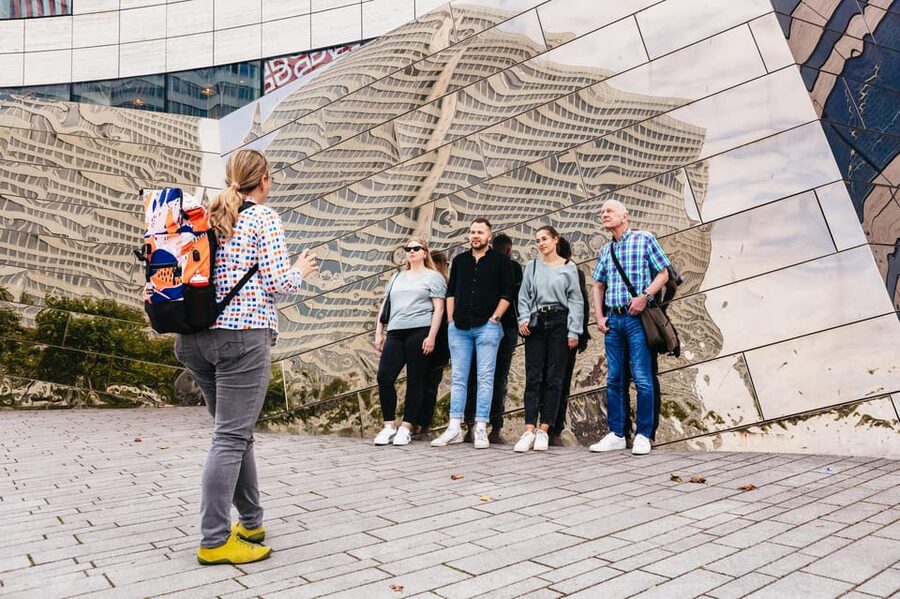
Düsseldorf has a habit of looking “finished” at first glance. But once someone points out what’s going on behind the facade, the city starts speaking. That’s the core value here: you stop treating buildings like scenery and start reading them like documents.
The tour leans hard into architectural layers. In a short distance, you can see distinct movements such as 1920s Expressionism and Brutalism, and you also get the social side of construction—how architects, patrons, and local builders leave fingerprints on public space.
You’ll also learn to spot what’s actually relevant on the street. It’s easy to look at a landmark and move on; this walk trains you to ask better questions: Why that shape? Why that material? Why here?
Getting oriented at the start near Mannesmannufer
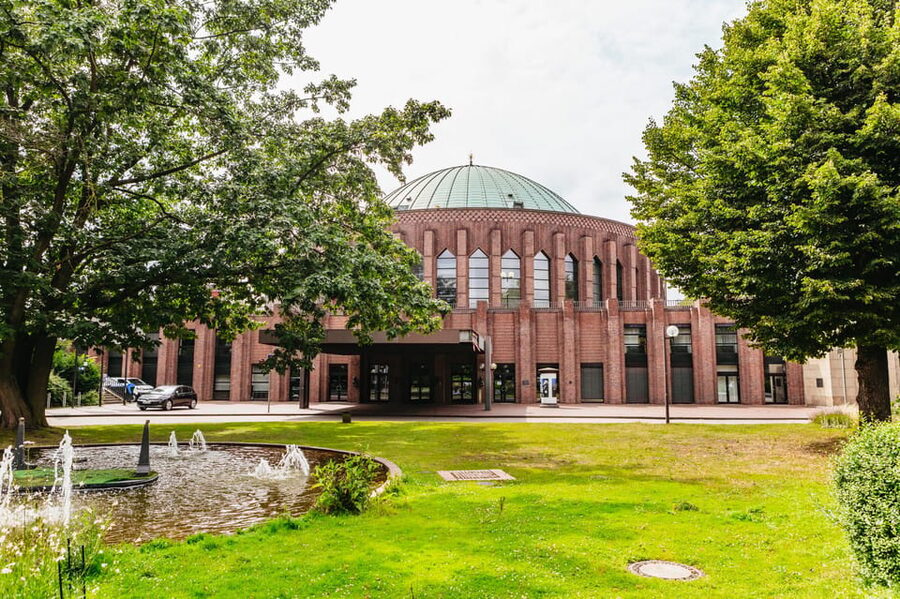
The meeting point is Mannesmannufer 2. If your departure uses one of the other listed starting points, those are Alter Stahlhof and Breite Str. 69, so double-check which location applies to your time slot.
This matters more than it sounds. The first stretch sets the rhythm for the entire walk—where your guide wants your attention and how the route will “connect the dots” later. In two hours, every minute counts, so getting your bearings immediately helps you stay engaged instead of playing catch-up.
Even if you know Düsseldorf, you may find you’re better at navigating after the opening remarks. You’ll know what to look for, and that makes the rest of the tour feel smoother rather than a string of unrelated sights.
Königsallee: the lesson behind the city’s most famous boulevard
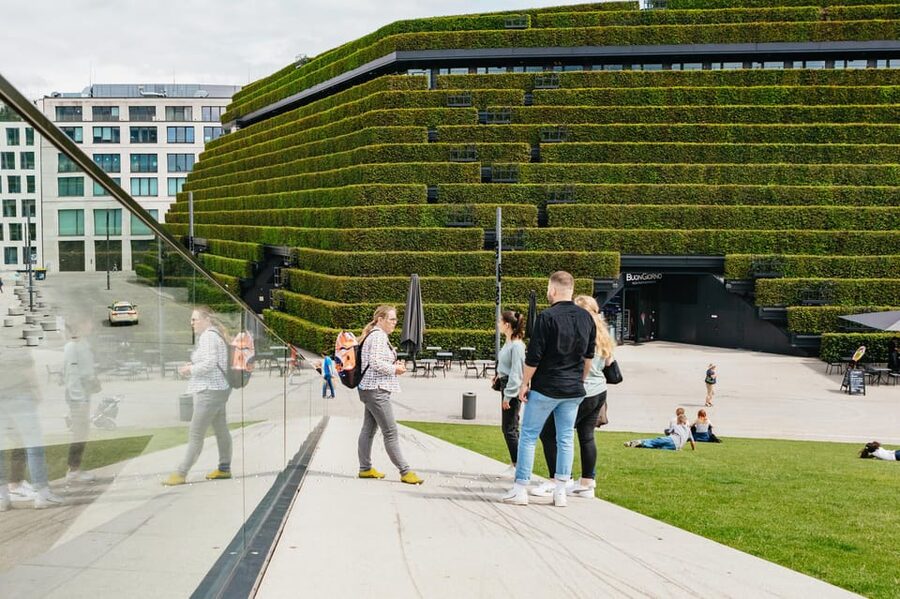
The walk heads toward Königsallee, Düsseldorf’s showcase boulevard. This is where the tour uses landmarks to teach you a bigger idea: international design influence meeting regional building practice.
You’ll focus on architectural moments that aren’t just impressive, but instructive. The tour highlights the Kö-Bogen area, tied to Daniel Libeskind, and it uses the surrounding buildings to show how modern visions can sit next to older city logic. The point is to help you see the city as a conversation across time.
If you like photography, this is a strong zone for it. You get multiple opportunities to frame the city’s skyline angles and the way buildings relate to the street plan. It’s also easier to “read” structures here because the boulevard gives you open sightlines and clear edges for visual comparisons.
Kö-Bogen and Daniel Libeskind: modern architecture you can actually track
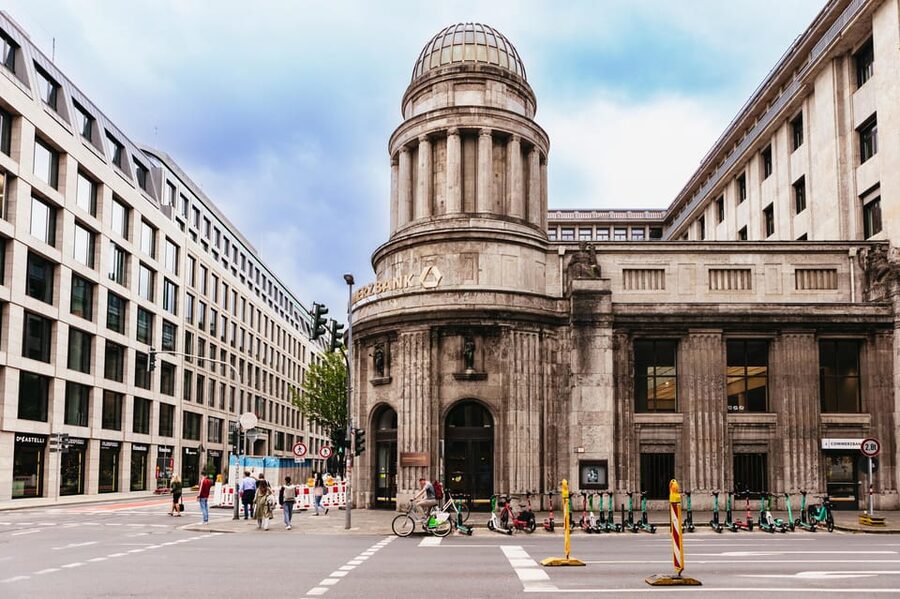
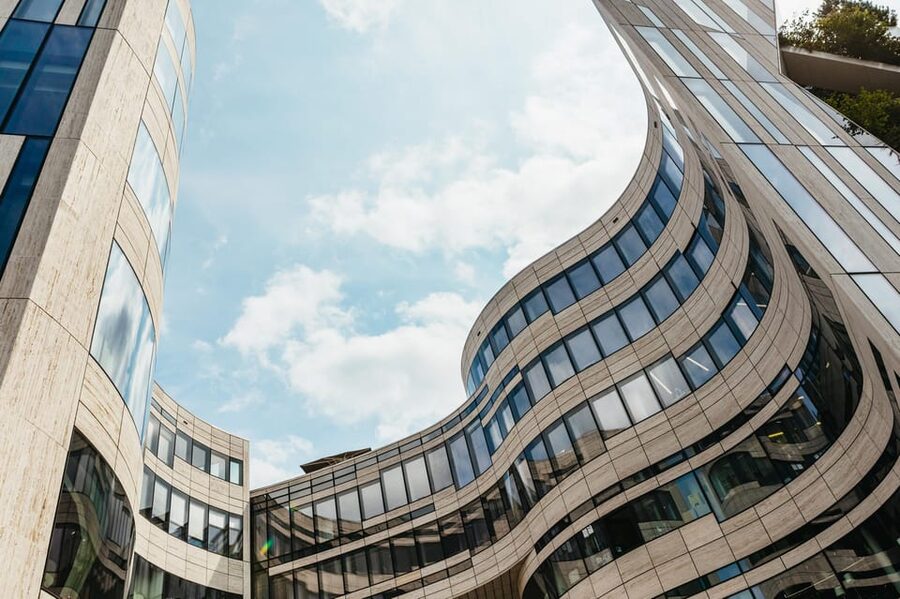
The star stop here is the Kö-Bogen, pass-by viewing with a focus on Daniel Libeskind’s contribution. Even if you’re not an architecture specialist, you’ll get a practical way to interpret the design: not just what it looks like, but what it’s doing in the city.
Libeskind’s name can feel intimidating if you only know him from headlines. The tour makes it usable by explaining how his approach shows up in recognizable urban features you can stand in front of and test with your eyes.
You’ll also learn the surrounding context so the structure isn’t isolated in your mind. Instead, you’ll connect it to the larger set of designers the guide mentions—especially those associated with German architectural traditions and shifts over decades.
Dreischeibenhaus and Schauspielhaus: size, form, and the city’s ambition
Next you’ll pass by the Dreischeibenhaus, a 96-meter-high building that the tour uses as a scale lesson. Tall architecture changes how you experience a street, even when you’re only seeing the building from across the way.
The tour also points you toward the Schauspielhaus as part of this visual and cultural cluster. Theatre buildings have their own kind of authority in a city: they signal investment in public life and a willingness to make bold statements with architecture.
This is one of those moments where you might expect the tour to be purely visual. Instead, you get discussion that helps you interpret the form. If you’re the type who enjoys asking why something was designed that way, this stop offers plenty of angles.
Altstadt Düsseldorf: where architectural style meets real urban life

After the boulevard segment, you head into Altstadt Düsseldorf, the Old Town. This transition is one of the most valuable parts of the route, because it forces you to compare how architecture behaves in different city moods.
The Old Town segment is where you start noticing how people actually move through the environment. You’re no longer just looking at big-profile skyline features; you’re surrounded by street rhythm and building density. That makes it easier to see how design choices affect daily experience—light, entrances, facades, and the feel of walking from one block to the next.
The tour also brings in the theme that Düsseldorf can show Expressionism from the 1920s and Brutalism in a relatively small area. When you’re on foot, “nearby” stops being a vague idea and becomes a practical comparison you can literally make with your eyes.
Ehrenhof: finishing at the place where architecture feels collected
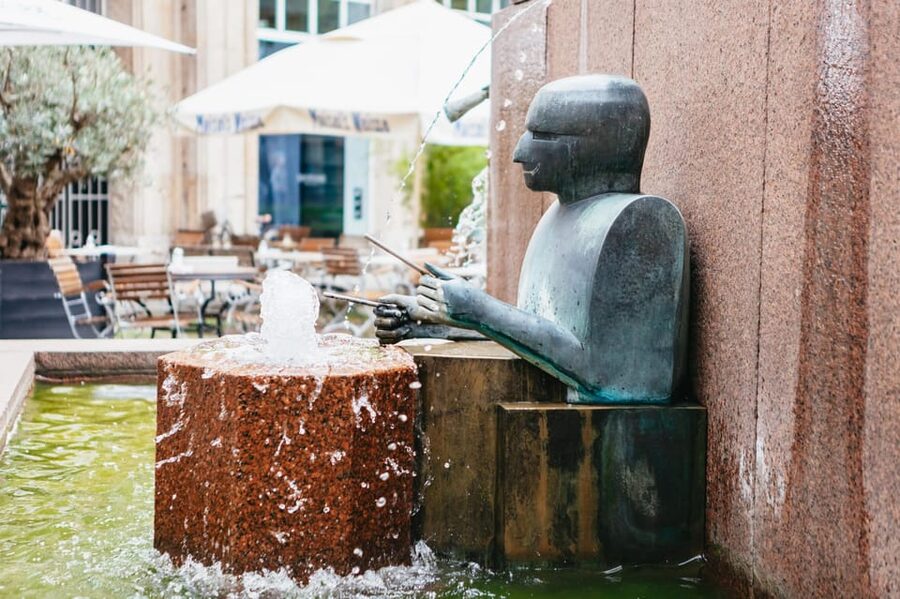
The walk ends in Ehrenhof, a fitting finale because the space invites you to think about architecture as an intentional ensemble. You’re still walking and still learning, but the atmosphere helps your brain organize what you just saw.
Ehrenhof is also where the tour’s architectural focus clicks into place. Earlier stops taught you about named architects and major structures; the finale is where those stories start to feel connected as a single city identity rather than separate landmarks.
If you want one “aha” moment, this is often where it comes. The city stops feeling like a set of iconic buildings and starts feeling like an evolving design plan—shaped by different eras, but still legible when you pay attention.
City Museum entry at Bergerallee 2: using indoor context to sharpen your street reading
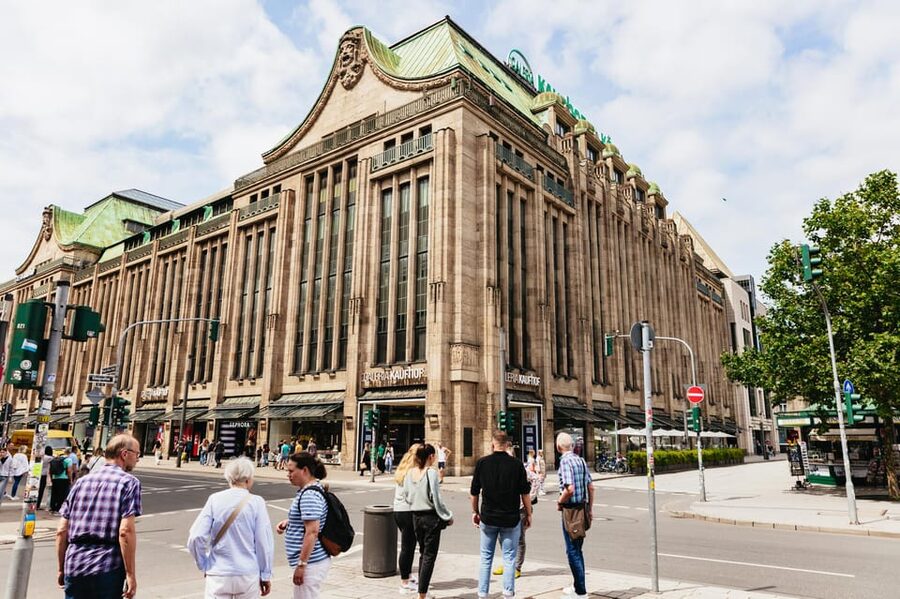
A smart inclusion here is entry to the City Museum at Bergerallee 2. The tour doesn’t ask you to accept architecture as a list of things to memorize. Instead, you get a chance to reinforce what you’re seeing with museum context.
This can be especially helpful if you’re the type who wants more than surface impressions. Street-level observations are powerful, but indoor context can give you missing pieces—how ideas developed, why styles landed where they did, and how designers fit into broader change.
It’s also a practical break within a brisk walk. Even if you don’t stay long, having the option to step inside makes the tour feel more complete rather than purely outdoors.
The guide factor: what Dietmar Schönhoff-style storytelling adds
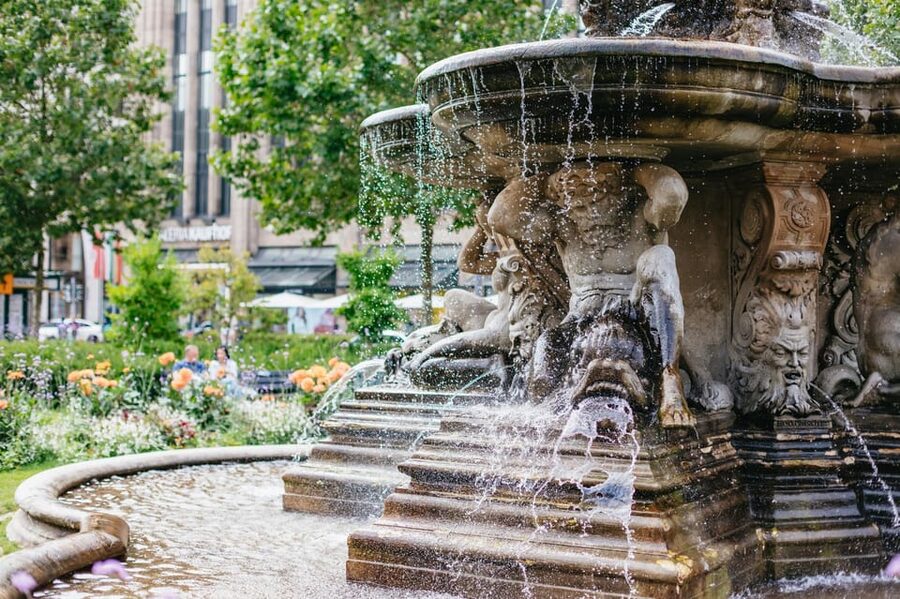
Many architecture tours can feel like a lecture with stops. This one leans more toward story and explanation, and that’s why it tends to land well. In particular, Dietmar Schönhoff stands out in feedback for mixing architecture and history with humor and anecdotes.
That blend matters because architecture can be technical. A guide who can frame the why behind the look makes the tour more “human.” You end up with details you can actually use when you look at buildings later, not just information that fades after the walk.
You still need some energy on your end. A guide who gives you lots of connections and context will reward curiosity and a quick pace. If you’re excited to learn how power, aesthetics, and design intersect in real places, you’ll likely enjoy the ride.
Getting your money’s worth in 2 hours
At $23 per person for a 2-hour guided walk, the value is strong if you want architecture guidance without spending all day. You’re paying for interpretation and structure, not for transport or big-ticket attractions.
The route is tight, but it doesn’t feel shallow. You cover key zones like Königsallee, Kö-Bogen, Dreischeibenhaus, Altstadt, and Ehrenhof, which is a lot to fit into two hours. The included museum entry also helps justify the cost because it adds context beyond outdoor viewing.
The main “consideration” is pacing. This isn’t a slow, meandering stroll. If you prefer lots of free time at each stop, consider whether you’d rather do a self-guided walk later. But if you like tight routes and learning that clicks quickly, this is a good use of your time.
Who should book this Düsseldorf architecture walk
You should book if you want to look at buildings with better questions. This tour suits you if you enjoy comparing architectural styles and want to understand how named architects—plus local constructors—shaped what you see.
It also fits well if you’re in Düsseldorf for a short time. In a compact walk, you get major districts and major design themes, plus the museum reinforcement at Bergerallee 2.
If you travel with someone who finds architecture “too much,” you may still have a good time. The guide approach—especially when it includes humor and storytelling—can make the material easier to follow even for non-specialists. Just bring a willingness to keep moving and listen closely.
Should you book it
If your goal is to understand Düsseldorf’s buildings instead of just photographing them, I’d say yes. The combination of architectural storytelling, major named designers, multiple landmark pass-bys, and City Museum entry makes this a solid value for the time.
Book it if you like guided structure and you don’t mind a brisk pace. Skip it only if you want a very casual walk with minimal talking, because this experience gives you a lot to process while you’re on the move.
FAQ
How long is the Düsseldorf guided city architecture walking tour?
The tour lasts 2 hours.
What language is the guide?
The live tour guide speaks German.
Where do I meet the guide?
The meeting point is Mannesmannufer 2. The tour also lists three possible starting locations, including Alter Stahlhof and Breite Str. 69, depending on the time slot.
What’s included in the price?
You get a walking tour, a guide, and entry to the City Museum at Bergerallee 2.
Is it available as a private tour?
Yes, you can choose between a shared group or a private guided walking tour.
Is free cancellation available, and can I pay later?
There is free cancellation up to 24 hours in advance for a full refund, and there is also a reserve now & pay later option.